
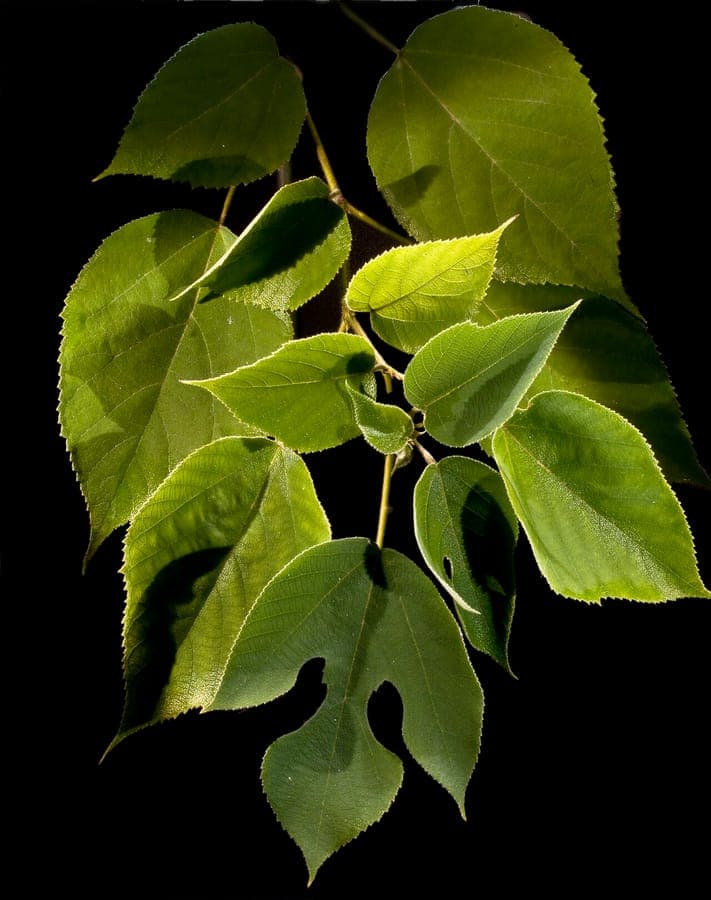
Didier Descouens / CC BY-SA 4.0, via Wikimedia Commons
Paper mulberry: complete guide
Broussonetia papyrifera
¿Quieres ver Paper mulberry: complete guide en tu jardín?
1 minuto, sin tarjeta de crédito
Overview
The paper mulberry (Broussonetia papyrifera) is a vigorous, fast-growing tree in the Moraceae family, native to India, Korea, and Indochina. Known for robust growth, attractive foliage, and fruit production, this tree has historical significance: its bark was traditionally processed into paper. With an open crown and moderate size, it makes a striking statement in larger gardens.
Appearance and bloom cycle
Paper mulberry grows 33 to 50 feet tall with a full, rounded crown. The leaves are large, rough-textured, and visually striking; young foliage can feel quite coarse. Flowers are inconspicuous, greenish-yellow, appearing in spring (April-May). Following bloom, orange to red fruits appear by July-August, with some cultivars producing edible berries.
Ideal location
This tree thrives in full sun to light shade, requiring at least 6 hours of direct sunlight daily. Avoid deep shade, which promotes tall, spindly growth. Paper mulberry tolerates various urban conditions and wind reasonably well, making it suitable for larger gardens and parks. Provide adequate space for development.
Soil requirements
Paper mulberry is not particular about soil conditions. It grows in standard garden soil with reasonable drainage. Heavy clay can be improved with compost. A pH between 6.0 and 7.5 is ideal. Avoid permanently waterlogged conditions, as this causes root rot.
Watering
Once established, paper mulberry is quite drought-tolerant. Young trees need regular moisture, especially during dry periods. Water deeply but not daily; once weekly typically suffices. In very dry summers, supplemental watering may be needed. Prevent prolonged water saturation.
Diseño gratis
¿Quieres ver Paper mulberry: complete guide en tu jardín? Crea un diseño gratis ahora.
Pruning
Paper mulberry tolerates pruning well. Prune in early spring (February-March) before growth begins. Remove dead, diseased, or crossing branches. Thinning improves air circulation. Heavy pruning is unnecessary; basic maintenance pruning is usually sufficient.
Maintenance calendar
February-March Conduct pruning. April-May Bloom and young leaf development. June Regular watering during dry spells. July-August Fruit ripening. September-October Autumn color (modest). November-January Dormant period.
Winter hardiness
Paper mulberry is moderately hardy. USDA zones 6-11. In temperate climates (Northern Europe, UK), it grows outdoors but young trees may suffer frost damage in severe winters. Mulch young trees for the first years. In cold regions, wind protection can be beneficial.
Companion plants
Combine with other heat-loving species. Surrounding light-textured plantings like ornamental grasses, bergenia, and smaller hardwoods pair well. Avoid dense underplanting beneath the crown due to shade.
Final thoughts
The paper mulberry is a fascinating tree for larger gardens, especially where rapid growth and distinctive foliage are valued. At gardenworld.app, discover how such special trees enhance garden design. Its modest maintenance needs and attractive presence make it a sustainable choice. Check local garden centers like regional nurseries for quality saplings.
Interested in specialty trees for your garden design? Visit gardenworld.app for professional garden planning and design ideas.
¿Quieres ver Paper mulberry: complete guide en tu jardín? Crea un diseño gratis ahora.
Sube una foto, elige un estilo y obtén un diseño fotorrealista con lista de plantas en menos de un minuto.
Más de 10.000 jardines diseñados
Sin tarjeta de crédito


Plantas similares
Morus macroura: complete guide
Morus macroura
Himalayan mulberry with long fruits. Fast-growing, edible berries, winter hardy. Suitable for large gardens and landscapes.
Brosimum guianense: complete guide
Brosimum guianense
Guiana snakewood: exotic tree from South America with valuable timber. Cultivation and care for warm-climate gardens.
Maclura tinctoria: complete guide
Maclura tinctoria
Learn how to grow Maclura tinctoria or Cubanwood. This beautiful tree offers shade, food and dye possibilities in your garden.