
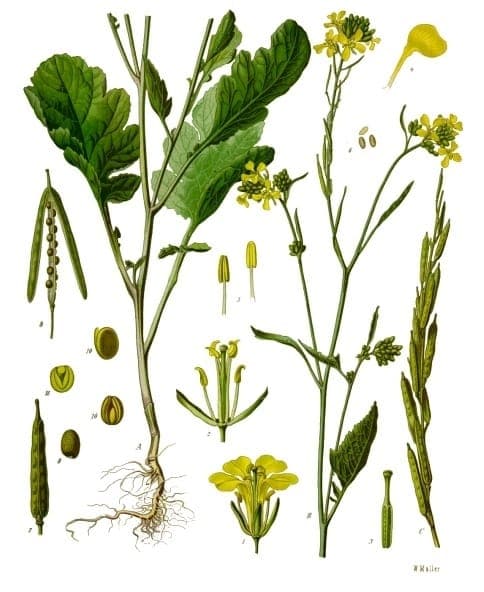
Walther Otto Müller / Public domain, via Wikimedia Commons
Black mustard: complete guide
Brassica nigra
¿Quieres ver Black mustard: complete guide en tu jardín?
1 minuto, sin tarjeta de crédito
Overview
Black mustard is a rapid-growing, easy-to-cultivate vegetable and medicinal plant prized for nutritious leaves and pungent seeds. The leaves are edible both raw and cooked, packed with vitamins and minerals, while the seeds yield the sharpest-flavored mustard powder. Black mustard grows vigorously, attracts beneficial insects, and serves as an excellent green manure crop. This plant suits both traditional market gardens and modern permaculture systems, thriving in cool climates and bouncing back after cutting.
Appearance and blooming cycle
Black mustard grows as an upright, branching herbaceous plant reaching 60-150 cm tall. Leaves are pinnately lobed, coarser-textured than cabbage, with a peppery taste. Flowering occurs from midsummer onward, producing dense racemes of small yellow flowers beloved by bees and other pollinators. These are followed by long, slender seed pods containing numerous small black seeds (2-3 mm) with notably sharper flavor than brown mustard. A single plant can produce thousands of seeds.
Ideal location
Black mustard requires at least six hours direct sunlight daily for optimal growth and seed production. It tolerates half-shade reasonably well if only leaves are wanted. Choose locations where other brassicas were not grown recently to minimize disease pressure. The plant is cold-hardy and succeeds in cool climates from Netherlands through Germany. Full sun ensures better flowering and seed set, though the crop adapts to most conditions.
Soil requirements
Black mustard tolerates most soils but prefers well-drained, fertile earth with pH 7.5-8.0. It adapts to heavy clay better than most vegetables. Incorporate compost or aged manure before sowing. Paradoxically, leaner soils produce more seed than heavily manured ones, while richer soils encourage leaf production. Well-prepared, moderately fertile soil provides the balance between acceptable yields and manageable plants. Avoid waterlogged conditions.
Sowing and cultivation
Sow directly outdoors in May-June for early summer blooms, or August-September for autumn and winter growth. Space rows 15-20 cm apart, thin to 10 cm between plants. Seeds germinate in 5-7 days. Sow every two weeks for continuous leaf harvests. For seed production, sow early spring (March-April) allowing the plant full summer to mature seed. Light watering promotes germination but avoid waterlogging.
Diseño gratis
¿Quieres ver Black mustard: complete guide en tu jardín? Crea un diseño gratis ahora.
Maintenance
Black mustard demands minimal care. Water regularly during dry spells but never allow waterlogging. Weed carefully during early growth until plants shade the soil. The plant cooperates well in mixed cultivation with other vegetables. Traditional farmers used black mustard as green manure between cash crops, improving soil while suppressing pests. Powdery mildew occasionally affects leaves in autumn but rarely causes serious damage.
Harvesting
Leaf harvesting begins 3-4 weeks after sowing. Cut lower leaves regularly, leaving the growing point intact for repeated harvests. Tender young leaves taste best. For seed harvest, allow plants to fully mature and watch for seed pods turning brown, usually September-October. Cut whole plants and hang inverted in dry conditions for seeds to fall. Separate from plant material and dry before storing.
Maintenance calendar
MARCH-APRIL: Sow early for seed production. MAY-JUNE: Sow for summer leaf harvests. JULY-SEPTEMBER: Begin flowering, continuous leaf picking. SEPTEMBER-OCTOBER: Seed pods mature and brown. OCTOBER: Harvest seed, thresh and dry for storage.
Winter hardiness
Black mustard tolerates temperatures down to -5 degrees Celsius and survives most European winters outdoors. In milder Mediterranean climates, production continues through winter. Row covers protect from severe frosts if needed. For reliable seed production in cool climates, some growers start plants in autumn, let them overwinter, then flower and set seed in spring. Vernalization (cold treatment) improves seed production in continental climates.
Companion plants and uses
Black mustard improves conditions for nearby plants, helping suppress powdery mildew on cucurbits and other mildew-prone crops. Plant alongside tomatoes, cucumbers and peppers. Showy yellow flowers attract pollinating insects and beneficial parasitoid wasps. Young tender shoots work in salads or cooked greens. Home processors can harvest and grind seeds for homemade mustard condiment. Mix with sunflowers and other seed-bearing flowers in cottage gardens.
Closing thoughts
Black mustard exemplifies old-fashioned crop efficiency - one plant feeds you, feeds beneficial insects, improves soil, and produces condiments. Its remarkable speed and minimal inputs suit modern sustainable gardening. Start from seed in late spring and enjoy continuous harvests. Seeds remain viable for 3-4 years in cool, dry storage. Garden centres stock seed packets from reliable suppliers in spring.
Learn more vegetable growing tips at gardenworld.app/en - discover other brassicas and heritage crops!
¿Quieres ver Black mustard: complete guide en tu jardín? Crea un diseño gratis ahora.
Sube una foto, elige un estilo y obtén un diseño fotorrealista con lista de plantas en menos de un minuto.
Más de 10.000 jardines diseñados
Sin tarjeta de crédito


Plantas similares
Brassica cretica: complete guide
Brassica cretica
Brassica cretica, the Cretan cabbage, grows wild on Aegean cliffs. Discover how to grow this drought-tolerant, yellow-flowered Mediterranean perennial.
Corsican cabbage: complete guide
Brassica insularis
Corsican cabbage is a rare Mediterranean rock cabbage with white flowers and blue-green leaves. Location, soil and winter protection.
Prostrate cabbage: complete guide
Brassica procumbens
Prostrate cabbage is a creeping North African cliff plant with yellow flowers. Discover location, soil type and winter protection.