
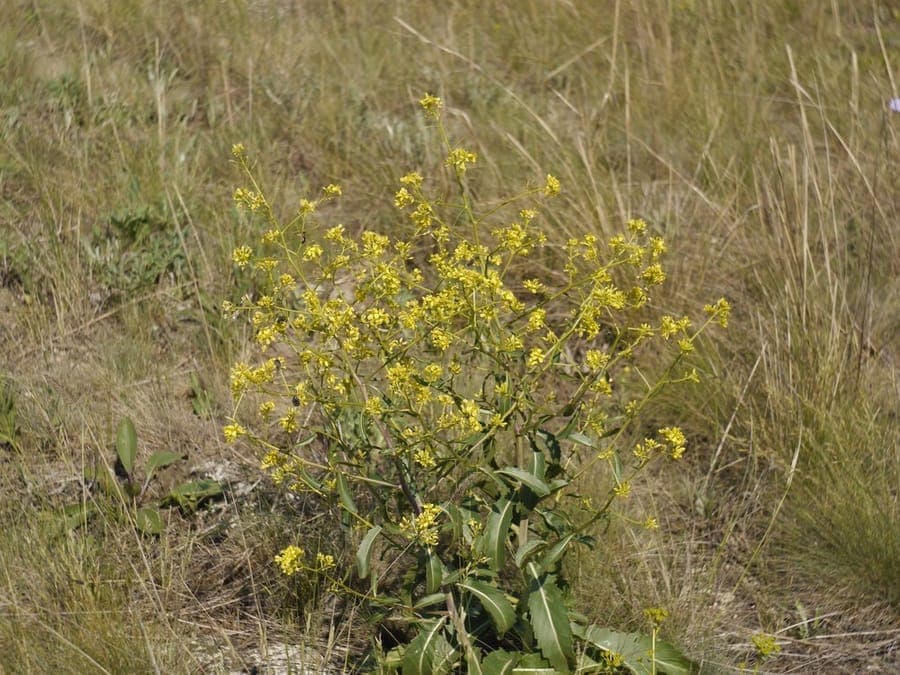
Roman / CC BY 4.0, via Wikimedia Commons
Brassica elongata: complete guide
Brassica elongata
¿Quieres ver Brassica elongata: complete guide en tu jardín?
1 minuto, sin tarjeta de crédito
Overview
Brassica elongata, often called long-stalk rape or elongated mustard, is a remarkable wild relative of cultivated cabbages. This biennial plant originates from the Caucasus and Eastern Europe, where it has adapted to marginal lands and rocky slopes. Historically, it was valued as a nutritious leafy green and has been incorporated into modern brassica breeding programs.
The plant typically reaches heights of 30 to 80 centimeters and develops an irregular, multi-branching habit. This makes it an excellent choice for naturalistic gardens and permaculture designs that celebrate diverse vegetable varieties.
Appearance and Bloom
The leaves of Brassica elongata are distinctly elongated and frequently have undulating margins. They alternate along sturdy stems that naturally branch freely. This growth pattern creates a full, architectural presence in the garden.
Flowering occurs in late spring and early summer (May to July). Small yellow flowers, typical of the Brassicaceae family, form dense inflorescences. Following pollination by bees and other insects, the plant produces long, slender seed pods (siliques). Seed production is typically abundant.
Ideal Location
Brassica elongata thrives in open positions receiving 6 to 8 hours of direct sunlight daily. However, it tolerates partial shade, though growth may be somewhat reduced.
In its native habitat, the plant grows in steppes and montane grasslands, suggesting a preference for well-drained sites with good air circulation. Sloping terrain and raised beds are therefore ideal.
Soil
While not particularly demanding, this plant performs best in fertile, moderately moist, neutral to slightly alkaline sandy loam. Brassicas require significant potassium and mineral content.
Soil preparation: incorporate well-rotted compost or aged manure (5-10 liters per square meter) and add 100-150 grams of ground chalk or limestone per square meter. This prevents clubroot and other brassica diseases.
Watering
Although tolerant of drought, the plant grows more vigorously with consistent moisture. Water when the top 2-3 centimeters of soil feel dry. Employ deep, infrequent watering rather than frequent surface sprinkling, which promotes leaf diseases.
Excessive moisture can invite fungal conditions. Ensure excellent drainage at all times. The plant is frost-hardy and overwinters successfully in most regions.
Diseño gratis
¿Quieres ver Brassica elongata: complete guide en tu jardín? Crea un diseño gratis ahora.
Pruning
Brassica elongata requires minimal pruning. Simply remove dead or diseased foliage and stems regularly. If growth becomes excessively wild, gently trim side stems to a manageable size.
Historically, these plants were harvested for their tender stem tips and young leaves as greens. Light harvesting actually stimulates continued branching and growth.
Maintenance Calendar
Spring (March-May): Ground preparation with compost, seed starting indoors or direct sowing. Summer (June-August): Regular watering, leaf harvesting, flowering and seed set observation. Autumn (September-October): Seed maturation, pod collection and drying. Winter (November-February): Plant overwintering, planning next season's cultivation.
Winter Hardiness
Brassica elongata is remarkably cold-tolerant, withstanding temperatures as low as -15 to -20 degrees Celsius. In temperate climates, plants often overwinter in open ground with minimal protection during hard frosts.
In northern Europe, the complete biennial cycle unfolds naturally. First-year plants establish robust foliage, then flower and set seed in their second spring.
Companion Plants
Brassica elongata grows well alongside other brassicas, as well as:
- Small flowering herbs (chamomile, dill)
- Carrots and beets (in crop rotation)
- Onions and garlic (for insect deterrence)
- Native wildflowers attracting pollinators
Avoid prolonged proximity to cross-pollinating brassica species if you wish to maintain seed purity.
Conclusion
Brassica elongata represents excellent value for gardeners seeking to integrate heritage vegetables and wild-type crops. The plant is easy to cultivate, provides nectar and pollen for pollinators, and enhances biodiversity. Seeds are available from specialist suppliers including Intratuin and Gamma. Try this fascinating brassica in your garden and experience the joy of growing historically significant plant varieties. Explore more at gardenworld.app/en for wild vegetables and biodiverse gardening.
¿Quieres ver Brassica elongata: complete guide en tu jardín? Crea un diseño gratis ahora.
Sube una foto, elige un estilo y obtén un diseño fotorrealista con lista de plantas en menos de un minuto.
Más de 10.000 jardines diseñados
Sin tarjeta de crédito


Plantas similares
Brassica cretica: complete guide
Brassica cretica
Brassica cretica, the Cretan cabbage, grows wild on Aegean cliffs. Discover how to grow this drought-tolerant, yellow-flowered Mediterranean perennial.
Corsican cabbage: complete guide
Brassica insularis
Corsican cabbage is a rare Mediterranean rock cabbage with white flowers and blue-green leaves. Location, soil and winter protection.
Prostrate cabbage: complete guide
Brassica procumbens
Prostrate cabbage is a creeping North African cliff plant with yellow flowers. Discover location, soil type and winter protection.