
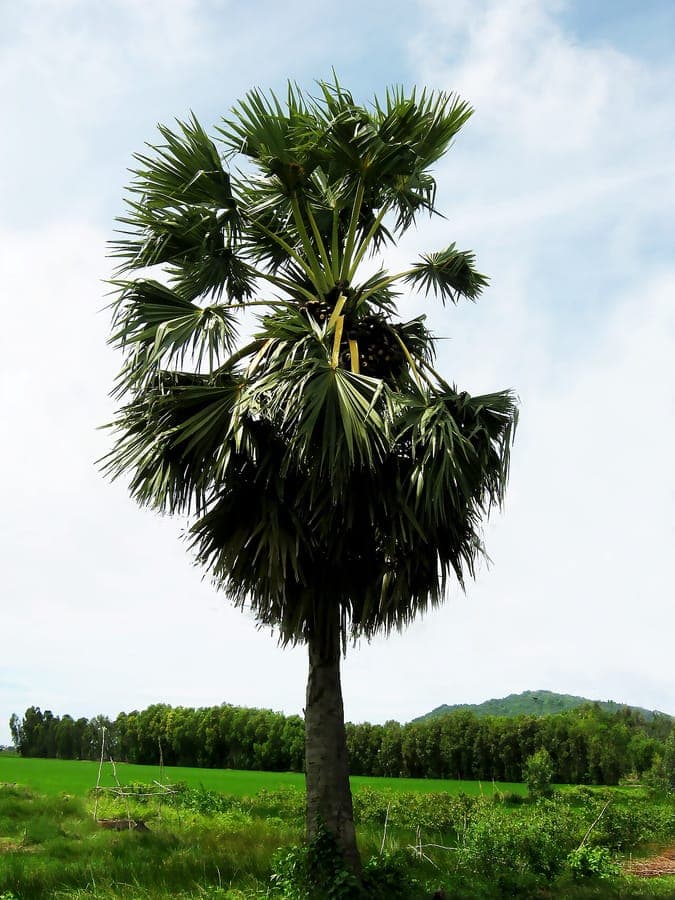
Bùi Thụy Đào Nguyên / CC BY-SA 3.0, via Wikimedia Commons
Borassus flabellifer: complete guide
Borassus flabellifer
¿Quieres ver Borassus flabellifer: complete guide en tu jardín?
1 minuto, sin tarjeta de crédito
Overview
Borassus flabellifer, commonly known as palmyra palm, sugar palm, or tala palm, is an exceptionally valuable tropical tree from the Arecaceae family. This impressive specimen originates from India, Bangladesh, Southeast Asia, and Indonesia. It is renowned for its diverse uses including food, beverages, and materials.
The tree is celebrated for its versatile applications. The fruits are edible, the nectar provides sugar, and the leaves serve as building materials. It is a classical palm appearing in many tropical gardens and agricultural systems.
Appearance and bloom
Borassus flabellifer forms a single, sturdy trunk that can reach 20 meters tall. The leaves are massive, deeply divided, and fan-shaped with gray-green coloring. Each leaf can exceed one meter in width.
The flowering period produces yellow flowers grouped in long, hanging flower stems. Following flowering, large round fruits develop measuring 10-15 centimeters in diameter. These dark brown to black fruits contain white, sweet pulp that is fragrant and nutritious.
The tree grows relatively quickly for a palm, achieving full size in 20-30 years.
Ideal location
Borassus flabellifer thrives in full sun requiring 8-10 hours of direct sunlight daily. The tree cannot tolerate shade and weak growth results in partial shade. Position in a well-lit location with ample space.
The tree is fairly wind-resistant but extreme winds can cause leaf damage. Provide weather protection during young years. Mature trees tolerate wind reasonably well.
Soil
Borassus flabellifer grows best in well-draining, sandy to loamy soil. The tree is undemanding and grows in diverse soil types as long as drainage is excellent. Water stagnation causes root rot.
The tree responds to annual fertilizing with compost or organic material. Poor soils are acceptable but the tree grows faster with supplemental nutrition. Sandy soils are suitable and the palm accepts even marginal growing conditions.
Diseño gratis
¿Quieres ver Borassus flabellifer: complete guide en tu jardín? Crea un diseño gratis ahora.
Watering
Borassus flabellifer is drought-tolerant once established. In tropical regions the tree usually receives sufficient rainfall. In cooler seasons supplemental water may be needed, especially for young specimens.
Mature trees tolerate extended dry periods. Water young trees regularly during the first year. Ensure well-draining soil to prevent waterlogging. Avoid stagnation, which is worse than drought.
Pruning
Minimal pruning is required. Remove only dead leaves and fruit stems. Careful pruning of living leaves is possible but not recommended without good reason.
Regularly check for damaged parts and remove carefully. Avoid aggressive pruning as this damages the tree and slows growth.
Maintenance calendar
Spring (March to May): Prepare for growing season. Add compost and water regularly.
Summer (June to August): Water as needed. Provide nutrition to support growth and fruiting.
Autumn (September to November): Gradually reduce watering. Harvest fruits when ripe.
Winter (December to February): Minimal care. Very limited watering.
Winter hardiness
Borassus flabellifer is not winter hardy and cannot tolerate frost. In temperate climates greenhouse cultivation or very large container growing is necessary. The tree cannot survive outdoors in frost-prone regions.
In tropical and subtropical climates the tree thrives outdoors year-round. A minimum temperature of 18 degrees Celsius is required for growth.
Companion plants
Borassus flabellifer typically stands alone as a specimen tree due to its size. Plant smaller tropical specimens at a distance. The enormous leaves cast substantial shade limiting understory growth.
Shade-tolerant understory plants work well. Avoid very large plants near this palm as competition for space and air is unfavorable.
Closing
Borassus flabellifer is a useful and impressive choice for large tropical gardens. The palm provides nutrition, useful products, and dramatic appearance. With consistent care this tree grows excellently and produces valuable fruit.
Seek Borassus flabellifer at specialized tropical nurseries. Find specimens through quality suppliers. Visit gardenworld.app for additional plant guides and growth information. Consult gardenworld.app again for support.
¿Quieres ver Borassus flabellifer: complete guide en tu jardín? Crea un diseño gratis ahora.
Sube una foto, elige un estilo y obtén un diseño fotorrealista con lista de plantas en menos de un minuto.
Más de 10.000 jardines diseñados
Sin tarjeta de crédito


Plantas similares
Needle palm: complete guide
Rhapidophyllum hystrix
Everything about the needle palm: the world's hardiest palm, suitable for gardens in temperate climates down to USDA zone 7b.
Saw palmetto: complete guide
Serenoa repens
A complete guide to saw palmetto (Serenoa repens), the iconic fan palm from Florida and the southeastern United States, prized for its toughness.
Puerto Rican hat palm: complete guide
Sabal causiarum
Grow Puerto Rican hat palm successfully. A majestic fan palm with tropical presence suited to sheltered Mediterranean-style gardens.