
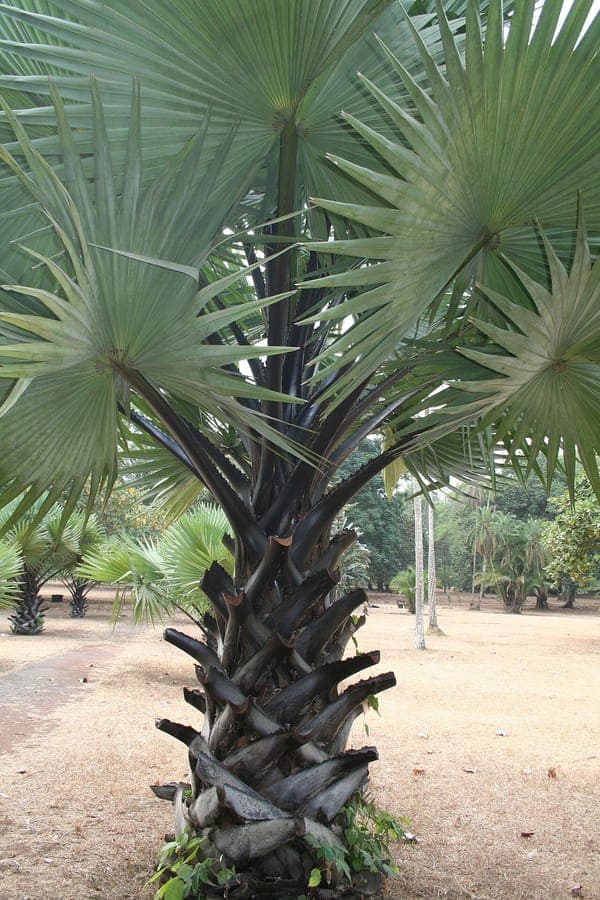
Marco Schmidt[1] / CC BY-SA 3.0, via Wikimedia Commons
Borassus aethiopum: complete guide
Borassus aethiopum
¿Quieres ver Borassus aethiopum: complete guide en tu jardín?
1 minuto, sin tarjeta de crédito
Overview
Borassus aethiopum, known as African fan palm, deleb palm, or rondier, is a majestic tropical tree from the Arecaceae family. This impressive specimen originates from tropical Africa, ranging from Senegal to Tanzania and Madagascar. It is a commanding plant that makes a distinct visual impact in any landscape design.
The plant is valued for its enormous fan-shaped leaves and its expressive silhouette. In its natural habitat, it can reach 20 meters tall, but in cultivation typically achieves 5-8 meters. It is a slow-growing but ultimately impressive specimen.
Appearance and bloom
Borassus aethiopum forms a single, sturdy trunk with a thick tree-like structure. The leaves are massive, deeply divided, and fan-shaped with a grayish tone. Each leaf can exceed one meter in length, creating dramatic visual impact.
The flowering period produces yellow to orange flowers arranged in large, compact inflorescences. Following flowering, large round fruits develop, approximately 5-7 centimeters in diameter. These golden-brown fruits contain hard, tough seeds.
The plant presents a tropical, impressive appearance ideal for large gardens or landscape applications.
Ideal location
Borassus aethiopum thrives in full sun requiring at least 8 hours of direct sunlight daily. The plant cannot tolerate shade and weak growth occurs in partial shade. Position where the plant receives full sun exposure.
The plant is robust enough to tolerate wind reasonably well, though protection from severe winds proves beneficial. Ensure space around the plant for free air circulation and prevent waterlogging at the base.
Soil
Borassus aethiopum grows best in well-draining, sandy to loamy soil. The plant tolerates diverse soil types as long as drainage is excellent. Water stagnation causes root rot and is fatal.
The plant is not nutrient-demanding but responds to annual applications of compost or slow-release fertilizer. Sandy, poor soils are acceptable, and the plant grows even in challenging conditions. Heavy clay soils require amendment.
Watering
Borassus aethiopum is drought-tolerant once established. In natural habitats it experiences seasonal rainfall but also grows through relatively dry periods. In cultivation, water regularly during the growing season, especially for young plants.
Mature plants tolerate extended dry periods. Water less during the dry season. Ensure well-draining soil to prevent waterlogging, which is far more damaging than insufficient water.
Diseño gratis
¿Quieres ver Borassus aethiopum: complete guide en tu jardín? Crea un diseño gratis ahora.
Pruning
Minimal pruning is required for Borassus aethiopum. Remove only dead or damaged leaves to maintain appearance. Avoid pruning living leaves as this damages the plant.
If the plant outgrows your space, careful leaf pruning can be performed, but this does not prevent natural growth. Regularly monitor for dead leaves and remove these carefully.
Maintenance calendar
Spring (March to May): Prepare for growing season. Apply weak fertilizer and water regularly.
Summer (June to August): Intensive watering during dry weather. Apply supplemental fertilizer to support growth.
Autumn (September to November): Reduce watering to normal levels. Decrease fertilizing.
Winter (December to February): Minimal care. Very limited watering, no fertilizer.
Winter hardiness
Borassus aethiopum is not winter hardy and cannot tolerate frost. In temperate climates the plant must be grown indoors or in greenhouse conditions. The plant absolutely cannot survive outdoors in frost-prone climates.
In tropical and subtropical regions, the plant thrives outdoors year-round. In cooler climates, greenhouse cultivation or very large container growing is necessary.
A minimum temperature of 18 degrees Celsius is required for survival and growth.
Companion plants
Borassus aethiopum works best as a specimen plant, as its size prevents competition. Position smaller tropical plants at a distance. The enormous leaves cast substantial shade limiting understory growth.
Combine with shade-tolerant plants or understory structures. Avoid surrounding the plant with other large specimens as this restricts air circulation. Keep the plant's crown clear for proper development.
Closing
Borassus aethiopum is a spectacular choice for large gardens in tropical and subtropical regions. Its impressive stature and dramatic foliage make it a true focal point for any landscape design. With consistent care, this plant grows excellently and adds character to every environment.
Seek Borassus aethiopum at specialized tropical plant nurseries. Find larger specimens through specialty suppliers. Visit gardenworld.app for additional plant guides and growth information. Consult gardenworld.app again for support with this fascinating species.
¿Quieres ver Borassus aethiopum: complete guide en tu jardín? Crea un diseño gratis ahora.
Sube una foto, elige un estilo y obtén un diseño fotorrealista con lista de plantas en menos de un minuto.
Más de 10.000 jardines diseñados
Sin tarjeta de crédito


Plantas similares
Needle palm: complete guide
Rhapidophyllum hystrix
Everything about the needle palm: the world's hardiest palm, suitable for gardens in temperate climates down to USDA zone 7b.
Saw palmetto: complete guide
Serenoa repens
A complete guide to saw palmetto (Serenoa repens), the iconic fan palm from Florida and the southeastern United States, prized for its toughness.
Puerto Rican hat palm: complete guide
Sabal causiarum
Grow Puerto Rican hat palm successfully. A majestic fan palm with tropical presence suited to sheltered Mediterranean-style gardens.