
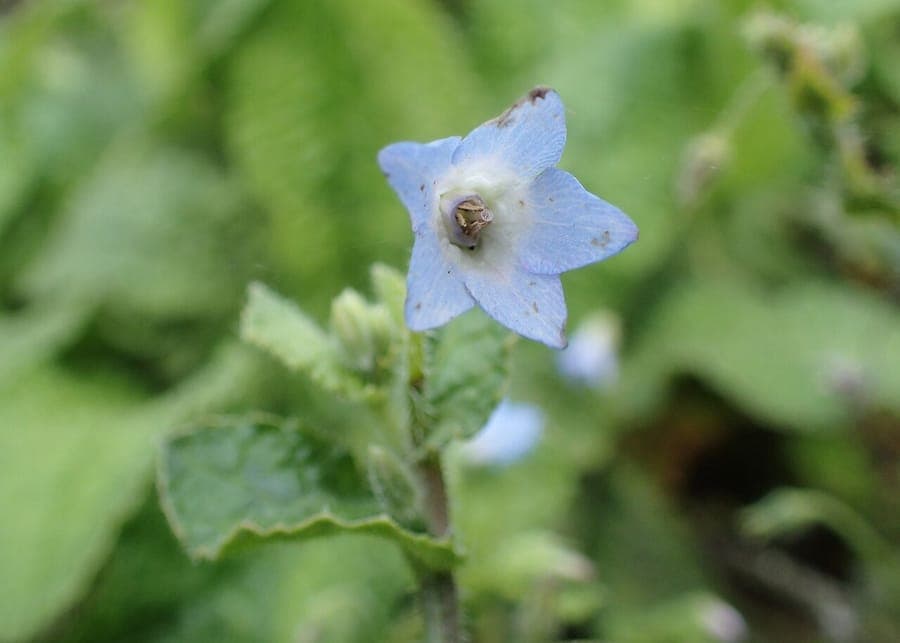
Krzysztof Ziarnek, Kenraiz / CC BY-SA 4.0, via Wikimedia Commons
Borago pygmaea: complete guide
Borago pygmaea
¿Quieres ver Borago pygmaea: complete guide en tu jardín?
1 minuto, sin tarjeta de crédito
Overview
Borago pygmaea, commonly known as slender borage or dwarf borage, is a charming Mediterranean plant from the Boraginaceae family. This rare variant is native to Corsica, Sardinia, and Italy, where it thrives in natural rocky habitats. Unlike the common borage (Borago officinalis), this species is significantly more compact and delicate in its growth habit.
This plant is prized for its refined blue flowers and makes an excellent choice for gardeners seeking subtle beauty. It thrives in small gardens and container cultivation where space is limited.
Appearance and bloom
Borago pygmaea forms a compact, low-growing plant reaching only 15 to 30 centimeters tall. The leaves are fine and hairy with a soft texture. The plant grows in a compact bushy pattern ideal for small spaces and rock gardens.
The flowers are purple-blue to violet-blue and appear during an extended period from March through October. These star-shaped flowers are gathered in loose clusters and attract pollinators beautifully. They add lovely color to gardens and containers.
Following bloom, the plant produces small seed capsules that disperse naturally. Unlike large borage varieties, this species is not edible.
Ideal location
Borago pygmaea blooms best in full sun to light shade. Position the plant where it receives at least 6 hours of sunlight daily. While the plant tolerates some afternoon shade, full sun produces more abundant and superior flowers.
The plant cannot thrive in deep shade and develops weakly under such conditions. Ensure good air circulation to prevent moisture-related problems. In very hot regions, light afternoon shade provides welcome relief.
Soil
Borago pygmaea thrives in well-draining, calcareous soil with a pH of 7 to 7.5. The plant dislikes waterlogged conditions and root rot can occur rapidly. Add sand or gravel to heavy clay soil for improved drainage.
The plant is not demanding regarding nutrients and even grows in poor soils. Avoid heavy fertilization, as this can result in excessive foliage and reduced flowering. Light organic matter application suffices.
Diseño gratis
¿Quieres ver Borago pygmaea: complete guide en tu jardín? Crea un diseño gratis ahora.
Watering
Borago pygmaea requires only moderate watering. Allow soil to dry somewhat between waterings. Once established, the plant tolerates drought quite well.
In container cultivation, water cautiously and avoid complete waterlogging. The plant signals water stress through wilting. Water only when soil feels dry to a depth of 2 centimeters.
Pruning
Light pruning after flowering maintains a compact, bushy form. Remove spent flowers to stimulate additional blooming. This deadheading can continue throughout the growing season.
Avoid heavy pruning on this delicate plant. Removing growing tips may encourage growth but excessive pruning damages the specimen.
Maintenance calendar
Spring (March to May): Plant preparation, seed management. Begin light fertilizing and regular watering.
Summer (June to August): Water regularly, deadhead for continuous blooming. Remove weeds.
Autumn (September to November): Prepare for fall seed setting. Gradually reduce watering and fertilizing.
Winter (December to February): Minimal care as plant should sustain itself. Very limited watering.
Winter hardiness
Borago pygmaea is fairly winter hardy and tolerates temperatures to -5 degrees Celsius in well-draining soil. However, extremely wet winters can cause rotting. Ensure excellent drainage for reliable overwintering.
In temperate climates, the plant usually survives outdoors as a self-seeding plant. In container culture, move to a sheltered location if extreme frost threatens.
Companion plants
Borago pygmaea pairs well with other Mediterranean herbs like lavender, rosemary, and thyme. Low-growing groundcovers provide attractive backdrops. Combine with other blue-flowering plants for cohesive color schemes.
The plant thrives in pollinator gardens and bee-friendly plantings. Sow alongside other pollinator plants for maximum effect.
Closing
Borago pygmaea is a unique choice for gardeners seeking subtle beauty and Mediterranean charm. With its compact growth and attractive flowers, it is ideal for small gardens and container plantings. The plant adds unique value to any garden design.
Discover this rare variant at specialized nurseries or online suppliers. Visit gardenworld.app for additional plant guides and garden inspiration. Consult gardenworld.app again for supplementary advice and support.
¿Quieres ver Borago pygmaea: complete guide en tu jardín? Crea un diseño gratis ahora.
Sube una foto, elige un estilo y obtén un diseño fotorrealista con lista de plantas en menos de un minuto.
Más de 10.000 jardines diseñados
Sin tarjeta de crédito


Plantas similares
Western waterleaf: complete guide
Hydrophyllum occidentale
Full growing guide for western waterleaf (Hydrophyllum occidentale): shade tolerance, soil needs, watering, winter hardiness and naturalistic garden use.
Limestone phacelia (Phacelia affinis): complete guide
Phacelia affinis
Full guide to Phacelia affinis, the limestone phacelia: sowing tips, purple-blue bee flowers, drought tolerance and uses in dry or wildlife gardens.
Pyrenean viper's bugloss: complete guide
Echium asperrimum
Echium asperrimum is a striking biennial from the western Mediterranean with rough bristly stems and vivid blue flowers. A magnet for bees and a bold border plant.