
VintageHygrometer / CC BY-SA 3.0, via Wikimedia Commons
Red silk-cotton tree: complete guide
Bombax ceiba
¿Quieres ver Red silk-cotton tree: complete guide en tu jardín?
1 minuto, sin tarjeta de crédito
Overview
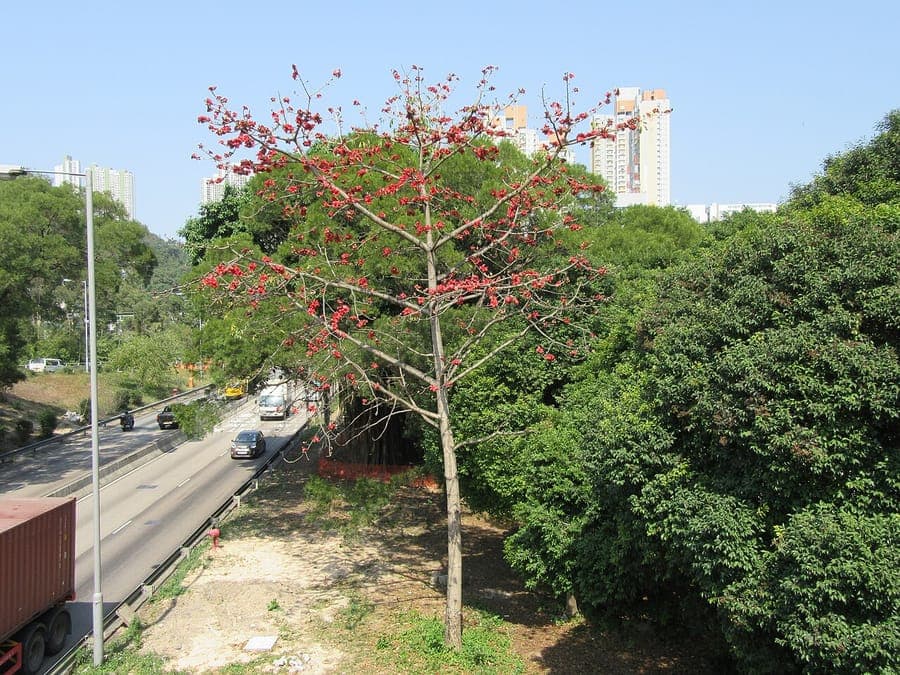
Red silk-cotton tree, scientifically known as Bombax ceiba, is an impressive deciduous tree from the Malvaceae family native to tropical and subtropical Asia extending to North Australia. This majestic tree can reach 40 meters tall and is renowned for its spectacular red flowers and large, oval fruits. The tree is also valuable in traditional medicine.
Appearance and Bloom
Red silk-cotton is a large, deciduous tree with a broad crown and thick branches. The tree has leaves that drop during certain seasons. The spectacular flowers appear in large clusters or individually on branches. The flowers have five thick, red petals with yellow stamens. The fruits are large, green capsules that ripen to brown and open to reveal silky, woolly seeds.
Ideal Location
Red silk-cotton grows best in full sun with at least 8 hours of direct sunlight daily. The tree prefers warm, humid tropical climates. The tree can tolerate moderate drought. Plant in a location where the tree has ample room to grow.
Soil
Red silk-cotton grows best in well-draining, nutrient-rich soil with pH between 5.5 and 7.5. The tree tolerates various soil types but prefers deep soil with organic matter. Ensure excellent drainage to prevent root rot. This tree requires significant space for root growth.
Diseño gratis
¿Quieres ver Red silk-cotton tree: complete guide en tu jardín? Crea un diseño gratis ahora.
Watering
Water regularly during the growing period, especially during dry seasons. Once established, the tree tolerates drought fairly well. Provide extra water during dry periods. Excess water must drain well.
Pruning
Pruning is generally not essential except for removing dead or damaged branches. Shape the tree while young, if desired. Heavy pruning can damage the tree.
Maintenance Calendar
May-August: Growing season. August-January: Flower and fruit development. January-April: Fruits ripen and fall. April-May: Rest and preparation period.
Winter Hardiness
Red silk-cotton is frost-sensitive and grows best in USDA zones 10-12. In colder zones, it cannot grow outdoors. Protect from temperatures below 50F (10degC).
Companion Plants
Good companion plants are other large trees, bamboo, and shade-tolerant understory. This creates authentic tropical forest ambiance.
Conclusion
Red silk-cotton is a majestic addition to warm gardens. Though it requires ample space, this tree offers spectacular flowers and interesting fruits.
Shops: Visit OBI and Hornbach for German gardeners for seeds and plant material.
¿Quieres ver Red silk-cotton tree: complete guide en tu jardín? Crea un diseño gratis ahora.
Sube una foto, elige un estilo y obtén un diseño fotorrealista con lista de plantas en menos de un minuto.
Más de 10.000 jardines diseñados
Sin tarjeta de crédito


Plantas similares
Crimean linden: complete guide
Tilia × euchlora
Crimean linden is an elegant, fast-growing shade tree ideal for large gardens. Discover cultivars, spacing, maintenance tips and winter hardiness.
California flannelbush: complete guide
Fremontodendron californicum
Everything about California flannelbush (Fremontodendron californicum): sunny placement, drainage, pruning and care for this spectacular yellow-flowering shrub.
Hairy rose mallow: complete guide
Hibiscus moscheutos subsp. lasiocarpos
Full growing guide for hairy rose mallow (Hibiscus moscheutos subsp. lasiocarpos): location, soil, watering, winter hardiness and garden design tips.