
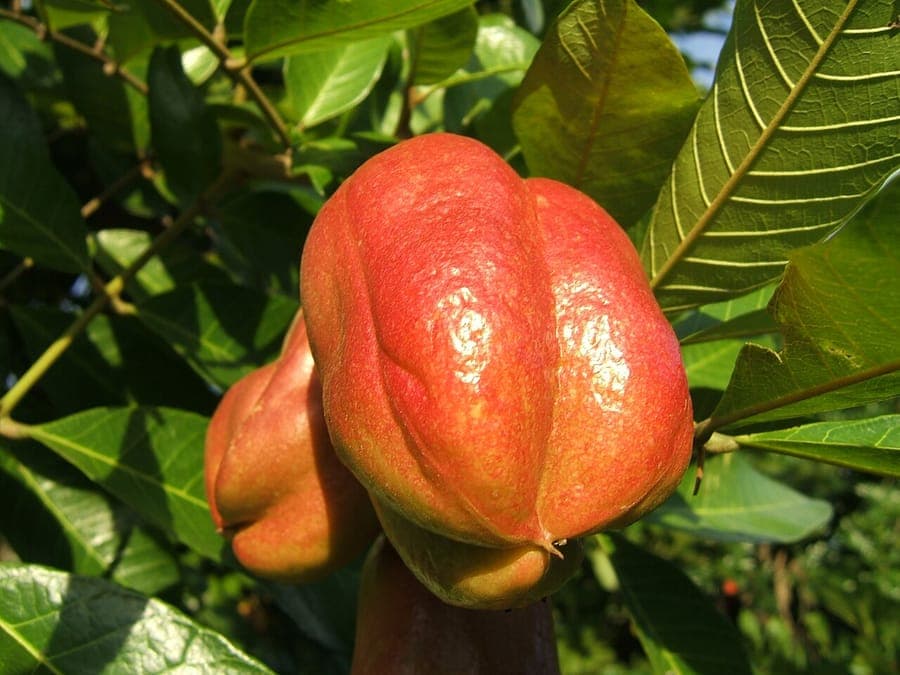
Jerome Walker / CC BY-SA 3.0, via Wikimedia Commons
Blighia sapida: complete guide
Blighia sapida
¿Quieres ver Blighia sapida: complete guide en tu jardín?
1 minuto, sin tarjeta de crédito
Overview
Blighia sapida, commonly called ackee, ackee or aki, is a tropical fruit tree in the Sapindaceae (soapberry) family. Originally from West Africa, this tree is now widespread in the Caribbean, particularly Jamaica where it is the national fruit.
The tree produces distinctive red-orange fruits that open to reveal creamy, yellow-hued arils (seed covers). These arils are nutritious and used in traditional Caribbean cuisine, especially Jamaican cooking. The tree is also ornamentally valuable with beautiful green foliage and delicate white to pink flowers.
Appearance & bloom
Blighia sapida grows as a medium tree reaching 10-15 meters height in optimal conditions. The tree has a broad, dense crown with glossy green, compound leaves comprising 8-10 pairs of oval leaflets.
The flowers are small, cream-white to pink, fragrant, appearing in dense compound inflorescences. These flowers appear regularly throughout the growing season, attracting numerous bees. The fragrance is particularly pleasant.
The fruits are highly distinctive: large, red-orange globular to pear-shaped, approximately 7-10cm length pods. When mature, pods split along three seams releasing creamy yellow arils (edible portion) surrounding a toxic black seed. The arils have a soft, buttery texture.
Ideal location
Blighia sapida grows best in warm, tropical climates. The tree requires full sun and at least 6 hours direct daily sunlight for optimal fruiting.
The tree is moisture-tolerant but dislikes standing water. Seaside wind tolerance is good. In cooler climates, greenhouse cultivation or very warm microclimates are necessary. The tree reaches substantial height; ensure adequate space.
Soil
Blighia sapida grows well in various soil types but prefers well-draining, fertile soil. The tree is not particular about pH but grows better in slightly acidic to neutral (6.0-7.0).
Heavy clay soils require amendment with sand and organic matter. Incorporate abundant compost before planting. The tree tolerates sea salts well, making it useful for coastal gardens.
Diseño gratis
¿Quieres ver Blighia sapida: complete guide en tu jardín? Crea un diseño gratis ahora.
Watering
Blighia sapida requires consistent moisture, especially in young years until deep root systems establish. Once established, the tree is reasonably drought-tolerant.
During growth periods (spring-summer), water when topsoil feels dry. In dry seasons, provide regular watering. Avoid standing water. Good drainage is essential.
Pruning
Blighia sapida requires minimal pruning for natural growth. Remove dead or damaged branches as needed. To control form, shorten long branches after fruiting.
Wound healing is slow, so minimize pruning. Responds better to light, regular pruning than heavy cutting.
Maintenance calendar
Early Season: Plant during warm months (spring to early summer). Ensure good drainage and shelter from strong winds.
Summer: Water regularly. Enjoy white flowers. Monitor for insect pests and diseases.
Autumn: Fruits ripen (red-orange). Harvest as they spontaneously open. Eat or process arils quickly after harvest.
Late Season: Minimal maintenance. Protect from cold in non-tropical regions.
Winter hardiness
Blighia sapida is not winter hardy and suffers damage at temperatures below 10°C. This is a warmth-loving tropical tree unsuitable for outdoor cultivation in temperate climates. Young trees are particularly frost-sensitive. Mature trees might survive briefly above freezing but suffer severely.
Companion plants
In tropical orchards combines well with other tropical fruit trees: Mango for fruit variety, Pineapple as understory, Cacao in partial shade, Coconut for height variation, Hibiscus for ornamental value.
In potted cultivation: Passion fruit, Guava, Papaya.
Closing
Blighia sapida brings tropical flavor and cultural significance to gardens. With distinctive fruits and nutritious edible arils, it's a unique tree for adventurous gardeners. Perfect for greenhouse cultivation and warm microclimates. Start from seed early in season for best growing results. Respect the nutritional value and cultural importance of this significant tree.
¿Quieres ver Blighia sapida: complete guide en tu jardín? Crea un diseño gratis ahora.
Sube una foto, elige un estilo y obtén un diseño fotorrealista con lista de plantas en menos de un minuto.
Más de 10.000 jardines diseñados
Sin tarjeta de crédito


Plantas similares
Acer pycnanthum: complete guide
Acer pycnanthum
Acer pycnanthum, the Japanese swamp maple, is a fast-growing tree with early red flowers and brilliant autumn color, ideal for damp garden settings.
Freeman maple: complete guide
Acer × freemanii
Everything about the Freeman maple (Acer x freemanii): a fast-growing shade tree with spectacular autumn colour for large gardens.
Wild ackee: complete guide
Cupania americana
A comprehensive guide to Cupania americana, a tropical tree from the Sapindaceae family with conspicuous white flowers and brown fruits, native to tropical America.