
Jörg Hempel / CC BY-SA 3.0 de, via Wikimedia Commons
Alpine bistort: complete guide
Bistorta vivipara
¿Quieres ver Alpine bistort: complete guide en tu jardín?
1 minuto, sin tarjeta de crédito
Overview
Bistorta vivipara, often called Alpine bistort or alpine bistort, is a beautiful mountain plant from subalpine and subarctic regions of Europe and Asia. This compact yet hardy plant grows naturally on rocky slopes between 800 and 3000 meters elevation. Despite its delicate appearance, it is an extremely robust plant that withstands many difficult conditions. For gardeners passionate about alpine plants, Bistorta vivipara is a must-have.
Appearance and Bloom
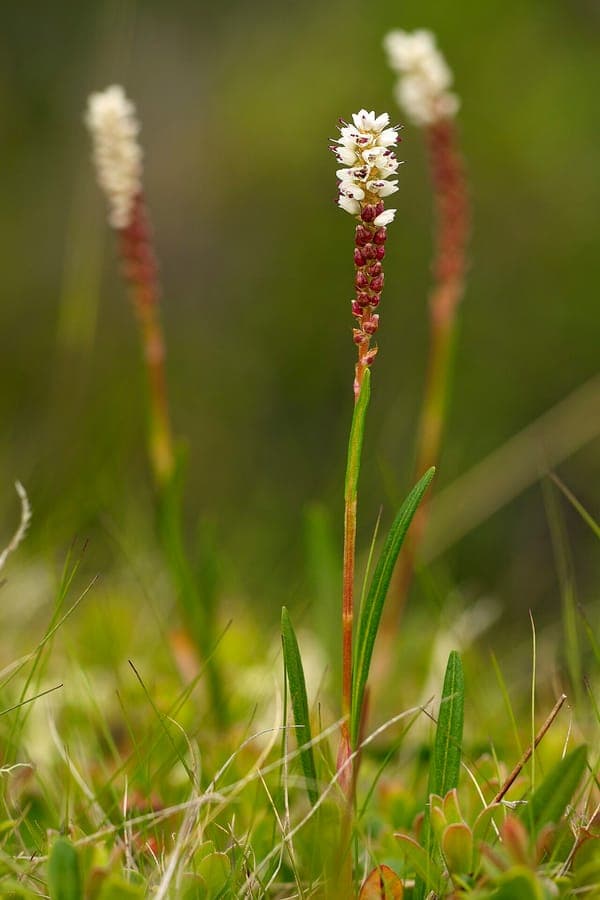
Bistorta vivipara forms compact rosettes with characteristic elongated, dark green leaves. The plant reaches only 10-30 centimeters in height, making it ideal for the front border or rock garden. From July to September, beautiful pink to white flower heads appear on upright stems. The flowers attract many butterflies and other pollinators. The plant also has an interesting characteristic: it produces small bulbils (mini-tubers) at the base of the flower stem, hence the name 'vivipara'.
Ideal Location
Choose a sunny to semi-shaded spot with well-draining soil. The plant thrives best on north-facing mountainsides or in areas with cool air circulation. Avoid warm, dry south-facing situations. In temperate climates, partial shade can actually be preferable. This plant thrives in cooler temperatures and mountain air.
Soil Requirements
Bistorta vivipara requires well-draining, sandy to loamy soil. The plant prefers slightly acidic to neutral terrain (pH 6.0-7.0). Alpine plants appreciate stone debris and mineral-rich substrates. Add gravel, coarse sand, and sharp sand to garden soil. Ensure no stagnation occurs from organic accumulation.
Watering
This plant tolerates dry soil well once established but appreciates regular moisture during the growing period. Water when the surface feels dry. During rainy periods, supplementary watering is not needed. Avoid waterlogging and stagnation. During summer drought, water extra two to three times per week.
Pruning
Pruning is generally not necessary. Only remove faded flower stems after blooming. The plant maintains its own attractive compact form. Cleaning dead leaves in spring is advisable to prevent disease.
Diseño gratis
¿Quieres ver Alpine bistort: complete guide en tu jardín? Crea un diseño gratis ahora.
Maintenance Calendar
Spring: Clean dead leaves, feed with mineral-rich fertilizer. Summer: Regular watering, check for disease. Autumn: Remove faded parts. Winter: No special attention needed, plant is hardy.
Winter Hardiness
Bistorta vivipara is extremely winter-hardy and withstands temperatures down to minus 20 degrees Celsius without problem. The plant is fully hardy in the Benelux and many colder areas. No specific winter protection is necessary. The plant tolerates snow cover well.
Companion Plants
Combine with other alpine plants such as saxifrages, alpine phlox, and dianthus. Excellent for rock gardens together with sempervivums and sedums. The low growth habit makes it perfect for borders or in alpine troughs.
Propagation and Growing
Bistorta vivipara is usually grown from seed. Sow in March-April on cold frame. Stratification (3-4 weeks cold) significantly improves germination percentage. Plant out after last frost. Division of older clumps in spring produces faster-flowering plants. The small bulbils at the base of flower stems can also be used for propagation by detaching and sowing them separately.
Applied Garden Techniques
Bistorta vivipara is perfect for alpine borders where durability is required. Excellent for rock-like environments. Can be used in wandering borders that create mountain-like appearances. Group plantings create beautiful masses of color in June-July. It is also usable in xeriscapes where minimal water consumption is necessary, combining both beauty and sustainability.
Natural Observations
In its natural habitat, Bistorta vivipara grows at elevations where shorter growing seasons prevail. This adaptation results in early-season blooming making it particularly valuable for mountain gardens where growth stops earlier. The plant tolerates extended snow periods without damage, making it excellent for high-altitude and northern gardens.
Closing
Bistorta vivipara is the ideal plant for those wanting to add hardy, winter-hardy mountain plants to their garden. The delicate blooms and compact form make it a real showstopper. Local garden centers regularly offer seedlings. Visit gardenworld.app for more inspiration. Create your dream rock garden with gardenworld.app and enjoy decades of beauty.
¿Quieres ver Alpine bistort: complete guide en tu jardín? Crea un diseño gratis ahora.
Sube una foto, elige un estilo y obtén un diseño fotorrealista con lista de plantas en menos de un minuto.
Más de 10.000 jardines diseñados
Sin tarjeta de crédito


Plantas similares
Crosby's wild buckwheat: complete guide
Eriogonum crosbyae
Full guide to growing Eriogonum crosbyae: ideal site, soil, watering, winter hardiness and companion plants for this rare western wild buckwheat.
Spreading buckwheat: complete guide
Eriogonum effusum
Full guide to growing Eriogonum effusum: ideal site, soil, watering, winter hardiness and companion plants for this prairie subshrub from the American West.
Tall woolly buckwheat: complete guide
Eriogonum elatum
Full guide to Eriogonum elatum: siting, soil, watering, pruning and companion plants for this elegant white-flowered buckwheat from the western United States.