
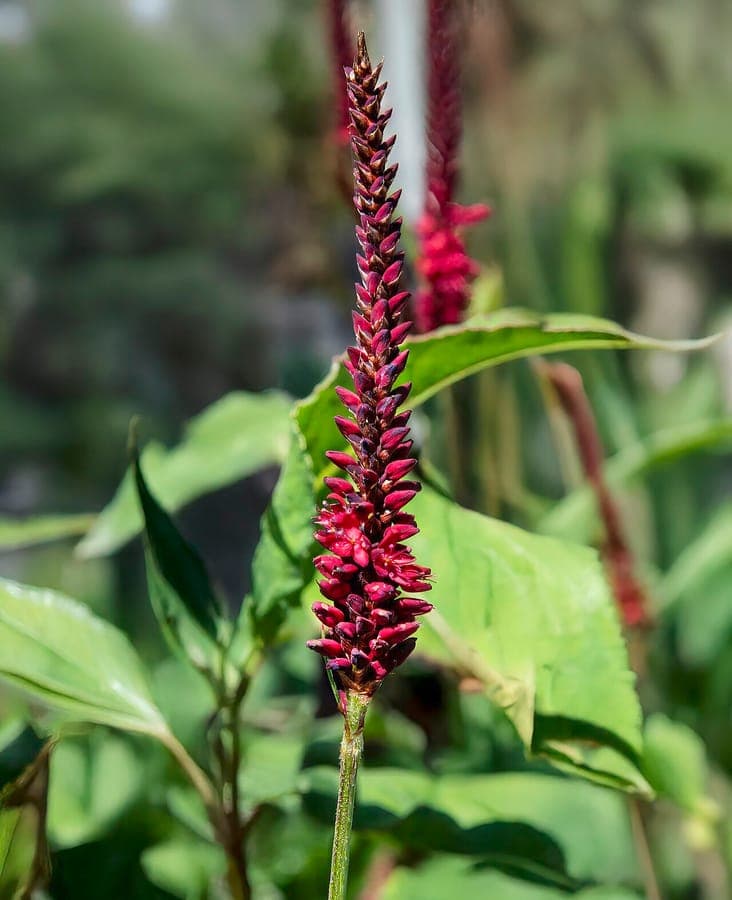
Didier Descouens / CC BY-SA 4.0, via Wikimedia Commons
Red bistort: complete guide
Bistorta amplexicaulis
¿Quieres ver Red bistort: complete guide en tu jardín?
1 minuto, sin tarjeta de crédito
Overview
Red bistort (Bistorta amplexicaulis) is an elegant perennial from the mountains of Afghanistan to Central China, beloved for its striking red-pink flower spikes. These densely packed floral structures appear reliably from May through September, making it a superb choice for alpine gardens, water features, and moist borders where continuous colour is desired.
Appearance and bloom
This plant forms dense clumps with broad, blue-green foliage that slowly emerges from the ground in spring, providing early season garden structure. The distinctive compact flower spikes, technically dense racemes packed with tiny individual florets, emerge in rich red to deep pink shades, measuring typically 5-8 cm tall, sometimes reaching 10 cm under optimal conditions. White-flowered cultivars exist for those seeking paler tones, while some selections display pink variations with reddened tips creating bicolor effects. The flowers attract numerous pollinators including bees and butterflies throughout the extended blooming period. Plants typically reach 60-90 cm in height with comparable spread, creating substantial architectural impact in landscape schemes. The foliage remains attractive throughout the season, providing textural interest even when plants are not actively flowering, with leaves displaying fine blue-green coloration that enhances surrounding plantings.
Ideal location
Red bistort performs best in partial shade to full sun, though morning sun with afternoon protection suits warmer regions where temperatures exceed 28°C regularly. The plant thrives in positions receiving 4-6 hours direct sunlight daily, which optimises flowering density and plant vigour. Even in full shade, the plant establishes reasonably, though flowering may be reduced substantially to occasional sparse spikes. Wind protection from strong westerly or northerly breezes improves longevity of blooms, preventing physical damage to delicate flower structures. In very hot climates, afternoon shade becomes essential to prevent foliage stress and maintain consistent moisture. The species tolerates partial shade beneath light deciduous tree canopies, making it suitable for woodland garden edges and semi-shaded border situations.
Soil
The plant thrives in moist, well-draining loamy soil enriched with substantial organic matter, preferably 25-30 percent by volume. Heavy clay amended generously with compost and peat moss works well, transforming dense soils into moisture-retentive yet draining mediums. Slightly acidic to neutral pH between 6.0-7.0 is ideal, though the plant adapts to pH ranges 5.5-7.5. Adding leaf mold or composted bark improves water retention without creating waterlogging conditions that stress roots. In very sandy soils, incorporate additional organic matter to increase water-holding capacity. Marginal soils benefit from annual mulching with 5-7 cm of composted material, which gradually improves soil structure while releasing nutrients over time. Nutrient-poor soils require annual spring feeding to support vigorous growth and robust flowering performance.
Watering
Consistent moisture is absolutely essential throughout the growing season, from spring emergence through autumn dormancy. Water deeply and regularly, aiming for 2-3 cm of water weekly during active growth periods, increasing to 3-4 cm during hot spells exceeding 25°C. Avoid prolonged drought periods lasting more than 2-3 weeks, which cause wilting and premature flowering termination. Check soil moisture regularly by inserting finger 5 cm into the soil; water when this zone becomes dry. Mulching with 5-7 cm bark layer helps maintain moisture balance while regulating temperature fluctuations that stress shallow root systems. Drip irrigation systems prove ideal for consistent, efficient watering in hot climates. Morning watering reduces disease risk compared to evening watering which can promote fungal development.
Diseño gratis
¿Quieres ver Red bistort: complete guide en tu jardín? Crea un diseño gratis ahora.
Pruning
Deadhead faded flower spikes to encourage repeat blooming. Cut back stems to 10-15 cm after flowering. In spring, remove any frost-damaged material. The plant requires minimal structural pruning beyond tidying.
Maintenance calendar
Spring: Plant or divide in March-April. Apply balanced organic fertiliser. Summer: Water regularly and remove spent flowers. Autumn: Clear fallen foliage. Winter: Extremely hardy; minimal intervention required.
Winter hardiness
Red bistort tolerates temperatures well below -30 degrees Celsius. In temperate zones, roots remain dormant underground, with fresh growth appearing annually. Mulch protection is generally unnecessary except in extreme climates.
Companion plants
Pair with primulas, astilbe, rodgersia, and hostas in moist borders. In drier zones, combine with sedum, nepeta, and lavender. Ornamental grasses and Carex species create striking textural contrasts while complementing the flower colour.
Fertilisation and feeding
Red bistort responds well to regular feeding during the growing season. Apply slow-release organic fertiliser in spring. A second feeding round in June encourages continued blooming. Phosphate-rich formulations promote flowering better than nitrogen-heavy types. Use moderate rates to prevent excessive vegetative growth at expense of flowers.
Propagation techniques
Propagate this plant by division in early spring when new growth emerges. Clumps at least three years old divide successfully. Carefully separate sections ensuring each division has viable roots and growth buds. Seed propagation is possible but produces variable offspring. Softwood cuttings taken in summer root under glass with bottom heat assistance.
Pest management
Red bistort remains largely resistant to major insect pests. Slugs and spider mites occasionally trouble densely planted specimens. Regular inspection and good air circulation prevent most issues. Severe infestations respond to biological controls or targeted insecticides as necessary.
Disease and disorder prevention
Leaf spot fungi develop in warm, wet conditions with poor air circulation. Remove affected leaves immediately and dispose safely. Clear accumulated dead foliage beneath plants to prevent fungal establishment. Avoid crowded planting situations restricting airflow. Root rot rarely occurs in well-drained soil environments.
Seasonal design applications
Red bistort excels in moisture-loving borders where sustained colour is desired. Plant in groups of three or more for maximum visual impact. Pair with white-flowering plants for striking contrast. In water features, position behind lower plantings for tiered effects. Extended flowering season bridges transitions between seasonal interest periods.
Propagation from seed
Wild seeds develop in autumn months in cool climates. Collect ripe seed heads carefully before dispersal. Stratify seeds in moist cold conditions over winter. Spring sowing in seed compost produces seedlings variable in flower colour and vigour. Select best performers for future propagation purposes.
Conclusion
Red bistort brings reliable, vibrant colour to moisture-loving gardens. With consistent watering and minimal intervention, this plant flourishes abundantly. Available from major retailers; visit gardenworld.app/en and gardenworld.app/nl for design inspiration and planting guides.
¿Quieres ver Red bistort: complete guide en tu jardín? Crea un diseño gratis ahora.
Sube una foto, elige un estilo y obtén un diseño fotorrealista con lista de plantas en menos de un minuto.
Más de 10.000 jardines diseñados
Sin tarjeta de crédito


Plantas similares
Crosby's wild buckwheat: complete guide
Eriogonum crosbyae
Full guide to growing Eriogonum crosbyae: ideal site, soil, watering, winter hardiness and companion plants for this rare western wild buckwheat.
Spreading buckwheat: complete guide
Eriogonum effusum
Full guide to growing Eriogonum effusum: ideal site, soil, watering, winter hardiness and companion plants for this prairie subshrub from the American West.
Tall woolly buckwheat: complete guide
Eriogonum elatum
Full guide to Eriogonum elatum: siting, soil, watering, pruning and companion plants for this elegant white-flowered buckwheat from the western United States.