
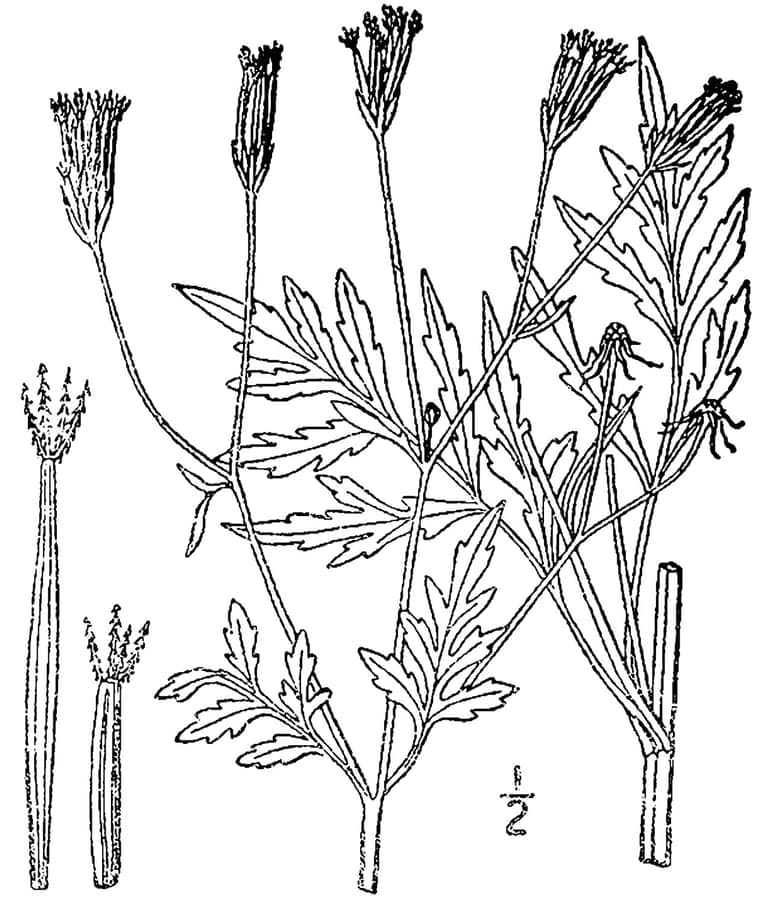
Britton, N.L., and A. Brown. / Public domain, via Wikimedia Commons
Spanish-needles: complete guide
Bidens bipinnata
¿Quieres ver Spanish-needles: complete guide en tu jardín?
1 minuto, sin tarjeta de crédito
Overview
Bidens bipinnata, commonly called Spanish-needles or beggar-ticks, is an attractive plant from the Asteraceae family. This North American annual is known for its fine, feathery foliage and unique fruits with characteristic needle-like projections. The plant gets its name from these barbed appendages that readily cling to clothing and animal fur.
Although an annual, it grows quickly and produces interesting visual effects throughout the season. With minimal care and a compact growth habit, Bidens bipinnata is an excellent choice for gardens and balconies.
Appearance and bloom
Bidens bipinnata grows into a compact shrub reaching 30 to 60 centimeters in height. The plant is characterized by extremely fine, light, feathery leaves that appear almost lacework. The leaves are doubly pinnate (bipinnate), giving the plant its scientific name.
Flowers are small, about 1 to 1.5 centimeters in diameter, appearing in yellow clusters at stem tips. While not spectacularly large, they add a delicate yellow glow to the plant.
The most interesting feature of Bidens bipinnata are its fruits. After the flower fades, long slender fruits form with two to four distinctive backward-pointing needles. These spines can be 1 to 2 centimeters long and are sharp enough to cling to clothing and animal skin.
Ideal location
Bidens bipinnata grows best in warm, sunny places receiving at least 6 hours of direct sunlight daily. The plant can grow in partial shade but will be less compact and flower-rich.
This plant is flexible regarding growing location. It can be grown in borders, containers, or as a specimen. It works well in borders and garden margins. Its compact growth makes it perfect for small gardens.
Diseño gratis
¿Quieres ver Spanish-needles: complete guide en tu jardín? Crea un diseño gratis ahora.
Soil requirements
Bidens bipinnata is not demanding in soil requirements. It grows in virtually all soil types as long as they drain well. In heavy clay soils, adding sand for better drainage is beneficial. The plant prefers moderately nutrient-rich soil.
Add organic matter like garden compost when planting. This improves soil structure and water-holding capacity.
Watering
Bidens bipinnata likes regularly moist soil, especially during the growing season. Water when the top layer of soil feels dry. Daily watering may be needed in dry summers.
Watch for waterlogging - although the plant tolerates substantial water, stagnation can lead to root disease. Always ensure well-draining soil.
Pruning
Pruning is not essential, but you can pinch off stem tips in May to encourage a more compact plant. This stimulates more branching and flowers.
Regularly remove yellowed or diseased leaves.
Maintenance calendar
APRIL-MAY: Sow or transplant. Begin regular watering.
JUNE-SEPTEMBER: Active growth and flowering period. Water regularly. Feeding not needed but can help.
OCTOBER-NOVEMBER: Plant produces abundant fruits with spines. Plant dies with frost.
Winter hardiness
Bidens bipinnata is an annual that cannot tolerate frost. In temperate climates the plant will die once temperatures drop below 5 degrees Celsius. You can collect seeds for next year.
Companion plants
Bidens bipinnata combines well with other annual summer bloomers and perennials. The fine foliage provides nice contrast with larger, more voluminous plants.
Conclusion
Spanish-needles are an interesting and low-maintenance plant. Find them at garden centers across Europe. For more plant information, visit gardenworld.app. More inspiration also available on gardenworld.app.
¿Quieres ver Spanish-needles: complete guide en tu jardín? Crea un diseño gratis ahora.
Sube una foto, elige un estilo y obtén un diseño fotorrealista con lista de plantas en menos de un minuto.
Más de 10.000 jardines diseñados
Sin tarjeta de crédito


Plantas similares
Calendula stellata: complete guide
Calendula stellata
Complete guide to Calendula stellata, the star-flowered marigold from Sicily: location, soil, watering and companion planting tips.
Korean chrysanthemum: complete guide
Chrysanthemum x rubellum
Chrysanthemum x rubellum is a hardy autumn perennial with single pink to copper flowers from August to November. Care and combinations.
Helianthus divaricatus: complete guide
Helianthus divaricatus
Helianthus divaricatus is a North American woodland sunflower with yellow summer blooms, ideal for naturalistic borders and shady edges.