
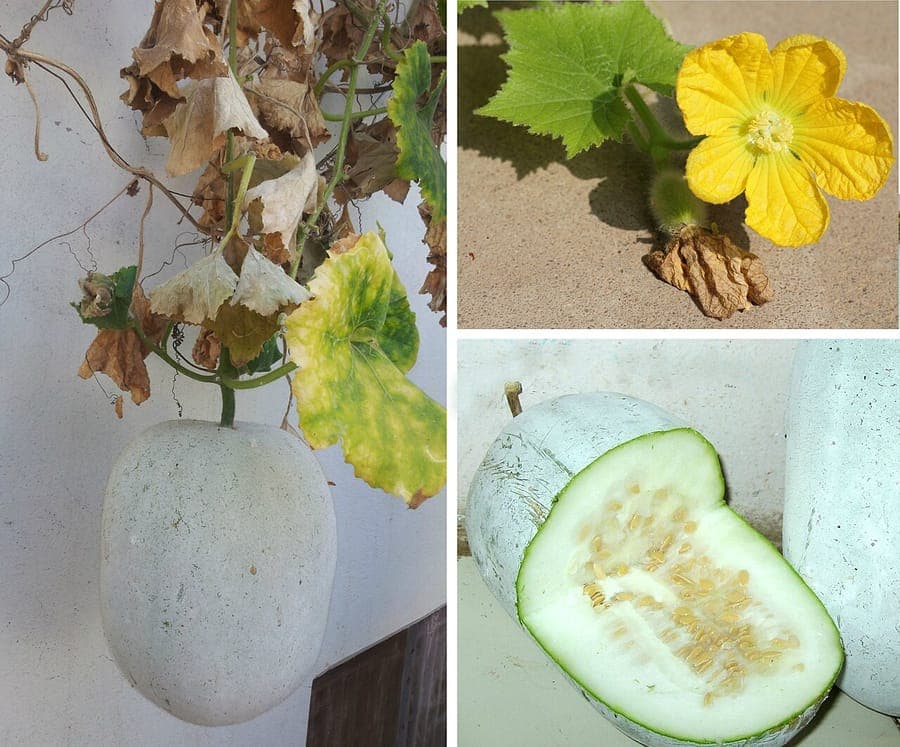
Akshay.paramatmuni1987 (left photo), মৌচুমী (bottom right photo), Zhangzhugang (upper right photo), montage by User:RoRo / CC BY-SA 3.0, via Wikimedia Commons
Benincasa hispida: complete guide
Benincasa hispida
¿Quieres ver Benincasa hispida: complete guide en tu jardín?
1 minuto, sin tarjeta de crédito
Overview
Benincasa hispida, commonly called winter melon or wax gourd, is a fascinating climbing vegetable in the Cucurbitaceae (gourd and melon) family. Originally from Southeast Asia and the Pacific regions, this plant has been cultivated for thousands of years across Asian cultures.
The plant produces large, oval fruits covered with a characteristic waxy white coating, hence the name "wax gourd." This versatile vegetable is tremendously popular in Asian cuisine, valued for its mild flavor, firm texture, and exceptional storage longevity.
Appearance & bloom
Benincasa hispida grows as an annual climbing vine with vigorous, hairy stems reaching 3-4 meters. The leaves are large, heart-shaped, rough, and covered with stiff hairs creating a distinctive appearance.
The flowers are large, bright yellow, and perfect-flowered, arising along the main vine. These morning-blooming flowers close by afternoon. Male flowers appear first, followed by female flowers several weeks later.
The fruits are highly distinctive: large (30-60cm long), oval to round in shape, initially green then covered with a thick white waxy coating that provides protection. The skin is thick, and mature fruits weigh 2-4kg.
Ideal location
Benincasa hispida thrives in warm, sunny locations requiring 6-8 hours daily direct sunlight. This tropical plant demands warmth for optimal growth and cannot tolerate temperatures below 10°C.
In cooler climates, greenhouse cultivation or very sheltered warm microclimates are necessary. The plant requires sturdy climbing structures such as trellises or nets to support heavy fruits. Protection from strong winds prevents damage to climbing vines.
Soil
Benincasa hispida grows optimally in nutrient-rich, well-draining soil with pH 5.5-7.0. This is a heavy feeder requiring abundant organic matter incorporation before planting.
Amend soil generously with compost or well-rotted manure. Soil should remain moist but never waterlogged. Heavy clay soils require amendment with sand and organic materials. Regular feeding throughout the growing season is essential for successful fruiting using nitrogen-rich fertilizer during vegetative growth and phosphorus-rich fertilizer during flowering and fruit development.
Diseño gratis
¿Quieres ver Benincasa hispida: complete guide en tu jardín? Crea un diseño gratis ahora.
Watering
Benincasa hispida requires consistent moisture, particularly during flowering and fruiting stages. Water regularly ensuring soil remains consistently moist but not soggy.
Water at the root zone avoiding wetting foliage which promotes fungal diseases. Daily watering may be necessary during dry periods. Mulching around the plant helps retain moisture. Avoid overwatering which can cause root problems; ensure adequate drainage.
Pruning
Benincasa hispida requires minimal pruning but benefits from directed training. Pinch off side shoots to direct energy toward main vine and fruits.
Limit fruit numbers per plant by removing weak or duplicate fruits during early development stages, promoting larger, higher-quality fruits. Remove diseased or damaged foliage as needed. Maintain hairy stems intact as they provide essential anchoring.
Maintenance calendar
Early Season: Direct sow in warm regions after last frost. In cooler climates, start seeds indoors 4-6 weeks before last frost in small containers.
Summer: Provide consistent watering. Begin monthly fertilization schedule. Train vines onto trellises. Monitor for fungal diseases and insect pests. Thin developing fruits.
Autumn: Harvest mature fruits before frost arrives. Fruits mature 90-110 days after flowering. Preserve waxy coating for extended storage. Cure fruits in cool, well-ventilated location for 2-3 weeks before storage.
Winter: Store properly in cool location. Save seeds for next season.
Winter hardiness
Benincasa hispida is not winter hardy and dies at first frost. This is an annual plant thriving only during warm seasons. In cooler regions, cultivation is limited to greenhouse growing or very sheltered warm-season microclimates. Plant only after all frost danger has passed (mid-May to June in cooler regions). Remove plants immediately when frost threatens.
Companion plants
In traditional polyculture systems (common in Asia), wax gourds grow alongside maize as climbing support (traditional "Three Sisters" system), nitrogen-fixing beans, other Cucurbitaceae family members, and aromatic herbs for pest protection.
In companion planting schemes: Basil, oregano and other aromatic herbs provide protective benefits.
Closing
Benincasa hispida brings exotic dimension to vegetable gardens in temperate climates. With impressive fruits and substantial nutritional value, this plant deserves attention from adventurous gardeners. Perfect for greenhouse cultivation and exceptionally warm summer locations. Start seeds early in the season for optimal results.
¿Quieres ver Benincasa hispida: complete guide en tu jardín? Crea un diseño gratis ahora.
Sube una foto, elige un estilo y obtén un diseño fotorrealista con lista de plantas en menos de un minuto.
Más de 10.000 jardines diseñados
Sin tarjeta de crédito


Plantas similares
Kiwano: complete guide
Cucumis metuliferus
Everything about growing kiwano: location, soil, watering, and harvesting this striking African horned cucumber with spiny orange fruits.
Sponge gourd: complete guide
Luffa aegyptiaca
Full guide to growing sponge gourd (Luffa aegyptiaca): sowing, care, harvesting edible fruits and drying natural loofah sponges in your garden.
Cucumis prophetarum: complete guide
Cucumis prophetarum
Wild cucumber is a fascinating climbing plant with remarkable spiky fruits. Learn how to grow this exotic annual from seed to harvest for decorative interest.