
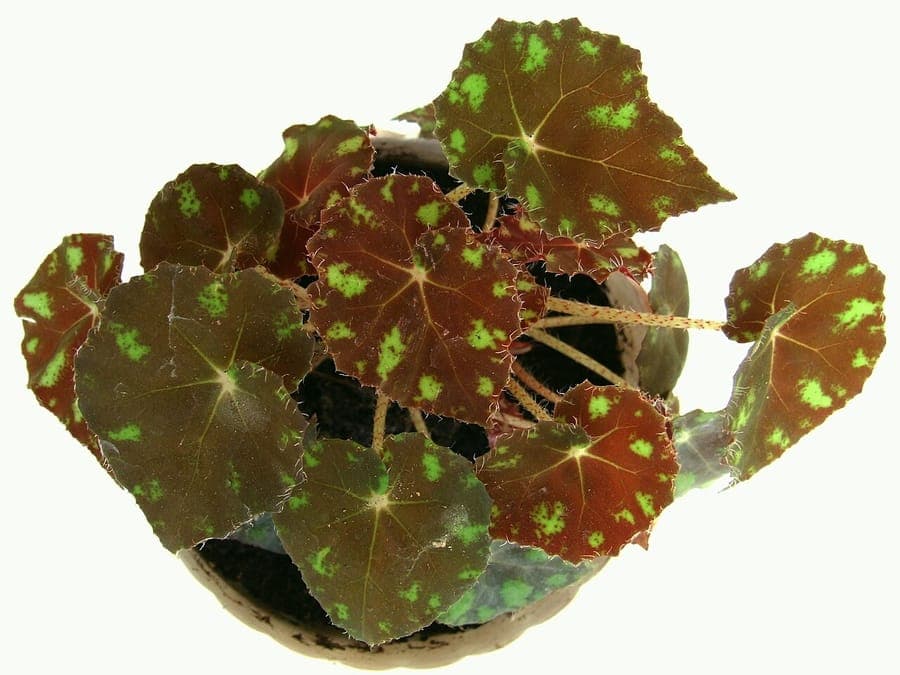
Jerzy Opioła / CC BY-SA 4.0, via Wikimedia Commons
Begonia bowerae: complete guide
Begonia bowerae
¿Quieres ver Begonia bowerae: complete guide en tu jardín?
1 minuto, sin tarjeta de crédito
Overview
Begonia bowerae, commonly known as eyelash begonia, is a delightful compact plant from the Begoniaceae family. This species is prized primarily for its ornamental foliage rather than flowers. Native to the mountainous regions of Mexico, it thrives as a houseplant and shade garden specimen. With its low growth habit and decorative leaves featuring deep texture and dark markings, Begonia bowerae brings elegant sophistication to indoor spaces and shaded gardens.
Appearance and Bloom
Begonia bowerae forms a compact, low-growing plant typically reaching only 20-30cm in height, making it ideal for desks, shelves, and small spaces. The star attraction is the foliage: small leaves (2.5-5cm) with deep green color, silky texture, and distinctive dark red margins resembling eyelashes. The leaf surface displays a delightfully rippled or quilted texture that catches light beautifully. The plant produces delicate pink flowers in spring and summer, appearing in small clusters above the foliage, though the flowers are secondary to the remarkable leaves.
Ideal Location
Begonia bowerae thrives in bright, indirect light and tolerates lower light conditions well. Position it near a window with sheer curtains filtering direct sun, or in a bright interior room away from intense sunlight. Direct rays can scorch leaf margins. Indoors, it's perfect for offices, bedrooms, and living spaces with moderate ambient light. This plant appreciates warmth between 16-24°C and consistent humidity levels.
Soil
Begonia bowerae prefers light, fertile, well-draining potting mix. Combine standard potting soil with extra perlite or orchid bark (1:1 ratio) for ideal drainage. The soil must never remain waterlogged, as this causes root rot. For indoor container gardening, use high-draining houseplant potting mix. Add a small amount of organic matter for nutrients without making the medium heavy or compacted.
Watering
Maintain consistently moist but never soggy soil. Water when the top 1-2cm of soil feels dry. Frequency varies seasonally: weekly or more in warm months, less in winter. Use soft or rainwater when possible, as many begonias are sensitive to hard, mineral-rich water. Never splash water on leaves, as this causes unsightly spotting. Never allow water to accumulate beneath the pot, as this promotes fungal issues and root rot.
Diseño gratis
¿Quieres ver Begonia bowerae: complete guide en tu jardín? Crea un diseño gratis ahora.
Pruning
Pruning is generally unnecessary for this compact plant. However, remove any dead or diseased leaves immediately. You can use removed leaf stems for propagation via leaf-petiole cuttings, which root readily in moist potting mix. If the plant becomes leggy, gentle spring pruning just above leaf nodes encourages bushier growth and a fuller appearance. Pinching off spent flowers is optional but keeps the plant looking tidy.
Maintenance Calendar
Spring: Begin feeding with quarter-strength liquid fertilizer every 2-3 weeks. Scout for pest infestations (especially spider mites). Monitor humidity levels closely. Summer: Continue regular feeding and watering. Maintain temperatures above 16°C. Mist foliage lightly if ambient humidity is low. Watch for pests. Fall: Gradually reduce feeding frequency. Decrease watering slightly as growth slows. Inspect again for pests before moving indoors. Winter: Stop feeding entirely. Reduce watering frequency significantly. Maintain adequate light. Keep minimum temperature at 16°C.
Winter Hardiness
Begonia bowerae is tropical and frost-sensitive, thriving only indoors in temperate climates. Outdoor cultivation is possible only in very mild zones (USDA 11-12) in complete shade. Temperatures below 10°C cause serious stress or death. Always maintain indoor temperatures minimum 16°C during winter months. Never expose to frost or cold drafts.
Companion Plants
Begonia bowerae pairs beautifully with other shade-loving houseplants:
- Fittonia (red or white leaf patterns)
- Anthurium clarinervium (heart-shaped leaves with white veins)
- Peperomia (compact growth, interesting leaf patterns)
- Philodendron hederaceum (elegant trailing stems)
- Tradescantia zebrina (purple leaf undersides)
These combinations create lush, visually interesting indoor garden displays.
Closing Thoughts
Begonia bowerae is perfect for anyone seeking a decorative houseplant without demanding much space. While frost-sensitive and indoor-only in temperate zones, maintaining proper moisture and lighting is straightforward. With consistent care, your plant will provide years of beauty. Purchase seedlings or established plants from local garden centers or online retailers. Browse gardenworld.app for more ideas on combining houseplants in your home.
Discover gardenworld.app for additional guides on indoor plant culture and shade garden design.
¿Quieres ver Begonia bowerae: complete guide en tu jardín? Crea un diseño gratis ahora.
Sube una foto, elige un estilo y obtén un diseño fotorrealista con lista de plantas en menos de un minuto.
Más de 10.000 jardines diseñados
Sin tarjeta de crédito


Plantas similares
Begonia brevirimosa: complete guide
Begonia brevirimosa
Discover the Exotica begonia, a tropical houseplant with spectacular foliage. Learn how to care for this rare plant at home.
Begonia fuchsioides: complete guide
Begonia fuchsioides
Discover the Fuchsia begonia, a stunning houseplant with vibrant red flowers. Learn how to successfully grow and care for this Colombian tropical beauty.
Oblique-leaved begonia: complete guide
Begonia obliqua
Discover Begonia obliqua, a charming flowering houseplant from the Caribbean islands featuring elegant white-pink blooms. Learn care tips, ideal conditions, and propagation methods for this shade-loving plant.