
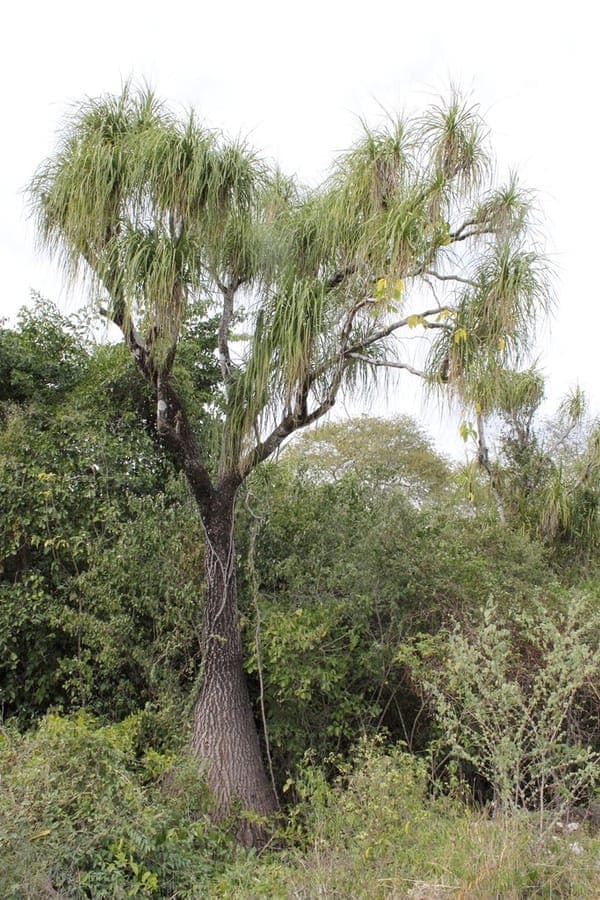
juancruzado / CC BY-SA 4.0, via Wikimedia Commons
Bottle Palm: complete guide
Beaucarnea recurvata
¿Quieres ver Bottle Palm: complete guide en tu jardín?
1 minuto, sin tarjeta de crédito
Overview
The Bottle Palm (Beaucarnea recurvata), also known as Ponytail Palm or Elephant's Foot, is a fascinating plant from Mexico. This unique specimen belongs to the Asparagaceae family and is characterized by its swollen stem base that stores water. The elegant, long arching leaves enhance its decorative appeal. This is an ideal plant for warm indoor climates and sunny terraces.
Appearance and Growth
The Bottle Palm grows slowly into an interesting shape. The stem base becomes thick and bottle-like, gray to brown in color. From the top, long narrow leaves emerge, elegantly curving and drooping. In mature specimens, this effect is exceptionally graceful. The plant reaches 2-3 meters in container culture. The texture is smooth and polished.
Ideal Location
Use a very sunny, warm spot, such as a south-facing window. At least 4-6 hours of direct sunlight daily is needed. This plant tolerates high heat and strong direct sunlight well. In very hot climates, light afternoon shade can be beneficial. Good ventilation helps too.
Soil
Use highly well-draining potting soil for cacti and succulents. Sand, perlite, and small stones enhance drainage. This plant tolerates poor, dry soils much better than moist conditions. Excellent drainage is absolutely essential.
Diseño gratis
¿Quieres ver Bottle Palm: complete guide en tu jardín? Crea un diseño gratis ahora.
Watering
Water sparingly, especially in winter. Let soil dry thoroughly between waterings. Overwatering is the biggest enemy, causing root rot. In summer, provide slightly more water, but never allow water to accumulate. Better to underwater than overwater.
Pruning
Pruning is rarely needed, but you can remove dead leaves. If the plant grows too large, you can carefully remove old leaf clusters, but this won't promote new growth.
Maintenance Calendar
Spring: Begin feeding; Summer: Moderate water, minimal feeding; Autumn: Reduce watering; Winter: Minimal water, no feeding needed.
Winter Hardiness
Very frost-sensitive. Not suitable outdoors in temperate Europe. Minimum temperature around 10°C. In very warm regions (southern Spain, France) possibly outdoors, but better kept indoors.
Companion Plants
Pair with other succulents: Echeveria, Aloe, Sedum. They share the same preference for dry, sunny conditions. Beautiful together in decorative pots.
Final Thoughts
The Bottle Palm is a fascinating choice for those seeking something unique. Minimal care, plenty of sunlight, and sparse watering ensure success. Available at major garden centres. More plant guides on gardenworld.app.
¿Quieres ver Bottle Palm: complete guide en tu jardín? Crea un diseño gratis ahora.
Sube una foto, elige un estilo y obtén un diseño fotorrealista con lista de plantas en menos de un minuto.
Más de 10.000 jardines diseñados
Sin tarjeta de crédito


Plantas similares
Narrow-leaved dracaena: complete guide
Dracaena angustifolia
Everything about Dracaena angustifolia - the narrow-leaved dracaena: location, care, overwintering and use as a houseplant or patio plant.
Chaparral yucca: complete guide to Hesperoyucca whipplei
Hesperoyucca whipplei
Hesperoyucca whipplei (Our Lord's candle) is a dramatic rosette-forming plant from California that produces a towering flower spike, ideal for dry and gravel gardens.
False lily-of-the-valley: complete guide
Maianthemum dilatatum
Everything about Maianthemum dilatatum, the false lily-of-the-valley. Care, shade location, propagation and garden combinations for this popular shade ground cover.