
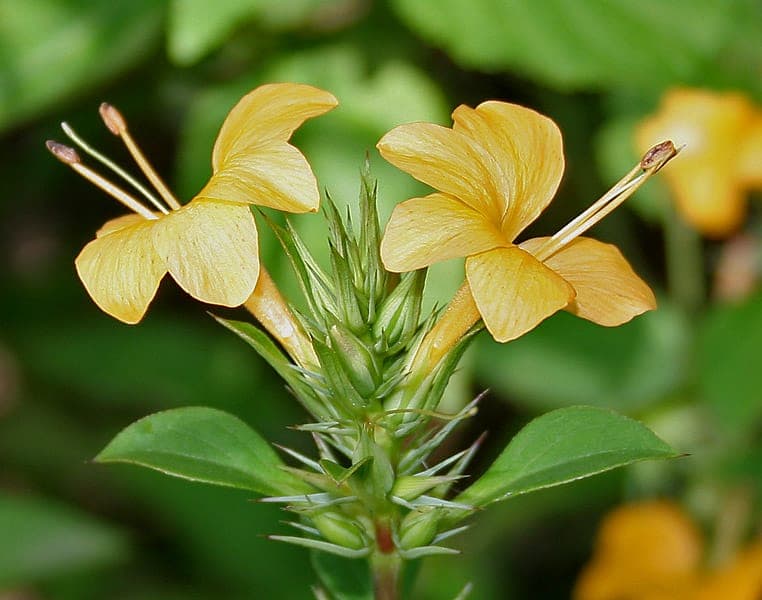
J.M.Garg / CC BY-SA 4.0, via Wikimedia Commons
Barleria prionitis: complete guide
Barleria prionitis
¿Quieres ver Barleria prionitis: complete guide en tu jardín?
1 minuto, sin tarjeta de crédito
Overview
Barleria prionitis, also known as porcupine flower or yellow hedge barleria, is a fascinating tropical ornamental plant from the Acanthaceae family. This shrub originates from Africa and Asia and is renowned for its striking yellow flowers with purple spots. The plant earns its common name from spiky calyces that protrude like porcupine quills.
In temperate climates, Barleria prionitis is cultivated primarily as a houseplant or in conservatories. The shrub grows compactly and flowers continuously, making it ideal for indoor cultivation. With proper care, this plant thrives for years with regular flowering.
Appearance and flowering
Barleria prionitis is a compact shrub reaching 60 to 120 centimeters. Leaves are opposite, linear to lanceolate, and dark green with a papery texture.
The flowers are the highlight of this plant. They grow in leaf axils and display bright yellow to orange-yellow color with purple or dark spots and lines on the petals. Flowers measure about 2 to 3 centimeters and appear continuously from spring to autumn when properly cared for.
The shrub flowers best with adequate light and regular feeding. Regular pruning promotes abundant blooms and compact growth.
Ideal location
Barleria prionitis prefers bright, indirect light. Position the plant where it receives abundant daylight but avoids direct afternoon sun. A south or west-facing windowsill is ideal but provide some shade if sun is too intense.
Indoors: Place the plant near a window with good light penetration. Maintain temperatures between 18 and 25 degrees Celsius. The plant tolerates household heating well, but high humidity helps.
Outdoors in summer: During warm seasons, place the plant outdoors in a sheltered spot with dappled shade and protection from strong winds.
Soil
Use loose, well-draining potting soil based on peat or coco fiber. Mix 60% potting soil with 40% perlite or sand for optimal drainage. Barleria prionitis dislikes waterlogging.
Ensure drainage holes in the pot. Add organic matter before planting as soil enrichment. Rich nutrients matter, but drainage takes priority.
Refresh the top layer of soil (5 centimeters) yearly in spring with fresh medium. This provides healthy growth support.
Diseño gratis
¿Quieres ver Barleria prionitis: complete guide en tu jardín? Crea un diseño gratis ahora.
Watering
Barleria prionitis prefers moist but not soggy soil. During the growing season (March to October), water when the top centimeter feels dry. This typically means 2 to 3 times weekly.
Mist the foliage regularly to increase humidity, especially during heating season. The plant appreciates 60 to 70% humidity.
In winter, reduce watering. Water only when soil feels noticeably dry. Avoid water on the plant center to prevent rot.
Feeding
Barleria prionitis is a hungry plant. From May to October, feed every two weeks with diluted liquid fertilizer. This promotes abundant flowering and healthy growth.
Use balanced garden fertilizer or special flower fertilizer with extra phosphorus and potassium. Always follow package instructions.
Stop feeding entirely in winter. The plant rests and needs no extra nutrients.
Pruning
Regular pruning is essential for good shape and flowering. In spring (March-April), cut back about 1/3 of length. This promotes branching and full bloom.
Note: Prune moderately - always leave several leaves per branch. Dead or damaged branches can be removed anytime.
After flowering (October-November), light pruning helps maintain compact, full form.
Maintenance
Repotting yearly in spring helps rejuvenate the plant. Use a pot only 2 centimeters larger than previous. Provide fresh, well-draining soil.
Check regularly for pests like spider mites and mealybugs, especially in warm conditions. Water spraying or insecticide helps.
Remove faded flowers regularly. This stimulates continuous blooming.
Winter care
In winter (October-February), Barleria prionitis enters dormancy. Place it in lower light and cooler temperature (15 to 18 degrees Celsius). Water minimally.
It's normal for the plant to lose leaves or flower less. This prepares for new growth in spring. Keep the plant from drying completely.
Towards winter's end (February), move the plant to warmer location and gradually increase watering. Start feeding in March.
Companion plants
Barleria prionitis fits well in tropical combinations:
- Anthurium species
- Calatheas for foliage interest
- Spathiphyllum for contrast
Around the pot, include climbers like:
- Rhaphidophora tetrasperma
- Scindapsus for green background
Closing remarks
Barleria prionitis is an exotic treasure for indoor gardens. With proper light, feeding, and humidity, this tropical beauty grows well and flowers abundantly. Visit quality nurseries for healthy specimens. Gardenworld.app helps you find the perfect spot in your interior. The plant requires patience initially, but the reward is years of abundant blooms and green beauty.
¿Quieres ver Barleria prionitis: complete guide en tu jardín? Crea un diseño gratis ahora.
Sube una foto, elige un estilo y obtén un diseño fotorrealista con lista de plantas en menos de un minuto.
Más de 10.000 jardines diseñados
Sin tarjeta de crédito


Plantas similares
Limestone wild petunia: complete guide
Ruellia strepens
Ruellia strepens is a long-blooming perennial native to central and eastern North America, with lavender trumpet flowers from June to September.
Shrimp plant: complete guide
Justicia brandegeeana
Everything about the shrimp plant (Justicia brandegeeana): cultivation, ideal location, watering, pruning and overwintering of this popular tender ornamental.
Caricature-plant: complete guide
Graptophyllum pictum
Grow the vibrant Caricature-plant with its striking patterned foliage. Care tips, cultivation, and pairing ideas for indoors and outdoors.