
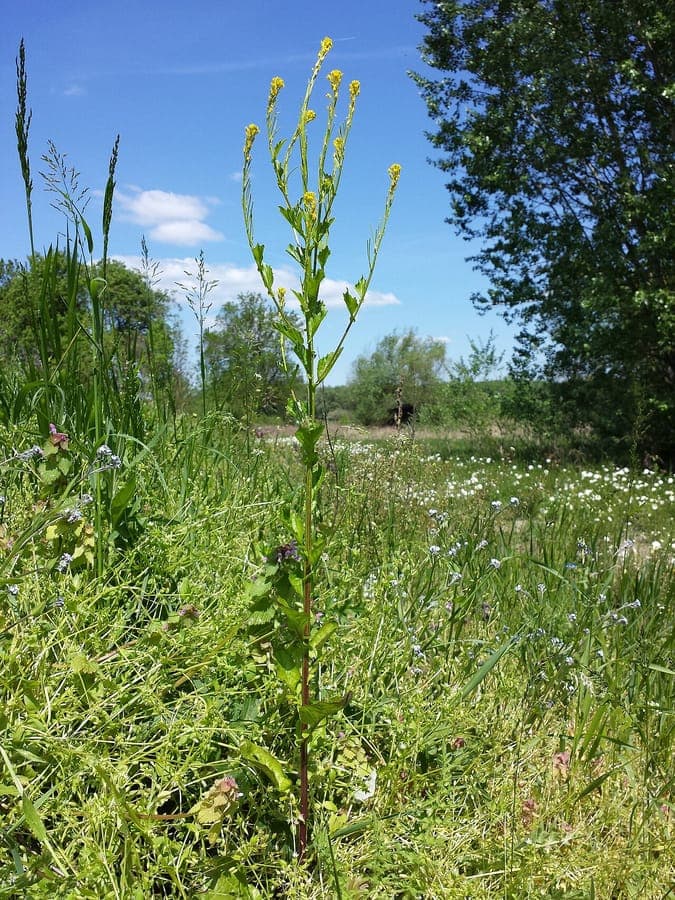
Stefan.lefnaer / CC BY-SA 3.0, via Wikimedia Commons
Barbarea stricta: complete guide
Barbarea stricta
¿Quieres ver Barbarea stricta: complete guide en tu jardín?
1 minuto, sin tarjeta de crédito
Overview
Barbarea stricta, commonly known as Upright Winter-cress or Rigid Bittercress, is a hardy plant from the cabbage family (Brassicaceae). Named after Saint Barbara, the patron saint of the harvest season, this biennial herb grows naturally throughout Europe to Northern Mongolia, thriving on grasslands and moist areas.
This vegetable crop excels as winter greens when most vegetables are scarce. With exceptional hardiness and minimal care requirements, it fits perfectly into permaculture gardens and sustainable landscape designs. The leaves have a distinctive, mildly peppery flavor reminiscent of radish.
Appearance & bloom
Upright winter-cress reaches 30-60 centimeters in height with densely packed, upright foliage. The leaves are lyre-shaped with characteristic dark green coloring. The texture is rough with toothed margins, making it tactilely interesting.
From May to July, vivid yellow flowers appear in dense clusters (racemes) atop the stems. Though small individually, they form striking displays highly attractive to bees and beneficial insects. After pollination, long thin seed pods develop and grow vertically upward.
The plant retains foliage throughout winter, making it exceptionally valuable for winter harvests.
Ideal location
Barbarea stricta thrives in full sun to partial shade, though full sun is optimal for maximum leaf production and nutrition. The plant embraces bright light and produces abundant foliage accordingly.
It is extremely cold-hardy, naturally occurring from the Atlantic to the Ural Mountains. Snow and frost do not faze it; leaf quality actually improves after frost due to increased sugar concentration in the cells.
This is an excellent choice for landscape designs with steep slopes or challenging exposures, as it grows nearly everywhere.
Soil
Upright winter-cress prefers nutrient-rich, well-draining soil with pH between 7.0 and 7.5. The plant favors higher pH and avoids acidic soils. In home gardens, compost-enriched, moderately moist soil works well.
The plant detests waterlogged conditions or sustained stagnant water. Ensure good drainage, especially in winter. Add mature compost or leaf mold at planting time for improved structure and nutrition.
It accepts moderately fertile soil (clay to sandy loam), provided it is not overly wet.
Watering
Once established, Barbarea stricta is reasonably drought-tolerant and requires minimal supplemental watering. Young transplants benefit from consistent moisture during their first growing seasons.
During dry summers, regular watering is beneficial. Winter requires almost no watering given natural rainfall. Guard against waterlogged conditions that can trigger rot diseases.
Through its deep root system (especially in year two), the plant reaches water at considerable depth. Moderately dry to moderately moist is ideal.
Diseño gratis
¿Quieres ver Barbarea stricta: complete guide en tu jardín? Crea un diseño gratis ahora.
Pruning
Pruning is barely necessary. You can continually harvest foliage from the plant, which actually encourages compact growth. Snip the oldest outer leaves from near ground level.
Remove any yellowed or damaged leaves. If you want seed, allow some stems to flower and set seed. Otherwise, remove spent flower heads to encourage new leaf growth.
The plant regrows vigorously after harvest, so regular picking acts as positive stimulation.
Maintenance calendar
Spring (March-May): Sow seeds directly in the ground or divide existing plants. Add extra nutrition with compost. Expect flowering in May-June.
Summer (June-August): Harvest leaves regularly. Ensure adequate water during dry periods. Let spent flowers remain to encourage natural reseeding.
Fall (September-November): Harvesting is now optimal as foliage becomes sweeter after frost. Sowing is still possible for next spring.
Winter (December-February): Minimal care needed. Harvest winter greens. Prepare for spring by removing spent plant material.
Winter hardiness
Barbarea stricta is extremely winter-hardy to at least -15 degrees Celsius. It is hardy throughout the Netherlands and Belgium, requiring no winter protection. The plant shows no problems with snow or extended frost periods.
Indeed, after frost the leaf cells contract and sugars concentrate, making the foliage sweeter and more flavorful. This is why traditional winter-cress harvests occur just after frost.
The plant also tolerates full winter sun.
Companion plants
Barbarea stricta works well alongside:
- Other winter herbs: Grow in proximity without competition
- Pest controllers: Plant near mint and oregano to deter unwanted insects
- Deep rooters: Combine with heavier-rooted vegetables like carrots and turnips
- Color contrast: Pair with dark red winter kale or vibrant green endive
Avoid strong competitors like corn or other tall plants casting shade.
Closing
Barbarea stricta is an excellent choice for sustainable landscape designs. The plant offers winter nutrition, is minimalist in care requirements, and adds tremendous ecological value. Whether growing organic vegetables or simply wanting a nourishing winter herb garden, winter-cress deserves a place.
With its extended growing season and frost-resistance, it pays for itself. On gardenworld.app you can integrate winter-cress into your personal garden design. The plant fits perfectly into permaculture and food gardens across both the Netherlands and Belgium.
Discover now how to use upright winter-cress for a more sustainable front garden: https://gardenworld.app/en/plant-blog/barbarea-stricta and https://gardenworld.app/en/plant-blog/winter-cress-guide
¿Quieres ver Barbarea stricta: complete guide en tu jardín? Crea un diseño gratis ahora.
Sube una foto, elige un estilo y obtén un diseño fotorrealista con lista de plantas en menos de un minuto.
Más de 10.000 jardines diseñados
Sin tarjeta de crédito


Plantas similares
Brassica cretica: complete guide
Brassica cretica
Brassica cretica, the Cretan cabbage, grows wild on Aegean cliffs. Discover how to grow this drought-tolerant, yellow-flowered Mediterranean perennial.
Corsican cabbage: complete guide
Brassica insularis
Corsican cabbage is a rare Mediterranean rock cabbage with white flowers and blue-green leaves. Location, soil and winter protection.
Prostrate cabbage: complete guide
Brassica procumbens
Prostrate cabbage is a creeping North African cliff plant with yellow flowers. Discover location, soil type and winter protection.