
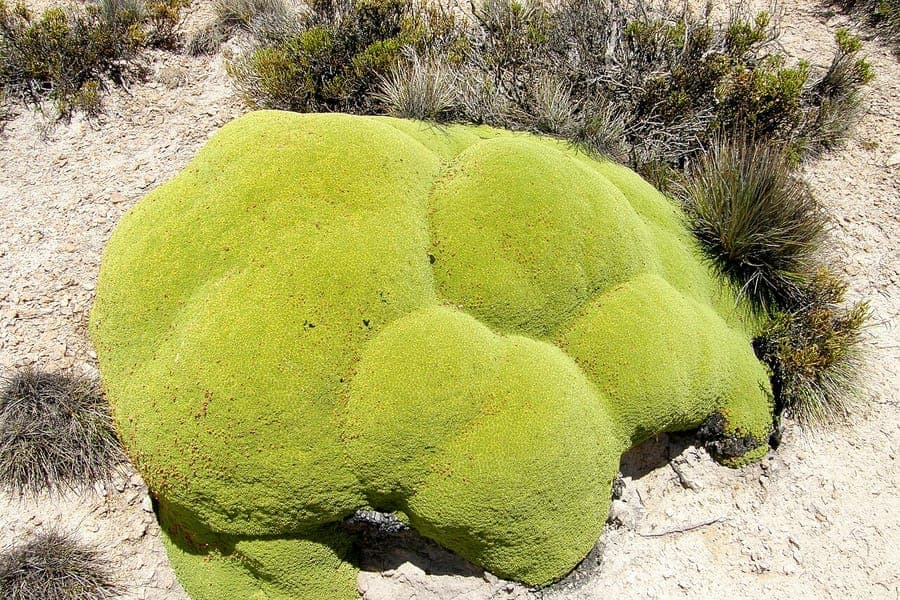
Bachelot Pierre J-P / CC BY-SA 4.0, via Wikimedia Commons
Yareta (Azorella compacta): complete guide
Azorella compacta
¿Quieres ver Yareta (Azorella compacta): complete guide en tu jardín?
1 minuto, sin tarjeta de crédito
Overview
Yareta (Azorella compacta), also called llareta, is an exceptional alpine plant from the Andes of Peru, Bolivia, Chile and Argentina. This plant from the Apiaceae family forms a fascinating, rock-solid, almost natural stone growth pattern. Yareta is a very special plant for lovers of extreme alpine plants and ethnobotany.
Appearance and blooming period
Azorella compacta grows in a very compact, spherical or cushion-like form, often only 5 to 30 centimeters high and up to 60 centimeters wide. The plant consists of numerous small leaves that grow tightly together and have a very hard, rock-like appearance. In favorable conditions, tiny yellowish flowers appear in late summer to autumn. After blooming, small fruits develop.
Ideal location
Yareta requires the most extreme alpine conditions. Plant at very high altitudes (in natural conditions it grows above 3,500 meters) or in very cold-reached parts of your garden. Full sun and exceptionally well-ventilated. The plant tolerates much wind.
Soil
This is the most difficult part of yareta cultivation. The plant requires extremely well-drained, poor soil. Use a mixture of coarse grit, very fine sand, and a small amount of organic material in approximately 80:15:5 ratio. The soil must be almost porous. Alpine trough mix or scree-mix is ideal. Neutral to slightly acidic pH.
Watering
Yareta is very drought-tolerant in its natural habitat, but in cultivation careful, minimal watering must be given. Water only when the soil is almost dried out. In winter very little to no water. Drainage is absolutely crucial; ensure water never runs along the leaf-rosette.
Diseño gratis
¿Quieres ver Yareta (Azorella compacta): complete guide en tu jardín? Crea un diseño gratis ahora.
Pruning
Pruning is not required. This plant grows extremely slowly and naturally in a compact form. Avoid any damage to the surface.
Maintenance calendar
- Spring (April-May): Minimal care. Very careful water if soil very dry. No fertilization.
- Summer (June-August): Almost no water unless very dry. Plant thrives on natural rainfall in mountain areas.
- Autumn (September-October): Flowers may appear. Water very little. Plant prepares for winter.
- Winter (November-March): Almost no water. Plant rests. Ensure cold, dry conditions.
Winter hardiness
Yareta is extremely winter-hardy and can tolerate temperatures down to -20 to -30 degrees Celsius. The problem in cooler climates is less freezing than wet conditions. Ensure very good drainage and prevention of winter moisture infiltration.
Companion plants
Yareta is usually cultivated as a solo specimen in alpine troughs or very drained containers. It can be combined with other extreme alpine and rock plants such as Eritrichium, Androsace and other drought-tolerant alpines.
In conclusion
Azorella compacta is what serious alpine plant collectors are looking for. This is not an easy plant; it requires much expertise and patience. Yareta grows extremely slowly (only a few millimeters per year in cultivation). But for those willing to meet these extreme requirements, it is a unique prize-winning plant. Find seed through specialized alpine seed suppliers. Learn more on gardenworld.app how to curate and maintain extreme alpine collections.
¿Quieres ver Yareta (Azorella compacta): complete guide en tu jardín? Crea un diseño gratis ahora.
Sube una foto, elige un estilo y obtén un diseño fotorrealista con lista de plantas en menos de un minuto.
Más de 10.000 jardines diseñados
Sin tarjeta de crédito


Plantas similares
Whorled carrot: complete guide
Daucus involucratus
Daucus involucratus is a Mediterranean umbellifer with white flower heads framed by lacy bracts. Growing this gravel garden gem.
Daucus muricatus: complete guide
Daucus muricatus
Daucus muricatus, the spiny wild carrot, grows wild on Mediterranean coasts. Discover sowing, June-July bloom, and wildflower meadow use.
Daucus pumilus: complete guide
Daucus pumilus
Daucus pumilus is a dwarf wild carrot relative with white lacy umbels, thriving on dunes and coastal rock in poor, fast-draining soil.