
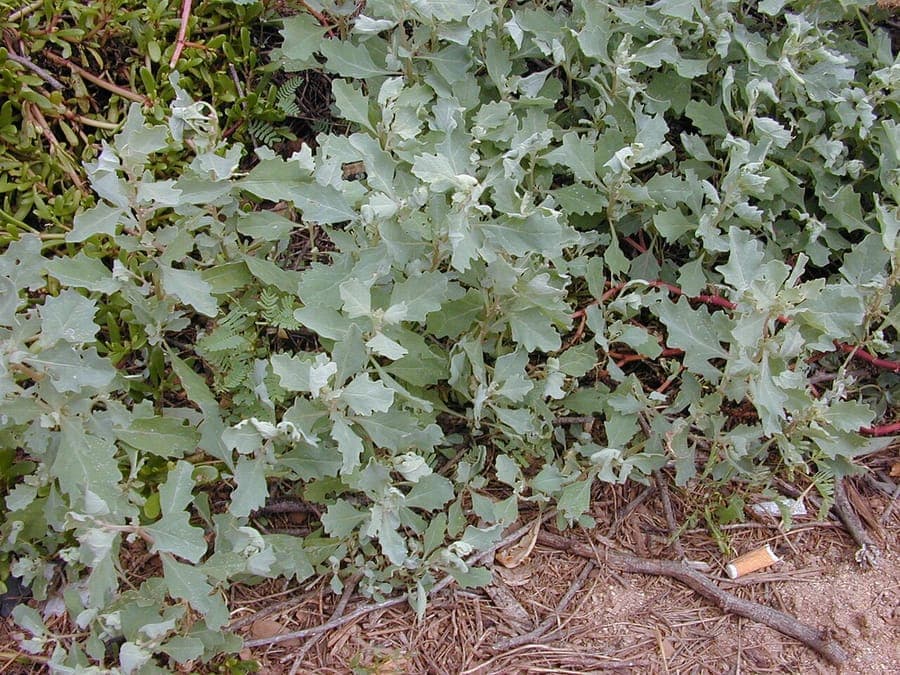
Forest & Kim Starr / CC BY 3.0, via Wikimedia Commons
Peregrine saltbush: complete guide
Atriplex suberecta
¿Quieres ver Peregrine saltbush: complete guide en tu jardín?
1 minuto, sin tarjeta de crédito
Overview
Peregrine saltbush (Atriplex suberecta) is a compact, salt-loving shrub from South Australia. This plant is known for its exceptional tolerance for salty, dry conditions and can thrive where many other plants would fail. With its grayish-green foliage and compact growth, it is a beneficial addition to dry gardens, coastal zones, and Mediterranean landscapes. The plant is native to Australia but has subsequently been introduced to many other dry regions.
Appearance and Bloom
Peregrine saltbush grows as a compact shrub, usually 30 to 60 centimeters tall. The leaves are small, green to grayish-green, oval to opposite. The plant forms a dense, rounded silhouette. The flowers are small and inconspicuous, greenish to brownish, not particularly attention-grabbing, but they give way to interesting seed heads. The seeds are provided with numerous wings that promote their dispersal by wind.
Ideal Location
Peregrine saltbush thrives in full sun on warm sites. Provide an open, sunny location with at least six hours of direct sunlight. Plant it in coastal areas where salt spray is no problem, or in dry inland regions where little rain falls. It is an excellent choice for seaside-and-sand gardens, dry slopes, and drought-resistant planting schemes. The plant can also be grown in pots on balconies and terraces.
Soil
Peregrine saltbush is very tolerant of soil, as long as it is well-drained. Sandy, gravelly, or rocky soils are ideal. It can tolerate very salty soils, making it ideal for coastal zones and areas with salt infiltration from groundwater. The plant prefers nutrient-poor, well-draining soil over rich earth. A pH of neutral to slightly alkaline is preferred. Do not add rich compost; this would promote poor growth.
Watering
Once established, Peregrine saltbush requires virtually no watering. It is very drought-tolerant and can endure long dry periods. Water only in extreme drought cases when the plant begins to suffer severely. Overwatering can lead to root rot. Under normal rainfall and humidity, supplemental water is not considered necessary.
Diseño gratis
¿Quieres ver Peregrine saltbush: complete guide en tu jardín? Crea un diseño gratis ahora.
Pruning
Pruning can be performed to keep growth compact and trim the shape, but it is not essential. Remove dead or damaged branches as needed. In spring, gentle pruning can help the plant grow to a denser silhouette.
Maintenance Calendar
Spring: Light pruning work as needed. Check drainage. April to May: Growth period begins. June to September: Bloom and seed formation. October to March: Dormancy and rest.
Winter Hardiness
Peregrine saltbush is relatively winter-hardy in temperate climates. It can survive to about USDA zone 9 (minimum temperature of -6 to -3 degrees Celsius). In colder regions, the plant will die in open ground. In temperate sea climates with mild winters, and in much of South-West Europe, it can grow permanently outdoors.
Companion Plants
Peregrine saltbush combines beautifully with other Australian natives and drought-lovers. Plant it next to Eucalyptus varieties, Hakea, dry Mediterranean shrubs, and silvery-gray Artemisia. It also works well in mixed dry-garden arrangements with Atriplex relatives and other salt-saturated coastal shrubs.
Conclusion
Peregrine saltbush is a valuable accent for coastal and dry-ground gardeners. With its exceptional salt and drought tolerance, compact growth, and minimal maintenance, it offers many practical advantages. It is ideal for ecologically conscious gardens where water-saving plant choices are important. Visit gardenworld.app for more guides on coastal gardening. Also discover more Australian plant combinations on gardenworld.app.
Praktische Tips voor Succesvolle Teelt
De sleutel tot succes met deze plant is geduld en aandacht voor de basisbehoeften. Veel tuiniers maken fouten door te veel zorg te geven in plaats van te weinig. Observatie van de plant gedurende het seizoen helpt je de perfecte balans te vinden. Raadpleeg gardenworld.app regelmatig voor updates en nieuwe technieken.
¿Quieres ver Peregrine saltbush: complete guide en tu jardín? Crea un diseño gratis ahora.
Sube una foto, elige un estilo y obtén un diseño fotorrealista con lista de plantas en menos de un minuto.
Más de 10.000 jardines diseñados
Sin tarjeta de crédito


Plantas similares
Bassia laniflora (woolly summer-cypress): complete guide
Bassia laniflora
Full guide to Bassia laniflora: origin, appearance, ideal location, soil, watering and care for this drought-tolerant annual.
Suaeda spicata: complete guide
Suaeda spicata
Everything about Suaeda spicata (spiked seablite): a rare salt-tolerant coastal succulent from the western Mediterranean and Macaronesia.
California amaranth: complete guide
Amaranthus californicus
Full guide to California amaranth (Amaranthus californicus): growing tips, ideal location, soil needs, watering, and garden design ideas.