
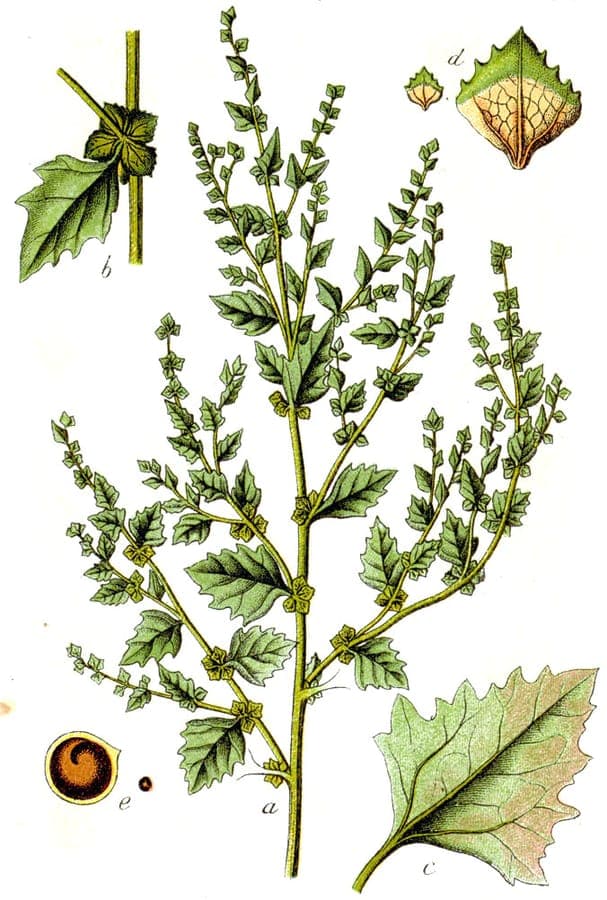
Johann Georg Sturm (Painter: Jacob Sturm) / Public domain, via Wikimedia Commons
Atriplex rosea: complete guide
Atriplex rosea
¿Quieres ver Atriplex rosea: complete guide en tu jardín?
1 minuto, sin tarjeta de crédito
Overview
Atriplex rosea, known as red orache or redscale, is an attractive annual herb from the Amaranthaceae family. Prized for distinctive red-purple foliage, it's popular as a bird-seed plant. Reaching 60 cm tall, it adds colorful summer interest. Native from Europe to Central Asia.
Appearance and Bloom
Red orache stands out for characteristic red-purple or silvery-white leaves showing color variation depending on growing conditions. Flowers are discrete within decorative seed pods changing from green to red. These pods strongly attract birds and wildlife. Blooming occurs July-September.
Ideal Location
Atriplex rosea thrives in full sun with minimum 6-7 hours direct light for optimal foliage color. In partial shade, plants appear paler. A warm, sheltered spot works best. Can be grown along border edges to attract birds.
Soil
Red orache is not particular about soil conditions and grows in most gardens. Well-draining, nutrient-rich soil promotes stronger growth. pH of 7-7.5 proves optimal. Add compost for better growth. The plant tolerates slightly saline soils.
Watering
Atriplex rosea shows moderate drought tolerance once established but grows better with regular watering. Water when soil surface feels dry. Avoid waterlogging causing root rot. In dry summers, regular watering maintains blooming and seed production.
Diseño gratis
¿Quieres ver Atriplex rosea: complete guide en tu jardín? Crea un diseño gratis ahora.
Pruning
Pruning isn't strictly necessary. Pinch tops when plant reaches 30 cm to encourage branching, resulting in fuller, more compact plants. Leave seed pods untouched so birds access food and seeds self-spread.
Maintenance Calendar
May: Sow seeds after last frost. June-July: Plants grow, begin pinching for shape. July-September: Flowering and seeding, feed birds. October: Harvest seed for next year. November-April: Winter rest, no maintenance.
Winter Hardiness
Atriplex rosea is an annual and doesn't survive winter in cold climates. In southern European regions, plants may self-seed if seeds fall to ground. In northern Europe, resow annually. Plant in May after last frost.
Companion Plants
Red orache pairs well with other summer bloomers. Sow alongside other bird-seed plants like sunflowers and teasels. Blue flowers like delphiniums and larkspurs provide color contrasts. Works well in wildflower borders.
Final Thoughts
Atriplex rosea is an easy, colorful plant attracting birds and enriching gardens. Perfect for summer borders and bird-seed gardens. Find seeds at major retailers. Visit gardenworld.app/en for more inspiration.
¿Quieres ver Atriplex rosea: complete guide en tu jardín? Crea un diseño gratis ahora.
Sube una foto, elige un estilo y obtén un diseño fotorrealista con lista de plantas en menos de un minuto.
Más de 10.000 jardines diseñados
Sin tarjeta de crédito


Plantas similares
Bassia laniflora (woolly summer-cypress): complete guide
Bassia laniflora
Full guide to Bassia laniflora: origin, appearance, ideal location, soil, watering and care for this drought-tolerant annual.
Suaeda spicata: complete guide
Suaeda spicata
Everything about Suaeda spicata (spiked seablite): a rare salt-tolerant coastal succulent from the western Mediterranean and Macaronesia.
California amaranth: complete guide
Amaranthus californicus
Full guide to California amaranth (Amaranthus californicus): growing tips, ideal location, soil needs, watering, and garden design ideas.