
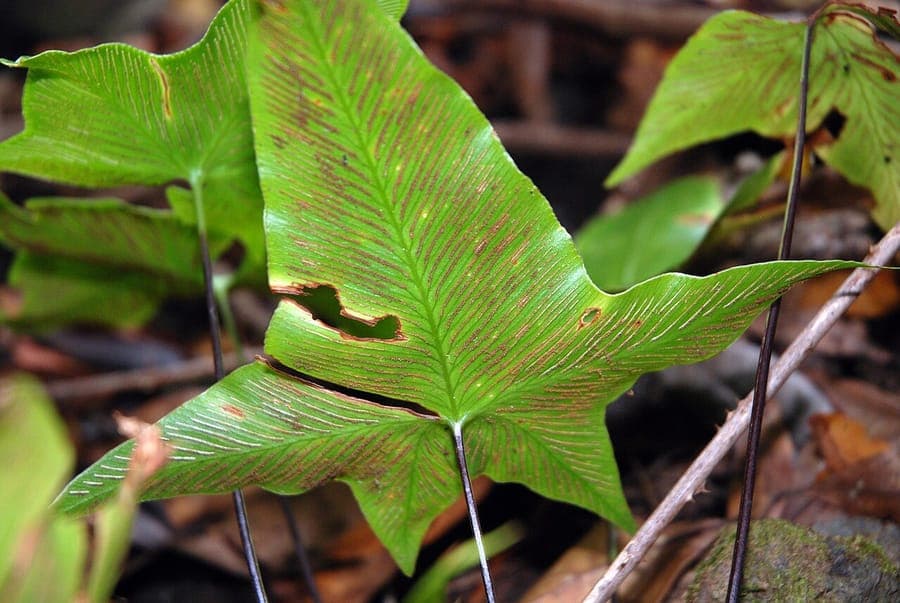
Tigerente / CC BY-SA 3.0, via Wikimedia Commons
Asplenium hemionitis: complete guide
Asplenium hemionitis
¿Quieres ver Asplenium hemionitis: complete guide en tu jardín?
1 minuto, sin tarjeta de crédito
Overview
Asplenium hemionitis, commonly known as the ivy spleenwort or heart fern, is an enchanting evergreen fern from the Aspleniaceae family. This species originates from Macaronesia and the western Mediterranean, where it grows on moist rocks and weathered cliff faces. The plant earns its common names from its characteristic heart or ivy-shaped fronds that impart an distinctly elegant appearance.
Asplenium hemionitis is a perfect choice for shaded gardens, moist corners, and indoor plant collections. The combination of delicate growth, evergreen fronds, and moisture-loving nature makes this fern suitable for many different garden environments.
Appearance and fronds
Asplenium hemionitis is a small to medium fern usually reaching 15 to 30 centimeters in height. The fronds are the most striking feature of this plant. They have a characteristic heart-shaped outline, usually with 5 to 11 deep lobes that make the fronds resemble oak leaves or palmate divisions.
Frond color varies from bright green to dark green, depending on growing conditions and light intensity. Younger fronds may display a light yellow-green tint, while older fronds become darker and more intensely green.
This fern lacks true flowers; instead, it produces spores on the underside of fronds. The sori (spore clusters) are linear and dark brown, visible as fine lines beneath fronds when the plant reproduces.
Ideal location
Asplenium hemionitis is a shade-loving plant that naturally grows beneath overhanging rocks and in moist, shaded forest environments. For optimal growth, position this fern in a location with filtered light or partial shade - receiving minimum 3-4 hours of indirect daylight daily.
Direct intense sun burns the fronds and causes color loss. Avoid locations directly before windows where harsh midday sun penetrates.
Indoors, Asplenium hemionitis grows excellently in well-lit spots away from direct sun, such as east or west-facing windows with curtains.
Soil type
Asplenium hemionitis requires very moist, well-draining growing medium. In gardens, compose a substrate containing substantial organic matter - minimum 40-50 percent leaf mold, compost, or peat moss.
The pH preference is slightly acidic to neutral (pH 6.0-7.0). Add broken stones or angular gravel to the growing medium to improve drainage and air circulation around roots.
In pots, use a specialized fern mix or a blend of 40 percent leaf mold, 30 percent orchid bark, 20 percent perlite, and 10 percent sand.
Diseño gratis
¿Quieres ver Asplenium hemionitis: complete guide en tu jardín? Crea un diseño gratis ahora.
Watering
Asplenium hemionitis is a moisture-loving fern requiring consistently moist growing conditions. Never allow the substrate to dry completely, but equally avoid waterlogged conditions.
During growth periods (spring and summer), water regularly, possibly 2-3 times weekly depending on weather and temperature. The substrate should feel like a squeezed-out sponge - moist but not dripping wet.
In winter, you can reduce watering frequency slightly, but continue regular watering since ferns lack true dormancy periods.
Soft water (rainwater or distilled water) is preferable to tap water with high mineral content, as ferns are sensitive to fluorine and calcium salts.
Maintenance and pruning
Asplenium hemionitis requires minimal pruning. Regularly remove yellow, damaged, or dead fronds by gently pulling them off at the base.
Aging, lower fronds naturally replace with new growth. This is normal and not a sign of disease.
Gently clean frond dust with a soft brush or sponge and distilled water, ensuring pores containing spores remain unobstructed.
Maintenance calendar
January-February: Minimal maintenance, moderate watering, no feeding.
March-April: Begin growth phase, water regularly, moderate feeding every 4 weeks.
May-June: Full growth, consistent watering, regular feeding.
July-September: Growth continues, ensure adequate moisture, light feeding.
October-November: Growth slows, reduce watering, cease feeding.
December: Dormant period, minimal maintenance, regular watering.
Winter hardiness
Asplenium hemionitis is not winter hardy in cold climates. The plant originates from subtropical and Mediterranean regions and cannot tolerate frost. In areas experiencing subzero temperatures, this plant is strictly a houseplant or greenhouse specimen.
The plant grows best at temperatures between 15-25 degrees Celsius. Below 10 degrees, growth ceases. Avoid drafty locations or sudden temperature fluctuations.
Companion plants
Asplenium hemionitis combines well with other shade-loving plants:
- Other small ferns (Polystichum setiferum, Adiantum capillus-veneris)
- Begonia rex cultivars
- Hosta species
- Epipremnum pinnatum
- Small-stemmed Philodendron species
Closing
Asplenium hemionitis is an enchanting choice for gardeners seeking an elegant, moisture-loving fern. With its heart-shaped fronds, compact growth, and unique texture, this plant adds value to any shaded garden corner or indoor plant collection.
You can obtain this plant through online nurseries and specialized fern growers. Provide moist growing conditions, filtered light, and regular watering, and Asplenium hemionitis will reward you with years of enjoyment. Visit gardenworld.app for more advice on moisture-loving plants and shaded garden designs.
¿Quieres ver Asplenium hemionitis: complete guide en tu jardín? Crea un diseño gratis ahora.
Sube una foto, elige un estilo y obtén un diseño fotorrealista con lista de plantas en menos de un minuto.
Más de 10.000 jardines diseñados
Sin tarjeta de crédito


Plantas similares
Mountain spleenwort: complete guide
Asplenium montanum
Everything about mountain spleenwort fern: cultivation, care, growing conditions and proper maintenance for your garden
Western spleenwort: complete guide
Asplenium vespertinum
The Western spleenwort (Asplenium vespertinum) is a delicate fern from California with fine, feathery fronds. Learn about care, location, and overwintering in this comprehensive guide.
Asplenium cirrhatum: complete guide
Asplenium cirrhatum
Discover the chestnut scale spleenwort, a tropical fern full of elegance. Learn how to care for this exotic plant at home.