
Joanbanjo / CC BY-SA 4.0, via Wikimedia Commons
Asplenium ceterach: complete guide
Asplenium ceterach
¿Quieres ver Asplenium ceterach: complete guide en tu jardín?
1 minuto, sin tarjeta de crédito
Overview
Asplenium ceterach, known as rusty-backed fern or scaly spleenwort, is a fascinating evergreen fern that naturally grows on rocky walls and in caves from Europe to Tibet. This compact fern distinguishes itself through unique fronds with prominent golden-brown to rust-colored scales on the underside. It is a popular choice for rock gardens, steep borders and window boxes due to its preference for well-draining conditions and its ability to grow on very limited soil.
Rusty-backed fern is particularly valuable for gardeners wanting something interesting for dark, difficult corners or rock walls where other plants refuse to grow. The fern grows year-round, although winter growth is slower. With its elegant, characteristic appearance, rusty-backed fern makes a strong visual impression in any garden.
Appearance
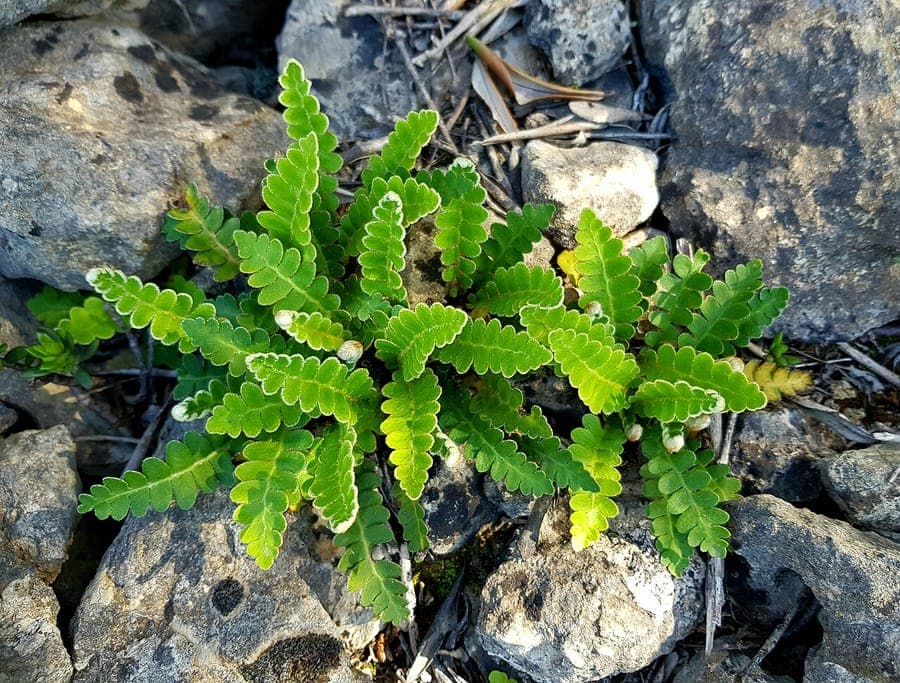
Rusty-backed fern produces soft, feathery fronds that grow 15 to 30 centimeters long. The fronds are deeply twice-pinnate with fine texture. What makes this fern truly special, however, are the prominent rust to golden-brown scales covering the underside of the midrib. These scales give the fern a warm, bronze appearance, especially when sunlight hits them.
The plant grows in rosettes that slowly expand. Mature plants can reach 20 to 40 centimeters wide but remain relatively compact. The fronds are soft green to deeper green and remain on the plant year-round.
Like all ferns, rusty-backed fern produces no flowers or seeds, but reproduction occurs via spores. The sporangia are found on the underside of the fronds and covered by pale indusia.
Ideal location
Rusty-backed fern is known as the most drought-tolerant fern and can grow in many difficult locations. It grows best in part shade to shade, receiving at least four hours of indirect light daily. However, it can tolerate considerable direct morning sun, especially in cooler climates.
Rusty-backed fern naturally grows in rock crevices and walls, so give it vertical growing space in these conditions. A rock garden, stone wall or rocks are ideal. It also grows well in containers and hanging baskets when given sufficiently well-drained soil.
The plant is very hardy and tolerates cold well. In warm climates where it grows year-round, it prefers some afternoon shade in summer to prevent desiccation.
Soil type
Rusty-backed fern has very specific soil needs. It craves well-drained, loose, porous soil. The ideal mix contains lots of gravel, perlite or coarse sand to ensure no water stagnates.
Of all factors, drainage is most critical. If water sits around the roots, the plant will quickly die. Use a mix containing at least 50 percent mineral aggregate. A typical mix for rusty-backed fern might be: 30 percent fine sand, 30 percent gravel or perlite, 20 percent leaf mould or peat, and 20 percent compost.
The plant grows well on very poor soil and needs little feeding. Moderate pH between 7.5 and 8.0 is preferred, so alkaline soil is fine.
Diseño gratis
¿Quieres ver Asplenium ceterach: complete guide en tu jardín? Crea un diseño gratis ahora.
Watering
Rusty-backed fern is very drought-tolerant once established, making it ideal for dry spots. However, young plants and newly planted specimens need regular moisture until well established.
The plant prefers periodic thorough watering over constant moisture. Water deeply and then let the soil completely dry before the next watering. This usually only happens once every three weeks during the growing period.
In winter, when growth slows, water much less. In regions with heavy rainfall, supplemental watering may be avoided entirely.
Watering in the morning is better than evening, as this helps prevent moisture-related diseases.
Pruning
Rusty-backed fern needs little pruning, so it is not a demanding plant for maintenance. Remove only dead or damaged fronds as they occur. This can be done year-round.
If the plant becomes large and dense, you can gently remove old fronds from the base to improve air circulation and light. This also stimulates new growth. Do this in early spring for best results.
Although rusty-backed fern can be divided, this is not necessary for health. Only if you want extra plants can you carefully separate young rosettes in early spring.
Maintenance calendar
January to March: Minimal feeding, no watering needed unless extremely dry. Remove dead fronds. Possible plant division.
April to May: Growth period beginning, start gentle watering (once per two weeks), no feeding needed.
June to July: Active growth, watering once every two to three weeks, no feeding.
August to September: Growth stabilizes, reduce watering to once per four weeks, no feeding.
October to December: Prepare for winter dormancy, minimal watering, no feeding, check for moisture-related problems.
Winter hardiness
Rusty-backed fern is very hardy and is an evergreen plant in many regions. It can withstand temperatures below -15 degrees Celsius without damage. The plant remains green through winter, although growth stops.
In very cold regions where snow is heavy, protective mulching may be useful. Ensure gutters and rainwater drain well so water doesn't stagnate around the crown, which can cause rot.
In mild climates, rusty-backed fern grows practically year-round. In warmer regions with dry summers, provide some shade to prevent desiccation.
Companion plants
Rusty-backed fern combines well with other rock-dwelling plants requiring the same conditions:
Saxifraga blooms in spring and provides nice contrast.
Alpine phlox fits well in rock gardens alongside rusty-backed fern.
Origonum species and thyme add aromatic texture.
Orostachys and other alpine plants form good plantings.
Dwarf junipers and other small ferns create interesting layering.
Conclusion
Rusty-backed fern is an exceptional plant for gardeners wanting a versatile, evergreen fern for difficult spots. With its characteristic golden-brown scales, compactness and drought tolerance, it is ideal for rock gardens, wall planting and containers.
With good drainage as the key to success, rusty-backed fern will provide pleasure for years with minimal maintenance. It is perfect for gardeners wanting something interesting and unique for dark, dry corners.
Looking for quality rusty-backed fern plants? Visit your local garden center for expert help. At gardenworld.app, find designs that optimally use rock plants. Bring elegant ferns to your difficult garden corners with rusty-backed fern.
Want more advice or designs featuring rusty-backed fern? Visit gardenworld.app for personalized garden designs.
¿Quieres ver Asplenium ceterach: complete guide en tu jardín? Crea un diseño gratis ahora.
Sube una foto, elige un estilo y obtén un diseño fotorrealista con lista de plantas en menos de un minuto.
Más de 10.000 jardines diseñados
Sin tarjeta de crédito


Plantas similares
Mountain spleenwort: complete guide
Asplenium montanum
Everything about mountain spleenwort fern: cultivation, care, growing conditions and proper maintenance for your garden
Western spleenwort: complete guide
Asplenium vespertinum
The Western spleenwort (Asplenium vespertinum) is a delicate fern from California with fine, feathery fronds. Learn about care, location, and overwintering in this comprehensive guide.
Asplenium cirrhatum: complete guide
Asplenium cirrhatum
Discover the chestnut scale spleenwort, a tropical fern full of elegance. Learn how to care for this exotic plant at home.