
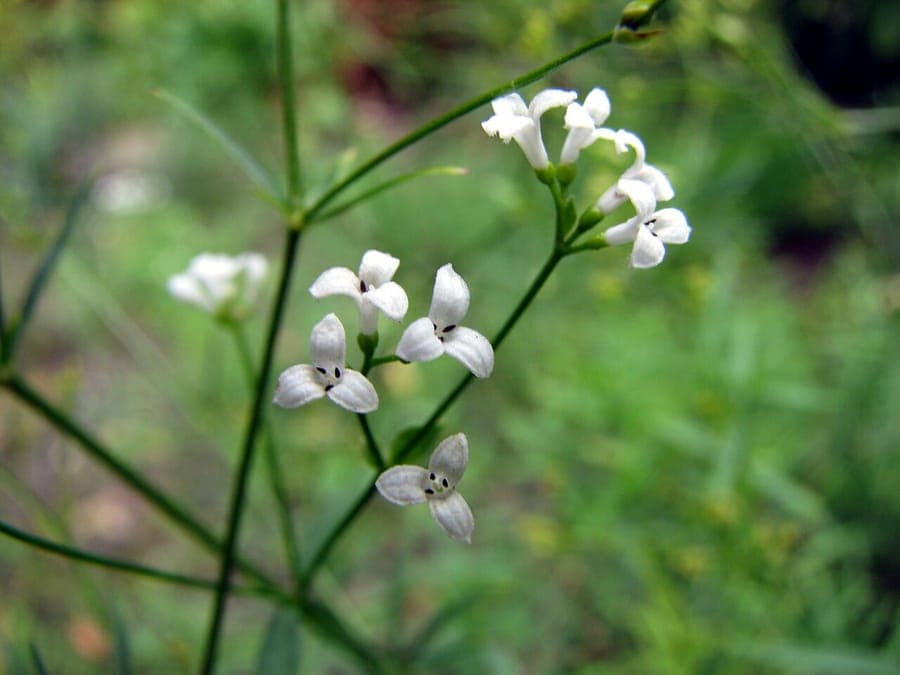
Agnieszka Kwiecień, Nova / CC BY 3.0, via Wikimedia Commons
Asperula tinctoria: complete guide
Asperula tinctoria
¿Quieres ver Asperula tinctoria: complete guide en tu jardín?
1 minuto, sin tarjeta de crédito
Overview
Asperula tinctoria, commonly known as dyer's woodruff or Färber-Meister, is a delicate, flowering plant from the Rubiaceae family. Native to Europe and Western Siberia, this is an excellent choice for gardeners combining frost hardiness with elegant blooms. With its fine foliage and numerous small flowers, it adds texture and color to dry to moderate gardens. The plant also has historical value as a natural dye source.
Appearance and Bloom
Asperula tinctoria is characterized by its slender, fine stems with small, linear leaves that grow elegantly upright. The plant typically reaches 25-40 cm height. Flowers appear from May to July in pink to purple shades in dense, round clusters. Small fruits form after blooming. Foliage remains green throughout the growing season, adding fine texture.
Ideal Location
This plant thrives in full sun locations and tolerates partial shade well. Choose a spot receiving 4-6 hours of direct daily sunlight. Asperula tinctoria is suited to dry, warm garden corners. Good air circulation helps prevent disease problems. Wind is no issue and is well tolerated.
Soil Requirements
The plant grows best in well-draining, lean soil. Heavy clay soils should be amended with sand or gravel. Neutral to slightly alkaline soil (pH 7.0-7.5) provides optimal growth. However, the plant tolerates moderately acidic to neutral conditions. Rich, moist soils can lead to weak growth.
Diseño gratis
¿Quieres ver Asperula tinctoria: complete guide en tu jardín? Crea un diseño gratis ahora.
Watering
Asperula tinctoria is extremely drought-tolerant once established. Regular watering during the first growing season helps establishment. Once established, water only in severe, extended droughts. Excessive moisture causes root rot. In winter, practically no water is needed; soil can remain lean-dry.
Pruning
Cutting back after flowering to 15 cm height promotes dense growth and possible second flowering. Removing spent flower clusters ensures neatness. In spring, remove dead wood. The plant responds well to pruning and recovers quickly.
Maintenance Calendar
March-April: Remove dead winter wood. May-June: Flowering period, minimal maintenance, regular watering. July-August: Cut back after blooming for possible second flush. September-October: Prepare for winter. November-February: Dormancy, no maintenance needed.
Winter Hardiness
Asperula tinctoria is extremely winter hardy to USDA zone 4 (-30 degrees Celsius) and thrives in all Netherlands and Belgian gardens. The plant dies back to ground in severe winters but regrows each spring. No winter protection needed under normal conditions.
Companion Plants
Asperula tinctoria combines beautifully with other drought-tolerant and frost-hardy plants: salvia, lavender, cistus, santolina, and gray-foliaged companions. The fine, pink flowers contrast nicely with yellow or white-flowering species.
Final Thoughts
Asperula tinctoria is an underrated gem for dry, sunny gardens. With its elegant appearance, robust frost hardiness, and historical significance, it makes an excellent choice. Plant in groups for best visual effect in borders.
Available at quality garden centers. Look for it under 'dyer's woodruff' or search specialty perennial suppliers.
¿Quieres ver Asperula tinctoria: complete guide en tu jardín? Crea un diseño gratis ahora.
Sube una foto, elige un estilo y obtén un diseño fotorrealista con lista de plantas en menos de un minuto.
Más de 10.000 jardines diseñados
Sin tarjeta de crédito


Plantas similares
Oregon bedstraw: complete guide
Galium oreganum
Everything about Oregon bedstraw (Galium oreganum): shade planting, soil requirements, care and use as a low groundcover in woodland and shade gardens.
Awned woodruff: complete guide
Asperula aristata
Full guide to growing Asperula aristata, the awned woodruff: sunny location, alkaline soil, minimal watering, and companion plants for dry or rock gardens.
Purple woodruff: complete guide
Asperula purpurea
Full guide to Asperula purpurea, purple woodruff: sunny sites, chalky soil, watering, pruning, winter hardiness and companion plants for rock and dry gardens.