
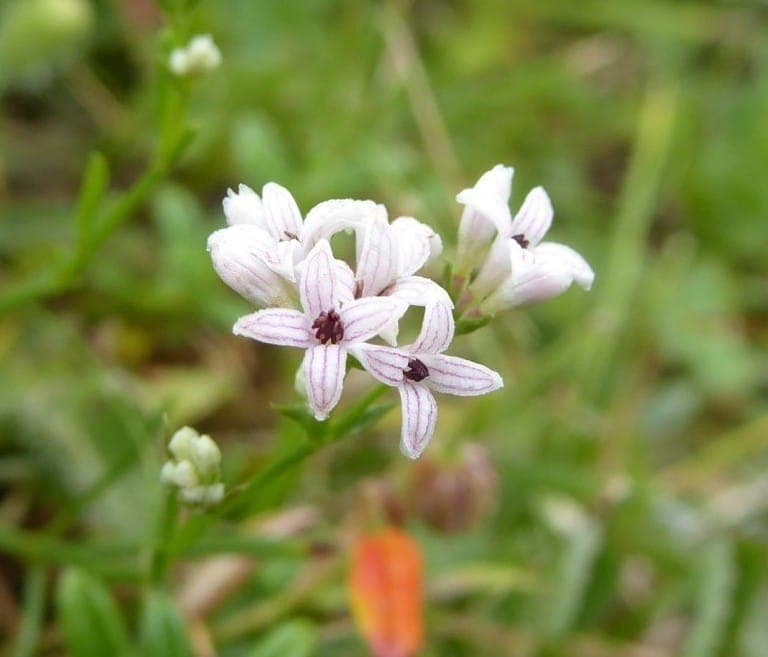
E Wusk / CC BY-SA 4.0, via Wikimedia Commons
Squinancywort: complete guide
Asperula cynanchica
¿Quieres ver Squinancywort: complete guide en tu jardín?
1 minuto, sin tarjeta de crédito
Overview
Squinancywort (Asperula cynanchica), also known as Herbe a lesquinancie, is a delicate southern European plant from the Rubiaceae family. This fine, low-growing specimen grows naturally in lime-rich mountainous regions throughout southern Europe. The plant is renowned for its pink to purple flowers and preference for dry, chalky soils.
In historical times, the plant was used for various medicinal purposes. Today it is primarily valued as an ornamental plant by gardeners creating alpine or rocky landscapes.
Appearance and bloom
Squinancywort forms low, dense mats of fine, tiny leaves. The plant reaches only 10-30 cm tall, making it ideal for foreground plantings and rock gardens. The leaves are thread-like and extremely delicate in texture.
The flowers are small but charming, appearing from June through September in soft pink to purple clusters. While individual flowers are tiny, the mass creates a charming effect. After blooming, small seeds form, allowing self-seeding.
Ideal location
Squinancywort thrives in full sun to light shade locations. Ensure the plant receives at least 4-5 hours of direct sunlight daily. This low-growing specimen is perfect for rock gardens, between gravel, and in alpine troughs.
The plant grows well on slopes and raised beds where drainage is excellent. For more planting ideas, visit gardenworld.app/en.
Soil
Squinancywort is a typical lime-lover preferring well-draining, chalk-rich soil. The ideal pH is between 7.5 and 8.0. Sandy, gravelly, or scree soil with stones is ideal for this plant.
Avoid heavy clay or moisture-prone soils. Add sand or gravel to improve terrestrial conditions. The plant grows well in stone gardens where minimal organic matter is present.
Diseño gratis
¿Quieres ver Squinancywort: complete guide en tu jardín? Crea un diseño gratis ahora.
Watering
Once established, Squinancywort is very drought tolerant. It actually prefers dry soil to moist. Provide regular water in the first growing season until established, then minimal water.
In wet regions or winters with heavy rainfall, no supplemental watering is needed. Avoid waterlogged soils which cause root rot.
Pruning
Minimal pruning required. After blooming, dead flower clusters can be carefully removed. The plant doesn't need cutting back unless it becomes too lush.
Avoid aggressive pruning, which can damage the delicate plant. Allow seed heads to ripen for self-seeding.
Maintenance calendar
Spring: Plant can be gently cleaned. Water only in very dry periods.
Summer: Provide minimal water. Enjoy the pink flowers. Seeds self-sow naturally.
Autumn: Allow seed heads to ripen. No watering needed.
Winter: Plant is dormant. Ensure good drainage against wet soil.
Winter hardiness
Squinancywort is winter hardy through zone 5, though better in zone 6+. The plant thrives better in temperate alpine climates. Extreme cold without good drainage can be problematic.
Extra drainage helps in wet winters. Mulch is not recommended due to rot risk.
Companion plants
Squinancywort pairs beautifully with:
- Other alpine plants
- Drought-tolerant specimens
- Low-growing sedums
- Ground cover species
Plant with adequate spacing for air movement. Avoid dense neighbors that might restrict moisture escape.
Closing
Squinancywort is a treasure for gardeners with dry, lime-rich soils. The delicate pink flowers and low growth make it perfect for alpine and rocky landscapes. With minimal care, this plant thrives faithfully through seasons.
Want to discover more alpine plants? Visit gardenworld.app/en for more garden inspiration.
¿Quieres ver Squinancywort: complete guide en tu jardín? Crea un diseño gratis ahora.
Sube una foto, elige un estilo y obtén un diseño fotorrealista con lista de plantas en menos de un minuto.
Más de 10.000 jardines diseñados
Sin tarjeta de crédito


Plantas similares
Oregon bedstraw: complete guide
Galium oreganum
Everything about Oregon bedstraw (Galium oreganum): shade planting, soil requirements, care and use as a low groundcover in woodland and shade gardens.
Awned woodruff: complete guide
Asperula aristata
Full guide to growing Asperula aristata, the awned woodruff: sunny location, alkaline soil, minimal watering, and companion plants for dry or rock gardens.
Purple woodruff: complete guide
Asperula purpurea
Full guide to Asperula purpurea, purple woodruff: sunny sites, chalky soil, watering, pruning, winter hardiness and companion plants for rock and dry gardens.