
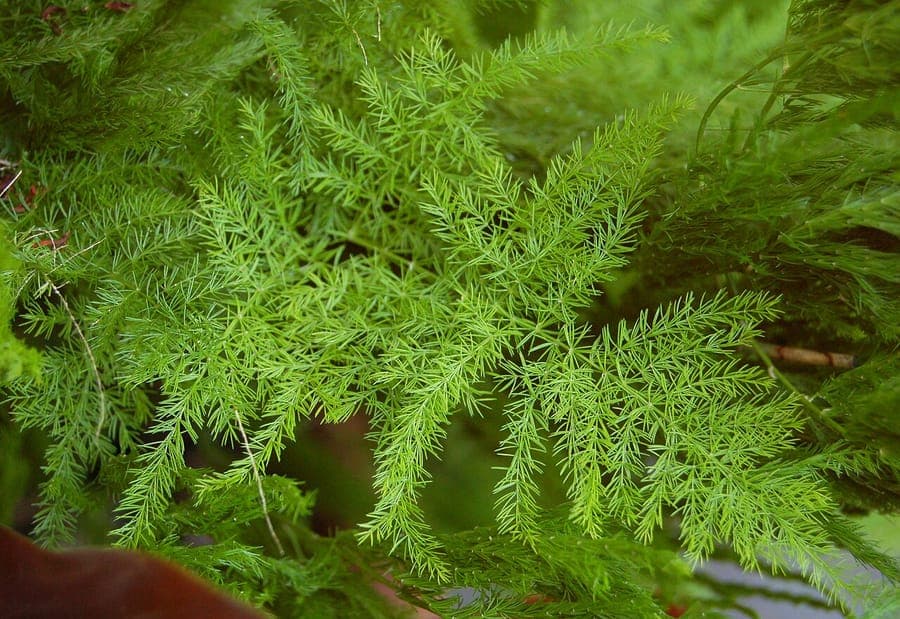
Photo by and (c)2006 Derek Ramsey (Ram-Man). Location credit to the Chanticleer Garden. / CC BY-SA 3.0, via Wikimedia Commons
Asparagus setaceus: complete guide
Asparagus setaceus
¿Quieres ver Asparagus setaceus: complete guide en tu jardín?
1 minuto, sin tarjeta de crédito
Overview
Asparagus setaceus, popularly known as wedding fern or bridal fern, is an elegant, delicate plant from the Asparagaceae family. This unique African native is renowned for its extremely fine, lacy foliage reminiscent of a bride's veil. This delicate appearance gives the plant its charming common name. It is a classic houseplant choice, adding soft elegance to any interior.
Appearance and Bloom
Asparagus setaceus is characterized by its extremely fine, lacy green foliage. The leaves are so delicate and finely divided they appear almost gauzy. The plant grows in upright forms, typically reaching 100-150 cm height with numerous graceful stems. Small white flowers appear in summer, but the plant is primarily valued for its foliage. Year-round green leaves provide continuous appeal.
Ideal Location
This plant thrives in bright, indirect light positions. Direct sunlight can cause leaf scorch. A position near a window with diffused light is ideal. Indoors, it can grow in moderate light, though growth will slow. Protect from strong drafts and dry, hot air that can cause leaf drop.
Soil Requirements
Use loose, nutrient-rich potting soil with excellent drainage. A blend of garden compost and perlite is perfect. The plant prefers neutral to slightly acidic conditions. Regular feeding during the growing season with balanced fertilizer supports healthy growth.
Diseño gratis
¿Quieres ver Asparagus setaceus: complete guide en tu jardín? Crea un diseño gratis ahora.
Watering
Keep soil consistently moist but never waterlogged. The plant is sensitive to dryness, so monitor moisture levels regularly. Mist foliage regularly with water to maintain high humidity and remove dust. Water less in winter, but never let soil completely dry out.
Pruning
Pruning is not necessary for healthy growth, but you can remove hanging or damaged parts. Work carefully as foliage is very delicate. Remove dead or yellowing leaves regularly to maintain plant health.
Maintenance Calendar
March-May: Growing season begins, regular feeding and watering. June-August: Peak growth cycle, weekly feeding, regular misting. September-October: Gradually reduce feeding. November-February: Rest period, minimal feeding.
Winter Hardiness
Asparagus setaceus is not winter hardy outdoors in cold climates. In Netherlands and Belgium, it can be outdoors only from May to September. Bring indoors before temperatures fall below 10C. Indoors, it grows year-round under suitable conditions (15-20C).
Companion Plants
As a decorative plant, it combines beautifully with other fine-foliaged specimens like polystichum ferns. It also works well as a solo specimen in an attractive pot. In mixed arrangements, it adds texture and elegance.
Final Thoughts
Asparagus setaceus is a classic choice for elegant indoor collections. While it requires more attention than some houseplants, the rewards are a spectacular, delicate specimen that commands admiration. Ideal for those who value elegance and patience.
Available at quality garden centers including OBI and Hornbach.
¿Quieres ver Asparagus setaceus: complete guide en tu jardín? Crea un diseño gratis ahora.
Sube una foto, elige un estilo y obtén un diseño fotorrealista con lista de plantas en menos de un minuto.
Más de 10.000 jardines diseñados
Sin tarjeta de crédito


Plantas similares
Narrow-leaved dracaena: complete guide
Dracaena angustifolia
Everything about Dracaena angustifolia - the narrow-leaved dracaena: location, care, overwintering and use as a houseplant or patio plant.
Chaparral yucca: complete guide to Hesperoyucca whipplei
Hesperoyucca whipplei
Hesperoyucca whipplei (Our Lord's candle) is a dramatic rosette-forming plant from California that produces a towering flower spike, ideal for dry and gravel gardens.
False lily-of-the-valley: complete guide
Maianthemum dilatatum
Everything about Maianthemum dilatatum, the false lily-of-the-valley. Care, shade location, propagation and garden combinations for this popular shade ground cover.