
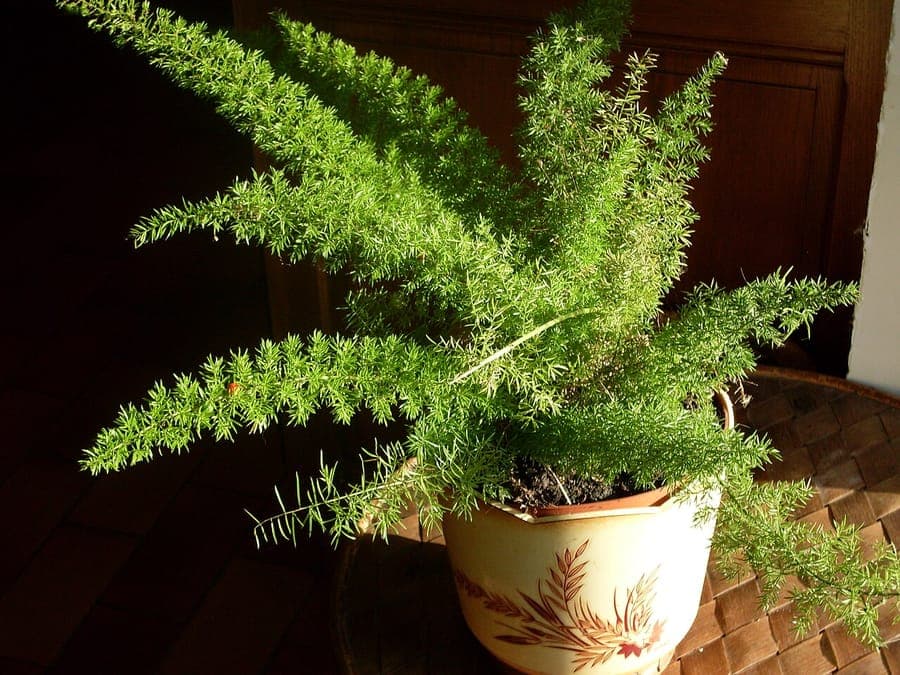
Traumrune / CC BY-SA 3.0, via Wikimedia Commons
Asparagus densiflorus: complete guide
Asparagus densiflorus
¿Quieres ver Asparagus densiflorus: complete guide en tu jardín?
1 minuto, sin tarjeta de crédito
Overview
Asparagus densiflorus, known as Sprenger's asparagus fern or ornamental asparagus, is a lush decorative plant from South Africa. This beautiful member of the Asparagaceae family is extremely popular as a houseplant due to its ornamental, feathery foliage. With its dense, trailing growth habit, it creates an attractive visual display in hanging baskets or elevated planters. The plant grows quickly and is excellent for beginners.
Appearance and Bloom
Asparagus densiflorus is characterized by its fine, green foliage with a plume-like texture. The plant grows in dense, cascading forms, typically reaching 30-60 cm with numerous trailing stems. Small white flowers appear during summer, followed by red berries that persist year-round. The overall appearance is elegant and highly ornamental.
Ideal Location
This plant flourishes in bright, indirect light. Avoid direct sunlight, especially in summer, as it can cause leaf scorch. Indoors, a position near an east or north-facing window is ideal. The plant tolerates moderate shade well but grows faster in brighter light. In gardens, it can grow in partial to full shade.
Soil Requirements
Use loose, nutrient-rich potting soil with good drainage. A blend of garden compost with perlite works perfectly. The plant prefers neutral to slightly acidic conditions. Ensure pots drain excellently to prevent rot.
Diseño gratis
¿Quieres ver Asparagus densiflorus: complete guide en tu jardín? Crea un diseño gratis ahora.
Watering
Keep soil consistently moist but do not allow it to dry completely between waterings. Water more frequently during growth periods (spring-summer) than during rest. Monitor moisture levels regularly. Excessive water causes root rot. In winter, water less frequently, only several times weekly.
Pruning
Pruning helps keep the plant compact and dense. Trim trailing stems for a neater appearance. Remove dead or yellowing leaves regularly. The plant responds well to pruning and flowers better after light trimming.
Maintenance Calendar
March-April: Growth period begins, regular feeding starts. May-July: Full growth cycle, weekly feeding and watering. August-September: Gradually reduce feeding. October-February: Dormancy, minimal care.
Winter Hardiness
Asparagus densiflorus is not winter hardy outdoors in cold regions. In Netherlands and Belgium, it can be outdoors only from May to September. Bring indoors before temperatures drop below 10C. Indoors, it grows year-round under suitable conditions.
Companion Plants
As a trailing plant, it combines perfectly with other fine-foliaged specimens. In mixed containers, use with other shade-tolerant plants. It creates beautiful contrast with dark-foliaged companions.
Final Thoughts
Asparagus densiflorus is an ideal choice for hanging baskets and elevated planters. It grows quickly, is low-maintenance, and provides year-round decoration. Perfect for those wanting lush, green displays without complex care requirements.
Available at quality garden centers including OBI and Hornbach.
¿Quieres ver Asparagus densiflorus: complete guide en tu jardín? Crea un diseño gratis ahora.
Sube una foto, elige un estilo y obtén un diseño fotorrealista con lista de plantas en menos de un minuto.
Más de 10.000 jardines diseñados
Sin tarjeta de crédito


Plantas similares
Narrow-leaved dracaena: complete guide
Dracaena angustifolia
Everything about Dracaena angustifolia - the narrow-leaved dracaena: location, care, overwintering and use as a houseplant or patio plant.
Chaparral yucca: complete guide to Hesperoyucca whipplei
Hesperoyucca whipplei
Hesperoyucca whipplei (Our Lord's candle) is a dramatic rosette-forming plant from California that produces a towering flower spike, ideal for dry and gravel gardens.
False lily-of-the-valley: complete guide
Maianthemum dilatatum
Everything about Maianthemum dilatatum, the false lily-of-the-valley. Care, shade location, propagation and garden combinations for this popular shade ground cover.