
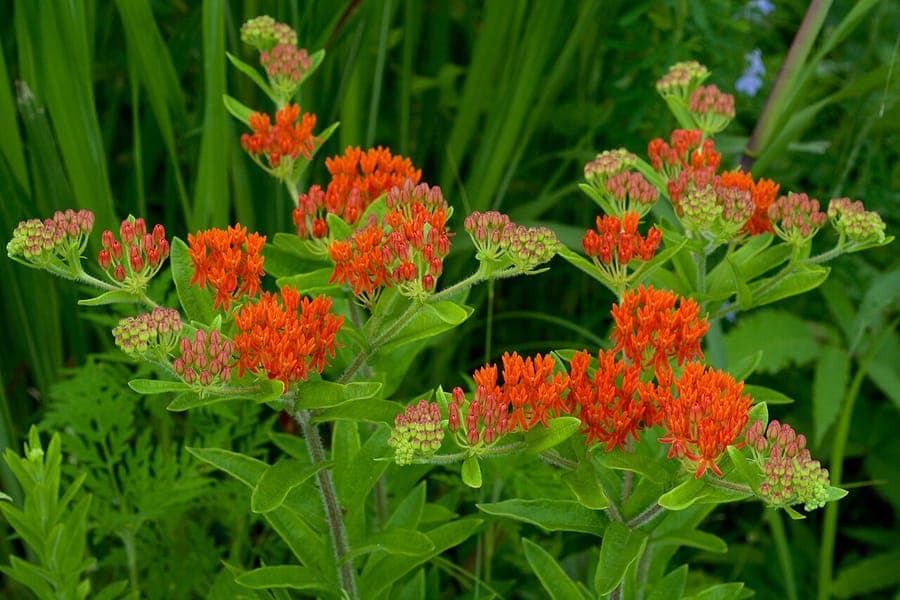
Eric Hunt / CC BY-SA 4.0, via Wikimedia Commons
Butterfly milkweed: complete guide
Asclepias tuberosa
¿Quieres ver Butterfly milkweed: complete guide en tu jardín?
1 minuto, sin tarjeta de crédito
Overview
Butterfly milkweed (Asclepias tuberosa), also called butterfly flower, orange milkweed, or pleurisy root, is a spectacular North American native plant from the Apocynaceae family. This plant is celebrated for its brilliant orange to yellow flower clusters that appear against lovely green foliage. It is essential host plant for monarch butterflies and a truly gorgeous addition to sunny gardens.
Unlike many Asclepias species, this plant prefers drier soils and thrives in challenging conditions. This makes it ideal for gardeners with limited water in sandy or gravelly locations.
Appearance and bloom
Butterfly milkweed grows 30-70 cm tall with stiff, upright stems. The leaves are narrow, lance-shaped and densely arranged on stems. The flowers are the true highlight: they appear in dense clusters of vivid orange to yellow flowers, typically May through July.
The flowers have a unique corona structure. After blooming, elongated seed pods develop, carefully split open to release silky-haired seeds for wind dispersal. The seed pods themselves are beautiful and valuable for bird food.
Ideal location
Butterfly milkweed grows best in full sun locations. At least 6 hours of direct sunlight is required for optimal flowering. This is truly a full-sun plant; shade results in weak growth and fewer flowers.
The plant is ideal for dry slopes, rock gardens, and foreground plantings. For more planting guidance, visit gardenworld.app/en.
Soil
Butterfly milkweed prefers well-draining soil and tolerates poor soils well. It grows best in sandy, gravelly or gritty soils. Heavy clay is unsuitable without significant drainage improvement.
Ensure your soil drains well by adding sand, gravel, or perlite if needed. The plant can thrive in poor soil and has strong root systems that penetrate deeply.
Diseño gratis
¿Quieres ver Butterfly milkweed: complete guide en tu jardín? Crea un diseño gratis ahora.
Watering
Once established, Butterfly milkweed is considerably drought tolerant. In the first growing season, water regularly until plants are well established. Thereafter, regular rainfall is usually sufficient, especially in temperate climates.
When growing in containers or shadier locations, some supplemental water may be needed. Over-watering must be avoided, especially in clay soils.
Pruning
Minimal pruning is required. You may remove old flower clusters after blooming, though not strictly necessary. After winter, dead stems can be cut back close to ground level.
The plant is actually more attractive left to grow without much maintenance pruning. Avoid aggressive cutting, which can suppress growth and flowering.
Maintenance calendar
Spring: Cut back dead stems. Water only if soil is very dry. Plant may grow slowly.
Summer: Follow regular watering. Enjoy the orange flowers. Deadheading optional.
Autumn: Stop watering. Let seed pods mature for bird food.
Winter: Plant is dormant. No water or maintenance needed.
Winter hardiness
Butterfly milkweed is winter hardy through zone 3, thriving in virtually all temperate climates. Above-ground portions die back in winter, but plants regenerate reliably each spring.
The strong, tuber-like roots insulate themselves deep in the soil. Extra mulch is not needed and can actually be harmful in wet winters through rotting.
Companion plants
Butterfly milkweed pairs well with:
- Drought-tolerant plants
- Other native flowering plants
- Rock gardens
- Sandy and gravelly areas
- Full-sun borders
Give plenty of space since this species dislikes water competition from neighbors.
Closing
Butterfly milkweed is an excellent choice for gardeners with dry locations and full sun. The spectacular orange flowers, drought tolerance, and essential role for monarchs make it a must-have. With minimal care, this plant flowers reliably year after year.
Want to discover more drought-tolerant plants? Visit gardenworld.app/en for more inspiring ideas.
¿Quieres ver Butterfly milkweed: complete guide en tu jardín? Crea un diseño gratis ahora.
Sube una foto, elige un estilo y obtén un diseño fotorrealista con lista de plantas en menos de un minuto.
Más de 10.000 jardines diseñados
Sin tarjeta de crédito


Plantas similares
Asclepias speciosa: complete guide
Asclepias speciosa
Showy milkweed: striking pink-white flowers, fragrant blooms. Essential monarch butterfly host plant.
Plumeria obtusa: complete guide
Plumeria obtusa
Discover the Singapore graveyard flower: an exotic evergreen with mesmerizing white blooms and exquisite fragrance. Expert cultivation, care, and maintenance tips.
Wrightia arborea: complete guide
Wrightia arborea
Wrightia arborea, known as doodhi, is an elegant tree from South Asia with delicate white flowers. Discover how to cultivate this exotic plant.