
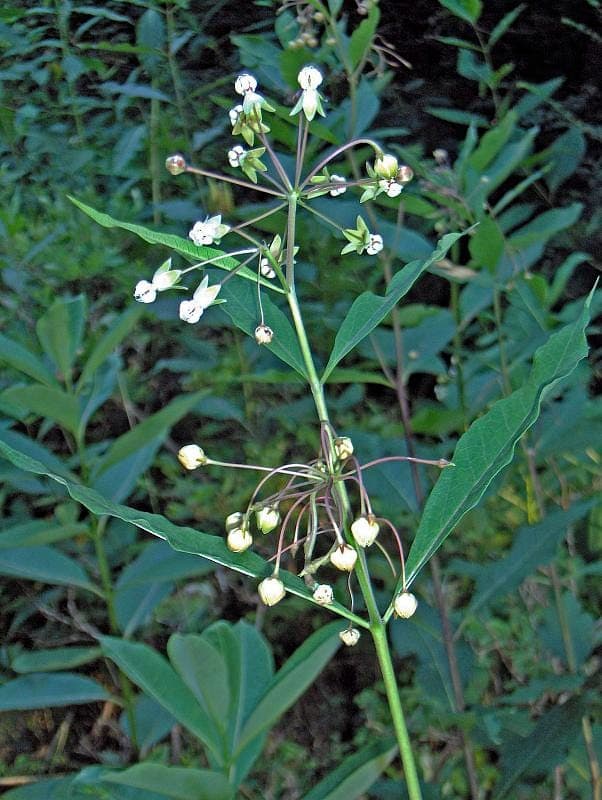
homeredwardprice / CC BY 2.0, via Wikimedia Commons
Asclepias exaltata: complete guide
Asclepias exaltata
¿Quieres ver Asclepias exaltata: complete guide en tu jardín?
1 minuto, sin tarjeta de crédito
Overview
Asclepias exaltata, commonly known as poke milkweed or tall milkweed, is a striking North American native herb reaching 100 to 150 centimeters tall. This robust plant bears clusters of greenish-white flowers that emit a subtle pleasant fragrance, followed by impressive elongated seedpods. An acknowledged milkweed host plant for monarch butterflies and numerous other insects, it ranks among the most valuable plants for butterfly gardeners. This is absolutely essential for anyone seeking to support monarchs.
Appearance and Bloom
Asclepias exaltata forms an upright, minimally branched plant with large elliptical leaves, 10 to 20 centimeters long, arranged oppositely along the stem. The sturdy stem, slightly hairy, stands without support. Flowers emerge from May through July in rounded clusters at leaf axils. Each flower measures roughly 5 millimeters and displays greenish to reddish-green tones. Blooms emit a pleasant subtle fragrance. Following pollination, impressive pod-like seedpods form, approximately 8 to 10 centimeters long. These split open in autumn to release silken seedpods.
Ideal Location
This plant flourishes in partial shade to sunny positions. Full sun is tolerated, but partial shade is equally acceptable, especially in warmer regions. In natural habitats, it colonizes woodland edges and semi-shaded meadows. Provide adequate space, as the plant attains significant size.
Soil
Asclepias exaltata prefers consistently moist, humus-rich soil. The species is not particularly fussy about pH, thriving in neutral to acidic conditions. It flourishes in humus-rich, moisture-retentive soils with reasonable drainage. Heavy clay soil may be amended with organic matter. Avoid exceptionally dry locations.
Diseño gratis
¿Quieres ver Asclepias exaltata: complete guide en tu jardín? Crea un diseño gratis ahora.
Watering
During the growing season (spring and summer), keep soil moisture-retentive. This plant appreciates moisture and thrives with regular watering. After establishment, deep-rooting allows better drought tolerance. Maintain consistent soil moisture, especially in the first season. Organic mulch aids moisture retention.
Pruning
No pruning is necessary. If overgrown, the top may be lightly pinched for bushier form, but this is optional. Dead stems may be removed in autumn or early spring. For seed production, allow seedpods to remain on the plant until they naturally split.
Maintenance Calendar
Spring (March-May): Rapid growth occurs. Ensure moist soil conditions. No fertilizer needed for healthy growth.
Summer (June-August): Prime flowering and pollination period. Monarch caterpillars appear on foliage. Provide ample water.
Autumn (September-October): Seedpods mature and dry. Leave seed capsules for seed dispersal. Plant dies after first hard frost.
Winter (November-February): Plant is dormant. Leave dead stems for wildlife.
Winter Hardiness
Asclepias exaltata is exceptionally hardy, withstanding cold well below -30 degrees Celsius. This North American native dies back to roots in autumn, which is normal seasonal behavior.
Companion Plants
Asclepias exaltata pairs beautifully with other pollinator-supporting plants:
- Echinacea (coneflower)
- Rudbeckia (black-eyed susan)
- Liatris (blazing star)
- Phlox
- Vernonia (ironweed)
- Asters
Ensure companion plants share moisture preferences.
Final Thoughts
Asclepias exaltata proves indispensable for monarch butterfly enthusiasts. The impressive seedpods, intriguing flowers, and substantial wildlife value make it a remarkable garden addition. Perfect for moist meadows, woodland edges, and butterfly gardens. This North American beauty ensures food and shelter for successive generations of monarchs and countless other insects.
Find milkweed seeds and plants at specialty nurseries. Gardenworld.app helps you design pollinator-friendly gardens.
¿Quieres ver Asclepias exaltata: complete guide en tu jardín? Crea un diseño gratis ahora.
Sube una foto, elige un estilo y obtén un diseño fotorrealista con lista de plantas en menos de un minuto.
Más de 10.000 jardines diseñados
Sin tarjeta de crédito


Plantas similares
Asclepias speciosa: complete guide
Asclepias speciosa
Showy milkweed: striking pink-white flowers, fragrant blooms. Essential monarch butterfly host plant.
Plumeria obtusa: complete guide
Plumeria obtusa
Discover the Singapore graveyard flower: an exotic evergreen with mesmerizing white blooms and exquisite fragrance. Expert cultivation, care, and maintenance tips.
Wrightia arborea: complete guide
Wrightia arborea
Wrightia arborea, known as doodhi, is an elegant tree from South Asia with delicate white flowers. Discover how to cultivate this exotic plant.