
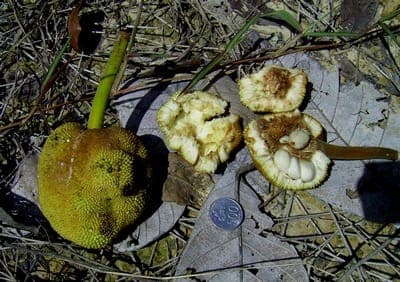
W.A.Djatmiko (Wie146) / CC BY-SA 3.0, via Wikimedia Commons
Artocarpus odoratissimus: complete guide
Artocarpus odoratissimus
¿Quieres ver Artocarpus odoratissimus: complete guide en tu jardín?
1 minuto, sin tarjeta de crédito
Overview
Artocarpus odoratissimus, known as the Marang, is a magnificent tropical fruit tree native to the rainforests of Borneo. This exotic tree is celebrated for its deliciously fragrant fruits - a combination of pineapple, banana, and plum aromas - and its large, hand-shaped green leaves. The tree grows rapidly and can even be cultivated in containers in warm climates or greenhouses, though it thrives best in subtropical to tropical settings.
The Marang is a highly useful tree that not only provides nutrition through its fruits but also creates shade and an exotic atmosphere in warm gardens.
Appearance and Growth
Artocarpus odoratissimus grows into a medium-sized tree of 10-20 meters tall in wild settings, but remains smaller under cultivation (5-10 meters). The leaves are extremely large, up to 60 centimeters long, hand-like or finger-like lobed, rough-haired, and dark green.
The fruits are spherical to oval, approximately 10-25 centimeters in diameter, with a green, spiky or warty surface. The flesh is yellow-white, very sweet, aromatic, and contains several large seeds. Ripe fruits have an overwhelming aroma reminiscent of musk and tropical fruit.
Ideal Location
The Marang thrives best in warm, humid locations in subtropical to tropical zones (minimum 15 degrees, ideal 20-30 degrees). Provide abundant indirect sunlight or partial shade. In hot desert regions, some afternoon shade can prevent fruit sunburn.
Perfect for greenhouses, conservatories, or in tropical gardens. Young trees can be grown in large containers.
Soil
Artocarpus odoratissimus prefers nutrient-rich, well-draining, slightly acidic soil. Ideal is a mixture of garden soil, compost, and coconut coir. Heavy clay soil must be improved with drainage material.
In containers, use a mixture of garden soil, compost, coconut fiber, and sand in proportions 2:2:1:1.
Diseño gratis
¿Quieres ver Artocarpus odoratissimus: complete guide en tu jardín? Crea un diseño gratis ahora.
Watering
The Marang loves regular watering, especially during growth periods. Water as needed but ensure good drainage to prevent rot. Waterlogging is deadly. In winter, watering can be reduced but drought is not well tolerated.
Saplings and young trees should receive regular misting when drought-stressed.
Pruning
Pruning is optional but can be done for form. Remove branches that are damaged or disturb the tree's shape. Early pruning (during the first years) can help establish a balanced crown.
After harvest, some branches can be cut back to encourage future fruit set.
Maintenance Calendar
FEBRUARY-MARCH: Growth period begins. Water and fertilize regularly (with slow-release fertilizer).
APRIL-MAY: Full growth. Young trees can be thinned for better form.
JUNE-SEPTEMBER: Fruit formation and ripening. Water regularly. Avoid major pruning.
OCTOBER-JANUARY: Harvest of ripe fruits. Continue regular watering.
Winter Hardiness
Artocarpus odoratissimus is NOT winter-hardy in temperate climates. It's a tropical plant that dies at frost. In Europe, it can only thrive in heated greenhouses, conservatories, or very warm indoor spaces. Minimum temperature: 15-18 degrees.
Companion Plants
Artocarpus odoratissimus combines well in tropical gardens with:
- Other fruit trees such as Mango, Pineapple, Papaya
- Exotic flowering shrubs such as Hibiscus and Heliconia
- Large-leaved plants such as Caladium and Alocasia
- Tropical climbers such as Philodendron
- Palms such as Coconut and Areca palm
- Bromeliad collections
The large leaves form a beautiful backdrop for delicate tropical flowers.
Closing
The Marang is a highly useful, exotic fruit tree that prefers warm, humid climates. With proper care and optimal growing conditions, it will produce delicious, aromatic fruits annually. Plant it in greenhouses, conservatories, or in very warm gardens. Seedlings or grafted specimens available from specialized tropical nurseries. Discover more tropical wonders on gardenworld.app.
¿Quieres ver Artocarpus odoratissimus: complete guide en tu jardín? Crea un diseño gratis ahora.
Sube una foto, elige un estilo y obtén un diseño fotorrealista con lista de plantas en menos de un minuto.
Más de 10.000 jardines diseñados
Sin tarjeta de crédito


Plantas similares
Morus macroura: complete guide
Morus macroura
Himalayan mulberry with long fruits. Fast-growing, edible berries, winter hardy. Suitable for large gardens and landscapes.
Brosimum guianense: complete guide
Brosimum guianense
Guiana snakewood: exotic tree from South America with valuable timber. Cultivation and care for warm-climate gardens.
Maclura tinctoria: complete guide
Maclura tinctoria
Learn how to grow Maclura tinctoria or Cubanwood. This beautiful tree offers shade, food and dye possibilities in your garden.