
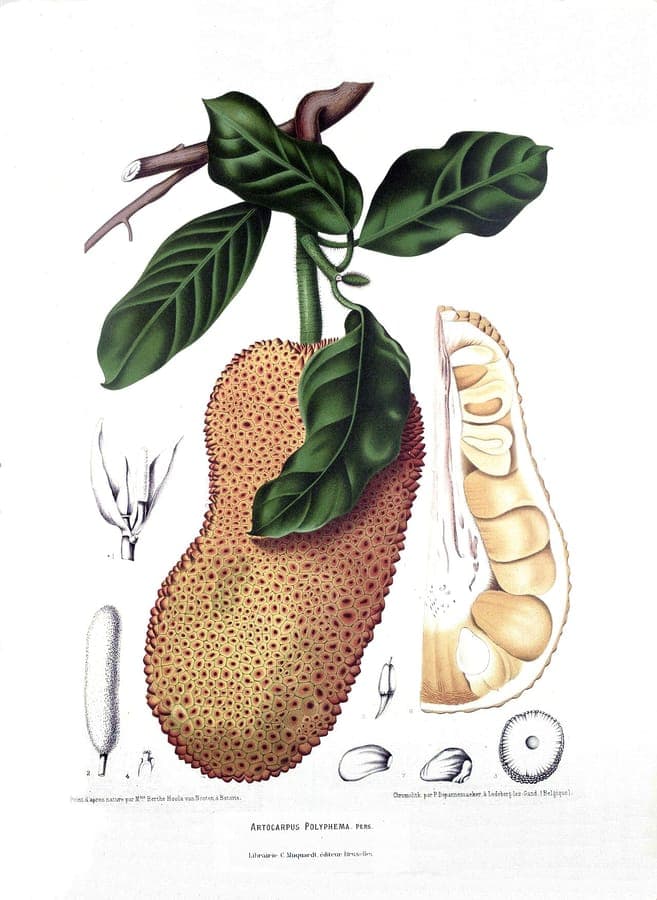
Berthe Hoola van Nooten (1817-1892), Pieter De Pannemaeker (lithographer) / Public domain, via Wikimedia Commons
Chempedak: complete guide
Artocarpus integer
¿Quieres ver Chempedak: complete guide en tu jardín?
1 minuto, sin tarjeta de crédito
Overview
Chempedak (Artocarpus integer) is a tropical fruit tree from the Moraceae family, native to Southeast Asia. This fascinating tree produces unique fruits with a soft, nutty flavor that delights tropical fruit enthusiasts worldwide. The tree grows naturally in Malaysia, Indonesia, and Thailand, where it has been cultivated for centuries.
The Chempedak differs from its jackfruit relative through its smaller stature and more compact growth habit. For gardeners seeking something unique from standard fruit trees, this species offers tremendous potential and delicious rewards.
Appearance and bloom
Chempedak trees grow into substantial specimens reaching 15-20 meters tall, though they can be managed effectively for smaller spaces. The leaves are large, glossy green, and thick, giving the tree a full, tropical aesthetic that turns heads.
Flowers are small and inconspicuous, appearing as male and female inflorescences on the same tree. Following pollination, distinctive fruits develop directly from the trunk and branches. These fruits can reach 20-30 cm in length and feature yellow to brownish skin covered with rounded bumps.
Ideal location
Chempedak thrives in warm, sunny locations. Plant in a position receiving at least 6 hours of direct sunlight daily. Protect from strong winds, as the substantial foliage experiences considerable air movement stress.
In temperate climates, growing in a greenhouse or protected environment ensures the warmth required. A south-facing wall or sheltered location provides optimal conditions. Want more guidance on plant selection? Visit gardenworld.app/en for comprehensive planting advice.
Soil
Chempedak prefers well-draining, fertile soil with pH between 6.0 and 7.5. Ensure your soil is rich in organic matter by incorporating compost or leaf mold when planting.
The tree can be container-grown, but larger pots of at least 60-80 liters produce superior results. Ensure proper drainage by mixing potting soil with extra perlite or sand to prevent waterlogging.
Diseño gratis
¿Quieres ver Chempedak: complete guide en tu jardín? Crea un diseño gratis ahora.
Watering
Young trees need regular watering, especially during dry periods. Maintain consistently moist but never waterlogged soil conditions. During the growing season, water every few days; in winter, reduce frequency significantly.
A 5-10 cm mulch layer around the base helps retain moisture and regulate temperature. This also reduces weeds and provides supplemental nutrition as it decomposes.
Pruning
Chempedak responds well to pruning. Remove dead or damaged branches to encourage healthy growth. Shape the tree by shortening lateral branches in early growth season for desired form.
Young seedlings can be trained to single or multi-stem forms based on preference. Regular maintenance pruning improves air circulation and enhances fruit production.
Maintenance calendar
Spring: Begin feeding programs. Water regularly as temperatures rise.
Summer: Continue watering, harvest ripe fruits. Monitor for pest activity.
Autumn: Reduce watering as growth slows. Apply autumn fertilizer applications.
Winter: Minimize watering, protect from frost. Move containers indoors in temperate zones.
Winter hardiness
Chempedak is not winter hardy for temperate climates. Temperatures below 10°C cause significant damage. In countries like the Netherlands, Belgium, and Germany, trees must be protected indoors during winter.
For permanent outdoor cultivation, warmer regions are essential. Consider container growing that moves indoors for winter protection.
Companion plants
Chempedak pairs well with other tropical specimens. Good companions include:
- Other fruit trees (mango, papaya)
- Tropical ornamental plants
- Evergreens for shade support
Avoid crowding due to the large canopy. Maintain 5-6 meters spacing between trees for adequate air circulation.
Closing
Chempedak is a magnificent tropical fruit tree for dedicated gardeners. With proper care and warm conditions, it produces delicious fruits for many years. Provide warmth, sun exposure, and consistent water and nutrition management for rewarding harvests.
Seeking more on exotic fruit cultivation? Visit gardenworld.app/en for inspiration and detailed guidance on specialized garden projects.
¿Quieres ver Chempedak: complete guide en tu jardín? Crea un diseño gratis ahora.
Sube una foto, elige un estilo y obtén un diseño fotorrealista con lista de plantas en menos de un minuto.
Más de 10.000 jardines diseñados
Sin tarjeta de crédito


Plantas similares
Morus macroura: complete guide
Morus macroura
Himalayan mulberry with long fruits. Fast-growing, edible berries, winter hardy. Suitable for large gardens and landscapes.
Brosimum guianense: complete guide
Brosimum guianense
Guiana snakewood: exotic tree from South America with valuable timber. Cultivation and care for warm-climate gardens.
Maclura tinctoria: complete guide
Maclura tinctoria
Learn how to grow Maclura tinctoria or Cubanwood. This beautiful tree offers shade, food and dye possibilities in your garden.