
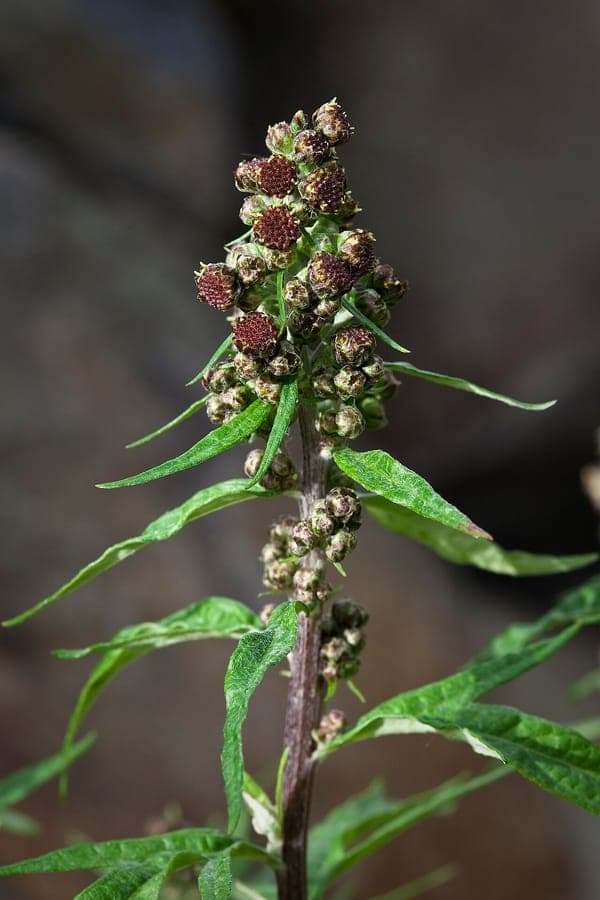
NPS / Jacob W. Frank: Denali National Park and Preserve / Public domain, via Wikimedia Commons
Aleutian Mugwort: complete guide
Artemisia tilesii
¿Quieres ver Aleutian Mugwort: complete guide en tu jardín?
1 minuto, sin tarjeta de crédito
Overview
Artemisia tilesii, commonly known as Aleutian Mugwort, is an exceptional plant originating from North America and subarctic Russia. This hardy shrub is recognized for its extreme cold tolerance and fine silvery-gray foliage that adapts to harsh climates. As a member of the Asteraceae family, it has been used for medicinal purposes for centuries.
Appearance and Bloom
Aleutian Mugwort grows into a compact shrub typically 30-50 cm in height. The leaves are extremely finely divided, almost feathery, creating a delicate silvery-gray appearance. The foliage shows the characteristic hairy texture of the Artemisia genus, but is much finer than most other species.
Ideal Location
This plant thrives best in full sun and a dry cold location. A minimum of 6 to 8 hours of direct daily sunlight is necessary. The plant is extremely cold and wind tolerant, and actually performs better in cold climates than in warm ones.
Soil
Artemisia tilesii thrives in very well-drained soil, preferably dry and lean. A pH between 6.0 and 7.5 is optimal. The plant can grow in very poor soil where many other plants cannot survive.
Diseño gratis
¿Quieres ver Aleutian Mugwort: complete guide en tu jardín? Crea un diseño gratis ahora.
Watering
Once established, this plant is virtually maintenance-free regarding moisture. Water during very dry periods, but usually not needed. In wet climates, good drainage is crucial.
Pruning
Minimal pruning is needed. After flowering, faded flower tops can be removed. The plant prefers light natural form. Heavy pruning is not recommended.
Maintenance Calendar
January to March: Remove dead wood if necessary. April to May: No special care needed. June to August: Water during extreme drought. September to October: Flowering ends. November to December: Minimal care.
Winter Hardiness
Artemisia tilesii is extremely hardy to at least -30°C and probably survives much colder temperatures. This plant originates in subarctic and arctic regions and grows without problems in cool climates.
Companion Planting
Artemisia tilesii combines nicely with other alpine and arctic plants. Interesting with other silvery-gray plants and low alpine herbs. Beautiful in rock gardens with Saxifraga and Sedum.
Closing Thoughts
The Artemisia tilesii is a perfect choice for gardeners in cold regions wanting something unusual. With its arctic heritage and extreme winter hardiness, it is ideal for robust garden design. Visit gardenworld.app for more information and personalized plant recommendations.
¿Quieres ver Aleutian Mugwort: complete guide en tu jardín? Crea un diseño gratis ahora.
Sube una foto, elige un estilo y obtén un diseño fotorrealista con lista de plantas en menos de un minuto.
Más de 10.000 jardines diseñados
Sin tarjeta de crédito


Plantas similares
Calendula stellata: complete guide
Calendula stellata
Complete guide to Calendula stellata, the star-flowered marigold from Sicily: location, soil, watering and companion planting tips.
Korean chrysanthemum: complete guide
Chrysanthemum x rubellum
Chrysanthemum x rubellum is a hardy autumn perennial with single pink to copper flowers from August to November. Care and combinations.
Helianthus divaricatus: complete guide
Helianthus divaricatus
Helianthus divaricatus is a North American woodland sunflower with yellow summer blooms, ideal for naturalistic borders and shady edges.