
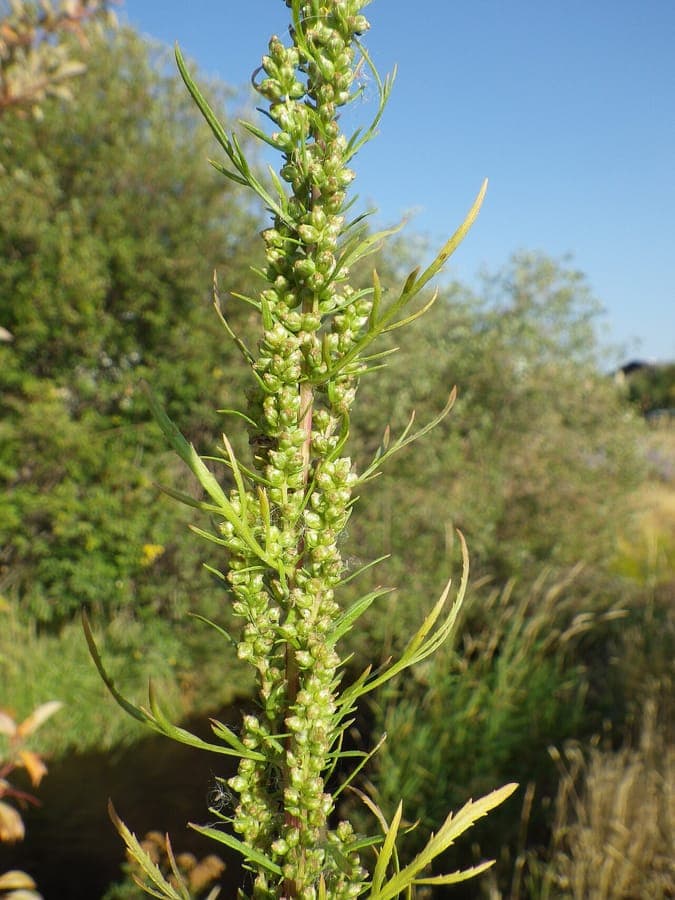
Matt Lavin from Bozeman, Montana, USA / CC BY-SA 2.0, via Wikimedia Commons
Biennial wormwood: complete guide
Artemisia biennis
¿Quieres ver Biennial wormwood: complete guide en tu jardín?
1 minuto, sin tarjeta de crédito
Overview
Biennial wormwood (Artemisia biennis) is an elegant herbaceous plant from the Asteraceae family. This attractive biennial grows 60-120 cm tall and stands out for its finely cut, silver-green foliage and small yellow flowers.
The plant originates from North America and now grows wild in many temperate zones as naturalization. Biennial wormwood is popular in medicinal and ornamental gardens.
Appearance and Bloom Cycle
Biennial wormwood forms characteristic, finely cut, twice or thrice divided leaves that are silver-green colored and very ornamental. The leaves have a fragrant, bitter aroma.
In the second year, the plant produces fine, branched flowering stems with numerous very small yellow flowers gathered in thin panicles. Flowers appear from July to October and are not spectacular but very useful for pollinators.
The flowers are followed by very light seeds.
Ideal Location
Biennial wormwood thrives best in:
- Full sun to light shade (minimum 4 hours direct sun daily)
- Well-drained, dry to moderately moist locations
- Herb garden or naturalistic garden
- Protected areas
The plant also grows in semi-shaded zones but less vigorously. Biennial wormwood is highly adaptable to various climates.
Soil Requirements
Biennial wormwood is not fussy:
- Tolerates dry to mixed soils
- Preference for well-draining, sandy soils
- Poor to moderately rich soils suitable
- pH between 5.5 and 8.0
- Accepts both loamy and sandy soils
The plant grows poorly on very wet, waterlogged soils.
Watering
Once established, Biennial wormwood needs minimal watering. Regular natural rainfall is usually sufficient. During dry seasons, watering helps growth.
Young plants must be kept more moist until rooted. Avoid waterlogging.
Diseño gratis
¿Quieres ver Biennial wormwood: complete guide en tu jardín? Crea un diseño gratis ahora.
Pruning and Maintenance
Biennial wormwood requires minimal maintenance:
- Do not prune - let the plant grow naturally
- Optional: remove faded flowers to limit self-seeding
- Remove withered foliage for neatness
- Biennial plant dies after seed set
The fragrant leaves can be dried for medicinal preparations.
Maintenance Calendar
March–April: Pre-chilling of seed, sowing outdoors or indoors.
May–June: Thin seedlings to 60 cm apart.
June–September (Year 2): Growth and bloom, water regularly.
July–October: Flowering period, pollinator food.
October–November: Seed formation, seed drops and self-sows.
December–March: Plant dies back, seed awaits next spring.
Winter Hardiness
Biennial wormwood is very frost-hardy to USDA zone 3 (-40°C). Frosty winters are not a problem. Foliage can remain reasonably green through mild winters.
Young plants can suffer frost damage in very severe winters but regrow.
Companion Plants
Biennial wormwood grows well with:
- Other Artemisia species: Southernwood, Sea wormwood, Adonis-wormwood
- Other medicinal plants: Lavender, Thuya, Thyme
- Drought-tolerant plants: Sedum, Echeveria, Santolina
- Pollinator attractors: Dill, Fennel, Clove
Avoid plants preferring waterlogged soils.
Closing Thoughts
Biennial wormwood is a beautiful choice for medicinal and ornamental gardens. The plant brings architectural character, interesting foliage texture, and pollinator food. Once established, the plant self-seeds and provides you with beautiful specimens for years.
Tip: For more information on medicinal plants in your front yard, visit gardenworld.app. Upload a photo of your garden and receive an herb garden design. Visit gardenworld.app for more inspiration.
Where to Buy
- USA: Local nurseries, specialty herb suppliers
- UK: Garden centers, herb plant specialists
- Online: Medicinal herb retailers
¿Quieres ver Biennial wormwood: complete guide en tu jardín? Crea un diseño gratis ahora.
Sube una foto, elige un estilo y obtén un diseño fotorrealista con lista de plantas en menos de un minuto.
Más de 10.000 jardines diseñados
Sin tarjeta de crédito


Plantas similares
Calendula stellata: complete guide
Calendula stellata
Complete guide to Calendula stellata, the star-flowered marigold from Sicily: location, soil, watering and companion planting tips.
Korean chrysanthemum: complete guide
Chrysanthemum x rubellum
Chrysanthemum x rubellum is a hardy autumn perennial with single pink to copper flowers from August to November. Care and combinations.
Helianthus divaricatus: complete guide
Helianthus divaricatus
Helianthus divaricatus is a North American woodland sunflower with yellow summer blooms, ideal for naturalistic borders and shady edges.