
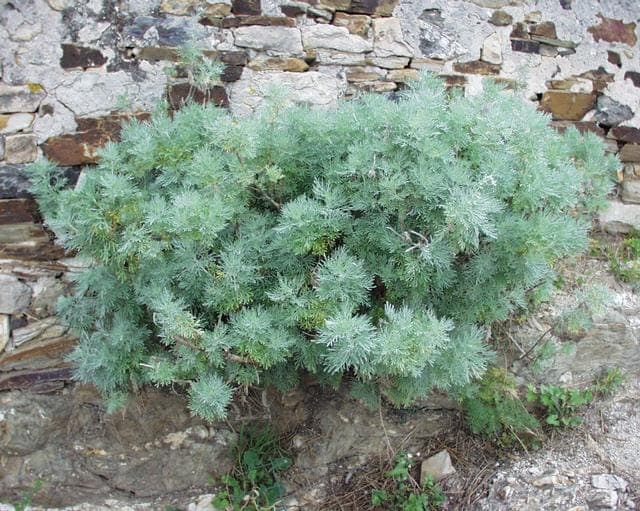
H Brisse (upload by Abalg) / CC BY-SA 3.0, via Wikimedia Commons
Artemisia arborescens: complete guide
Artemisia arborescens
¿Quieres ver Artemisia arborescens: complete guide en tu jardín?
1 minuto, sin tarjeta de crédito
Overview
Artemisia arborescens, commonly known as shrubby mugwort or hedge artemisia, is a beautiful Mediterranean shrub from the Asteraceae (daisy) family. This plant is renowned for its striking silver-gray foliage and fine, aromatic scent. In its natural habitat, it grows in Mediterranean countries from Spain to Turkey.
Shrubby mugwort is ideal for gardeners seeking a silver-gray foliage plant with minimal maintenance.
Appearance and Bloom
Artemisia arborescens grows as an elegant layered shrub reaching approximately 1-1.5 meters in height. The leaves are fine, feathery, and have a striking silver-gray color due to fine hairs on the leaf surface. This coloration gives the shrub its characteristic appearance.
In summer, small yellow flowers bloom in delicate clusters. These flowers are not very conspicuous but add lightness to the plant.
Ideal Location
Artemisia arborescens requires full sun - at least 6-8 hours of direct sunlight daily. It becomes thin and sparse in shade. Ensure good air circulation.
This plant grows best in warm, sheltered locations.
Soil
Shrubby mugwort prefers sandy, well-drained soils. A pH of 7.0-7.5 (neutral to slightly alkaline) is ideal. It tolerates poor, infertile soils well.
Heavy clay and waterlogged soils are unsuitable. Always ensure excellent drainage.
Watering
Once established, Artemisia arborescens is highly drought-tolerant. Water sparingly. Excessive water can lead to disease.
Young plants need more water in their first growing season. After that, they can thrive for extended periods without supplementary watering.
Diseño gratis
¿Quieres ver Artemisia arborescens: complete guide en tu jardín? Crea un diseño gratis ahora.
Pruning
Shrubby mugwort requires regular pruning to remain compact and neat. Trim in spring and possibly again in August for regrowth.
Remove very old woody stems to encourage rejuvenation.
Maintenance Calendar
Early summer: light trimming for shape. Mid-summer: remove spent flowers. Early fall: possible second pruning season. Winter: remove only damaged parts.
Regular pruning makes the plant fuller and gives it a neater form.
Winter Hardiness
Artemisia arborescens is moderately hardy. It tolerates temperatures down to approximately minus 5 to minus 8 degrees Celsius in sheltered locations. In many temperate climates outside the Mediterranean region, protection is required.
In cold regions, this plant grows better in containers and can be moved indoors for winter.
Retailers
Netherlands: Intratuin, Gamma Germany: OBI, Hornbach France: Truffaut, Jardiland
Visit gardenworld.app for more information about Mediterranean plant arrangements.
Final Thoughts
Artemisia arborescens is a fantastic choice for those wanting a silver-gray foliage plant in Mediterranean gardens. With its elegant growth form, aromatic scent, and minimal maintenance requirements, it adds much character to gardens in warm regions. With regular pruning and good drainage, it will develop into a beautiful structural element in your garden. Try this Mediterranean jewel and enjoy its silvery beauty. Visit gardenworld.app for inspiration.
¿Quieres ver Artemisia arborescens: complete guide en tu jardín? Crea un diseño gratis ahora.
Sube una foto, elige un estilo y obtén un diseño fotorrealista con lista de plantas en menos de un minuto.
Más de 10.000 jardines diseñados
Sin tarjeta de crédito


Plantas similares
Calendula stellata: complete guide
Calendula stellata
Complete guide to Calendula stellata, the star-flowered marigold from Sicily: location, soil, watering and companion planting tips.
Korean chrysanthemum: complete guide
Chrysanthemum x rubellum
Chrysanthemum x rubellum is a hardy autumn perennial with single pink to copper flowers from August to November. Care and combinations.
Helianthus divaricatus: complete guide
Helianthus divaricatus
Helianthus divaricatus is a North American woodland sunflower with yellow summer blooms, ideal for naturalistic borders and shady edges.