
Steve Law / CC BY-SA 2.0, via Wikimedia Commons
Artemisia alba: complete guide
Artemisia alba
¿Quieres ver Artemisia alba: complete guide en tu jardín?
1 minuto, sin tarjeta de crédito
Overview
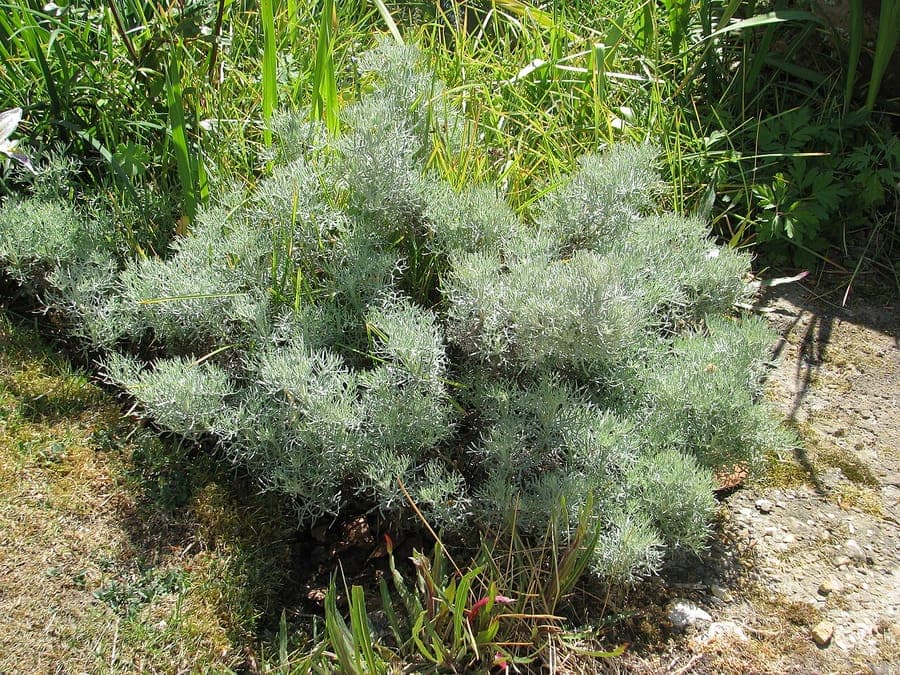
Artemisia alba, commonly known as White Wormwood or White Mugwort, is an aromatic herb native to the Mediterranean region. This elegant plant belongs to the Asteraceae family and grows naturally in Mediterranean areas from Spain to Romania. The silvery foliage and subtle fragrance make it a popular ornamental and culinary herb.
Appearance and Bloom
The plant reaches heights of 30-80 cm with finely branched, silvery-green foliage. The leaves are intricately divided with a characteristic camphoraceous scent. Small, discrete white to yellowish flowers appear in dense spikes from September through October. The plant structure is compact and rounded.
Ideal Location
White wormwood blooms optimally in full sun on dry terrain. The plant loves open, windy locations where air circulates freely. Protection from early morning frost is beneficial. The plant is highly self-sufficient and requires minimal care.
Soil
Requires well-draining, dry soil and does not prefer moisture. Ideal composition is sandy or gravelly mix with minimal organic matter. The plant tolerates poor soil and salt conditions. Soil pH may be neutral to slightly acidic.
Diseño gratis
¿Quieres ver Artemisia alba: complete guide en tu jardín? Crea un diseño gratis ahora.
Watering
The plant prefers dry conditions once established. Water only during extended droughts. Overwatering can lead to disease. Mulch should be kept limited around the plant.
Pruning
Regular pruning helps keep the plant compact and full. Prune in early spring back to 30 cm height. After flowering, remove flowers for neater appearance. Avoid allowing the plant to become overgrown without pruning.
Maintenance Calendar
March: Prune back to 30 cm. April-May: No water needed in normal rainfall. June-August: Minimal special care. September-October: Flowers appear, no interventions. November: Remove dead material. February: Prepare for spring pruning.
Winter Hardiness
Artemisia alba is hardy to zone 6, surviving to -20 degrees Celsius. In very cold climates, winter protection may be helpful. The plant grows best in temperate to warm climates with dry weather.
Companion Plants
Beautiful with other Mediterranean herbs like Rosmarinus, Lavendula, and Thymus. Attractive as container plant. Suitable for group plantings in dry gardens.
Closing
Artemisia alba brings silvery beauty and aromatic charm to dry gardens. Flowers can be dried for arrangements. Available at garden centers. Learn more at gardenworld.app/en and gardenworld.app/nl.
¿Quieres ver Artemisia alba: complete guide en tu jardín? Crea un diseño gratis ahora.
Sube una foto, elige un estilo y obtén un diseño fotorrealista con lista de plantas en menos de un minuto.
Más de 10.000 jardines diseñados
Sin tarjeta de crédito


Plantas similares
Calendula stellata: complete guide
Calendula stellata
Complete guide to Calendula stellata, the star-flowered marigold from Sicily: location, soil, watering and companion planting tips.
Korean chrysanthemum: complete guide
Chrysanthemum x rubellum
Chrysanthemum x rubellum is a hardy autumn perennial with single pink to copper flowers from August to November. Care and combinations.
Helianthus divaricatus: complete guide
Helianthus divaricatus
Helianthus divaricatus is a North American woodland sunflower with yellow summer blooms, ideal for naturalistic borders and shady edges.