
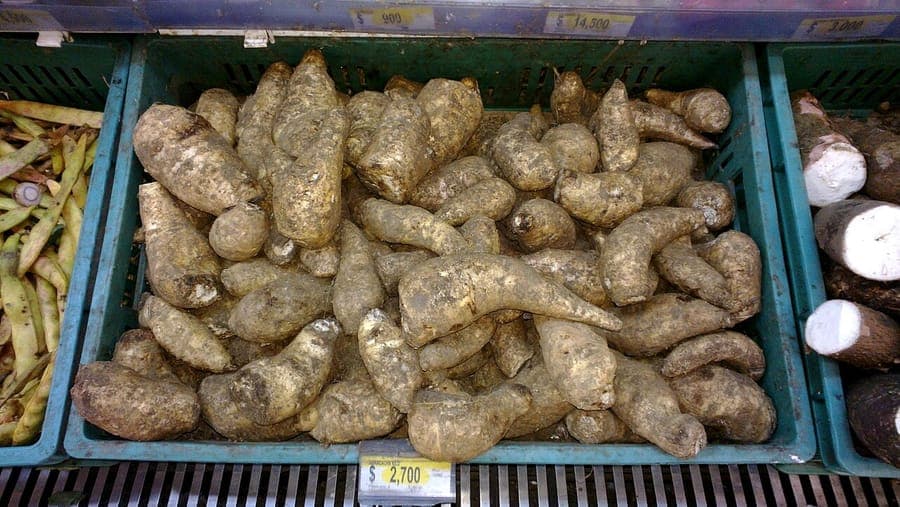
Germarquezm / CC BY-SA 3.0, via Wikimedia Commons
Arracacia xanthorrhiza: complete guide
Arracacia xanthorrhiza
¿Quieres ver Arracacia xanthorrhiza: complete guide en tu jardín?
1 minuto, sin tarjeta de crédito
Overview
Arracacia xanthorrhiza, commonly known as Peruvian carrot or Arracacha, is a nutritious root crop native to South America. This valuable plant belongs to the Apiaceae family and grows naturally in the Andean regions of Ecuador, Peru, Colombia, and Bolivia. The yellow tubers are a traditional food source in mountainous regions and provide excellent starch and minerals.
Appearance and Bloom
The plant reaches heights of 30-90 cm with large, triple-pinnate leaves. The stems are strongly articulated and develop yellowish tints. The root system produces clustered, yellow tubers similar to potatoes. Small white to greenish-yellow flowers appear in the second growing year.
Ideal Location
Arracacia thrives best in warm climates, full sun to partial shade. A sheltered location with good air circulation helps prevent disease. Protection from strong winds is recommended. Warm nights are essential as this is a tropical plant.
Soil
Requires consistently moist, well-draining soil enriched with organic matter. Ideal composition includes garden soil mixed with compost and peat moss. Heavy clay must be amended. Soil pH should be neutral to slightly acidic.
Diseño gratis
¿Quieres ver Arracacia xanthorrhiza: complete guide en tu jardín? Crea un diseño gratis ahora.
Watering
The plant prefers regular water throughout all growing seasons. Maintain moist soil without waterlogging. Apply mulch around the plant to retain moisture. Water regularly during dry periods.
Pruning
Pruning is not essential. Remove only wilted leaves and stems. Leaf pruning prevents the plant from putting energy into seed production rather than root development.
Maintenance Calendar
May: Plant acquisition and planting after last frost. June-July: Apply mulch layer. July-September: Water regularly. October: Tubers begin enlarging. November-January: Carefully harvest mature tubers. February-April: Rest period.
Winter Hardiness
Arracacia xanthorrhiza is NOT winter hardy and cannot grow in frost areas. The plant dies when temperatures drop below 10 degrees Celsius. In temperate climates, grow as an annual. In warmer regions, it can be cultivated as a perennial.
Companion Plants
Suitable companion plants are Yam, Taro, and other tropical vegetables. Underplanting and surrounding crops help moisture retention. Works in polyculture systems with other tropical plants.
Closing
Arracacia xanthorrhiza offers a unique, nutrient-rich vegetable harvest. For gardeners in warm climates, it makes an interesting cultivation experiment. Seed available from specialized seed companies. Learn more at gardenworld.app/en and gardenworld.app/nl.
¿Quieres ver Arracacia xanthorrhiza: complete guide en tu jardín? Crea un diseño gratis ahora.
Sube una foto, elige un estilo y obtén un diseño fotorrealista con lista de plantas en menos de un minuto.
Más de 10.000 jardines diseñados
Sin tarjeta de crédito


Plantas similares
Whorled carrot: complete guide
Daucus involucratus
Daucus involucratus is a Mediterranean umbellifer with white flower heads framed by lacy bracts. Growing this gravel garden gem.
Daucus muricatus: complete guide
Daucus muricatus
Daucus muricatus, the spiny wild carrot, grows wild on Mediterranean coasts. Discover sowing, June-July bloom, and wildflower meadow use.
Daucus pumilus: complete guide
Daucus pumilus
Daucus pumilus is a dwarf wild carrot relative with white lacy umbels, thriving on dunes and coastal rock in poor, fast-draining soil.