
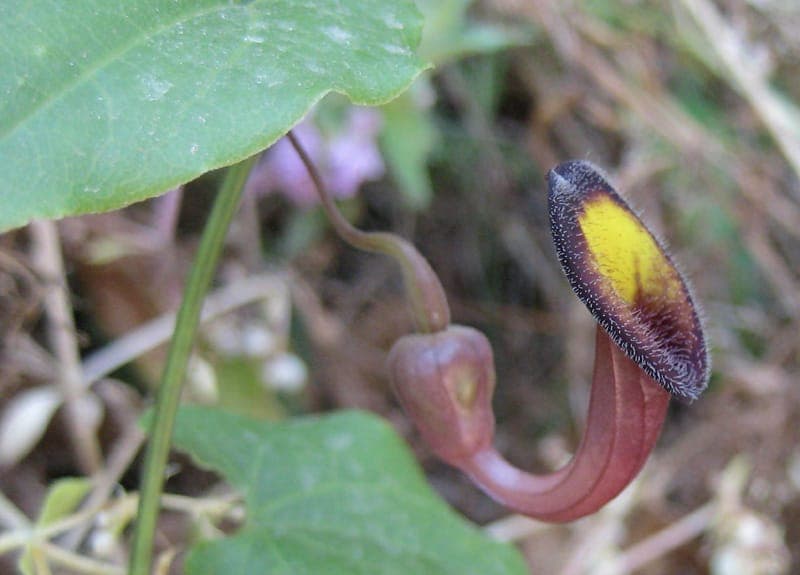
שרה גולד / CC BY 2.5, via Wikimedia Commons
Aristolochia sempervirens: complete guide
Aristolochia sempervirens
¿Quieres ver Aristolochia sempervirens: complete guide en tu jardín?
1 minuto, sin tarjeta de crédito
Overview
Aristolochia sempervirens, commonly known as the Long Birthwort or Evergreen Eastern Birthwort, is an impressive climbing plant from the Mediterranean region. This southern climber naturally grows in warm, rocky areas from Sicily to Turkey and the Eastern Mediterranean. The name sempervirens refers to the plant retaining foliage year-round, making it a valuable addition to temperate gardens where frost is rare.
This climbing plant is particularly known for its remarkable tubular flowers that resemble small pipes. The flowers have a fascinating shape that attracts insects and facilitates pollination. With proper conditions, Aristolochia sempervirens becomes a beautiful, dense covering that adorns walls, pergolas and fences.
Appearance and blooming
The plants grow as vines with twining stems that climb against supports. The leaves are heart-shaped to oval and remain on the plant year-round. This gives the plant structure and beauty even in winter.
Flowers typically appear in spring, May to June, with an incomparable shape. They grow from leaf axils and have a greenish-yellow to brownish color with interesting patterns. The tubular flowers can reach up to 5 centimeters long and attract butterflies and bees.
After pollination, interesting seed pods form that slowly ripen. These pods have an attractive shape and can be used for seed propagation.
Ideal location
Aristolochia sempervirens flowers best in a location with plenty of sunlight. A south-facing wall or pergola provides ideal conditions. The plant can tolerate some partial shade, but blooms more abundantly with six to eight hours of direct sunlight daily.
The plant requires support and does not grow well as a standalone shrub. Provide a sturdy trellis, lattice or mesh framework for the plant to climb. The sturdy vines can support heavy loads, so even large structures are suitable.
Due to its warm climate origin, this plant is suited to USDA zones 9-11, and in more temperate regions it overwinters better when grown against a warm, south-facing wall.
Soil type
The plant has fewer soil requirements but grows optimally in well-draining, moderately fertile soil. Heavy, wet soil should be improved by adding sand and compost. The ideal pH is between 7.5 and 8.0, so slightly alkaline soil is suitable.
Ensure adequate drainage to prevent root rot. Add compost or other organic matter when planting to improve water retention without causing waterlogging.
When growing in containers, use a lean potting mix with sharp sand or perlite for drainage. Repotting is only necessary every two to three years, as the plant is not very nutrient-demanding.
Watering
The plant tolerates drought well once established, typical for Mediterranean plants. However, young plants and plants in active growth need more frequent watering.
Water deeply but infrequently. Let the soil dry between waterings, especially in winter. Excessive moisture can lead to fungal infections. During the growing period (spring and summer), water once every two weeks; in winter months, this is less frequent.
During rainy periods, supplemental watering may be unnecessary. In dry, sunny coastal environments, you may water slightly more often. Ensure water drains well from pots.
Diseño gratis
¿Quieres ver Aristolochia sempervirens: complete guide en tu jardín? Crea un diseño gratis ahora.
Pruning
Aristolochia sempervirens grows vigorously and can become aggressive. Regular pruning encourages denser growth and shapes the plant as desired.
Prune best in late winter or early spring (February to March), before the new growing season begins. Remove all dead, diseased or damaged wood, and cut back heavy growth to about one third of original size. This encourages branching and richer blooms.
During the growing season, you can remove wayward shoots and shape the plant through light pruning. However, avoid heavy pruning in summer, as this can limit flowering.
After blooming (July), you can apply gentle pruning to maintain shape without negatively affecting future flowering.
Maintenance calendar
January to March: Prune back to shape, check for damage. No fertilization needed.
April to May: Start of growth period, regular watering, moderate fertilization (once per month).
June to July: Full flowering, water as needed, no extra fertilization.
August to September: Growth stabilizes, reduce watering, no fertilization.
October to December: Prepare for winter dormancy, minimal watering, no fertilization, check for wind or frost damage.
Winter hardiness
Aristolochia sempervirens is moderately winter hardy and tolerates temperatures to about -5 degrees Celsius. In more northern regions or areas with severe winters, the plant needs protection.
Provide protection by wrapping the plant with burlap or other protective material when frost arrives. A protective layer of mulch around the base also helps. In very cold regions, the plant grows better in a pot so it can be moved indoors for winter.
If the plant does suffer frost damage, most dead wood should be pruned back in spring. Healthy plant portions will often regrow.
Companion plants
Aristolochia sempervirens combines well with other Mediterranean plants requiring the same conditions. Consider the following:
Jasmine (Jasminum officinale) also grows climbing and offers fragrant flowers in summer. The two can grow together against the same support for an interesting mix.
Clematis varieties, especially later-blooming types, provide interesting contrast in flower and growth form.
Lavandula (Lavender) can be planted below for structure and fragrance.
Rosmarinus (Rosemary) adds Mediterranean flavor to the palette.
Bougainvillea can be combined with this climber in warmer climates for spectacle.
Conclusion
Aristolochia sempervirens is an unusual and intriguing climbing plant for those wanting Mediterranean-style gardens. With its evergreen foliage, remarkable flowers and vigorous growth, it brings character and exoticism to sunny walls and pergolas.
With basic care of good drainage, minimal watering and regular pruning, this Mediterranean jewel will provide blooms for years. The plant is perfect for gardeners wanting to experiment with southern species and who have space for its lush growth.
Want to ensure your Aristolochia grows successfully? Visit your local garden center for quality seedlings and expert advice. At gardenworld.app, find designs that showcase this fascinating plant in full glory. Bring Mediterranean elegance to your garden space with this classic climbing plant.
Need more advice or designs featuring Aristolochia sempervirens? Visit gardenworld.app for personalized garden designs that make optimal use of this plant.
¿Quieres ver Aristolochia sempervirens: complete guide en tu jardín? Crea un diseño gratis ahora.
Sube una foto, elige un estilo y obtén un diseño fotorrealista con lista de plantas en menos de un minuto.
Más de 10.000 jardines diseñados
Sin tarjeta de crédito


Plantas similares
Pistolochia Birthwort: complete guide
Aristolochia pistolochia
Full profile of Aristolochia pistolochia, the Pistolochia birthwort: unusual pipe-shaped flowers, care, soil, and garden use in dry borders.
Aristolochia gigantea: complete guide
Aristolochia gigantea
Aristolochia gigantea, the giant dutchman's pipe or duckflower, is a spectacular tropical climbing vine with colossal, intricately patterned flowers. Dramatic addition to warm regions and glasshouses.
Duckflower: Complete Guide
Aristolochia grandiflora
Learn everything about Aristolochia grandiflora: care, growing conditions and tips for this spectacular ornamental climber.