
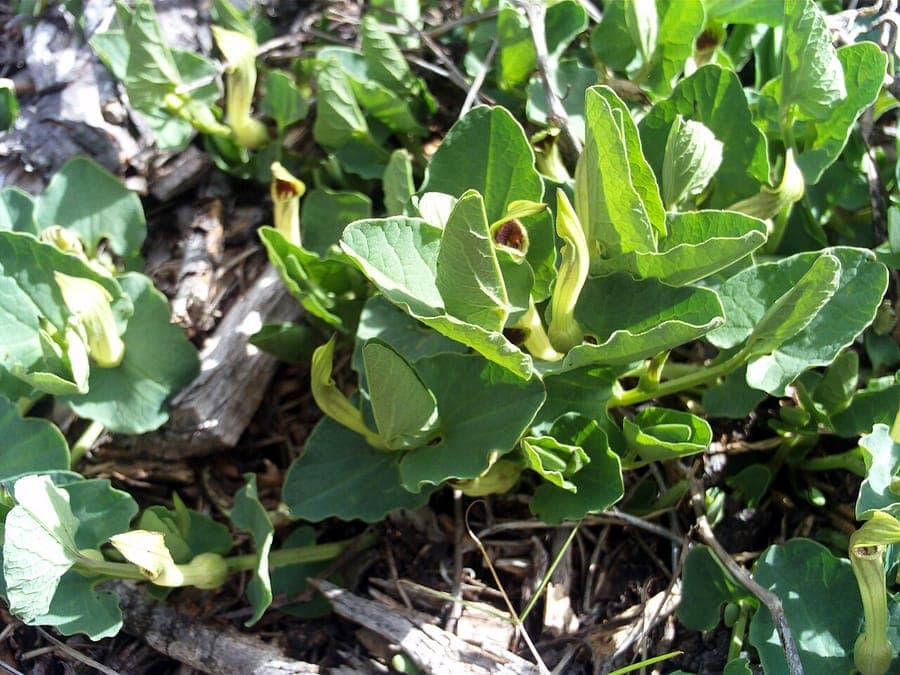
Javier martin / Public domain, via Wikimedia Commons
Aristolochia paucinervis: complete guide
Aristolochia paucinervis
¿Quieres ver Aristolochia paucinervis: complete guide en tu jardín?
1 minuto, sin tarjeta de crédito
Overview
Aristolochia paucinervis, also known as Green-flowered Birthwort or Aristoloche longue, is a fascinating climbing plant from the Aristolochiaceae family. This plant originates from the Mediterranean region and North Africa. With its elegant foliage and characteristic green, pipe-shaped flowers, it forms a special ornament for warmer gardens.
Appearance and bloom
Aristolochia paucinervis is a semi-vigorous climber that can reach 2 to 4 meters long. The leaves are oblong, elegant in form and green. In spring (April to June), the true highlights appear: green to yellow-greenish pipe-shaped flowers with a characteristic form. These unique flowers give the plant a very distinct appearance in the garden.
Ideal location
Aristolochia paucinervis grows optimally in warm, sunny to partially shaded terrain. In very warm areas, some afternoon shade is even beneficial. A south to west-facing wall position with reasonable protection is ideal. The plant also tolerates somewhat cooler positions, but grows slower then.
Soil
This Mediterranean plant makes moderate demands on soil. A well-draining, preferably sandy or gravelly soil is perfect. The plant tolerates dry, poor soils well. Avoid very heavy clay or waterlogged grounds. A neutral to slightly alkaline pH (6.5-7.5) is ideal.
Watering
Aristolochia paucinervis is drought-tolerant once established. In the first growing season, water regularly to promote establishment. Later, the plant tolerates dry periods well. Water only during very dry summers. Excessive water is harmful and can cause root rot.
Diseño gratis
¿Quieres ver Aristolochia paucinervis: complete guide en tu jardín? Crea un diseño gratis ahora.
Pruning
Pruning can be used to control growth and shape the plant. This is best done in late spring after flowering. Remove weak or dead wood. The plant naturally forms a beautiful shape without much pruning.
Annual maintenance schedule
Winter: Plant dormant, minimal maintenance. Spring: Prune gently, water regularly. April-June: Blooming period, enjoy flowers. Summer: Regular watering during dry periods. Autumn: Plant winds down, less water needed.
Winter hardiness
Aristolochia paucinervis is moderately winter-hardy and tolerates frost periods down to approximately -8 to -10 degrees Celsius. In temperate zones, it can overwinter outdoors with some protection. In very cold areas, better to grow in greenhouse or against a sheltered wall.
Companion plants
Aristolochia paucinervis combines well with other Mediterranean plants such as lavender and cistus. It also forms a beautiful combination with evergreens. The green flowers contrast beautifully with yellow or white bloomers.
In conclusion
Aristolochia paucinervis is a unique plant for the gardening enthusiast seeking something special. With support and regular maintenance, it remains a decorative eye-catcher for years. The green flowers are truly unusual and attract much attention. Gardenworld.app helps you with more ideas for Mediterranean gardens.
¿Quieres ver Aristolochia paucinervis: complete guide en tu jardín? Crea un diseño gratis ahora.
Sube una foto, elige un estilo y obtén un diseño fotorrealista con lista de plantas en menos de un minuto.
Más de 10.000 jardines diseñados
Sin tarjeta de crédito


Plantas similares
Pistolochia Birthwort: complete guide
Aristolochia pistolochia
Full profile of Aristolochia pistolochia, the Pistolochia birthwort: unusual pipe-shaped flowers, care, soil, and garden use in dry borders.
Aristolochia gigantea: complete guide
Aristolochia gigantea
Aristolochia gigantea, the giant dutchman's pipe or duckflower, is a spectacular tropical climbing vine with colossal, intricately patterned flowers. Dramatic addition to warm regions and glasshouses.
Duckflower: Complete Guide
Aristolochia grandiflora
Learn everything about Aristolochia grandiflora: care, growing conditions and tips for this spectacular ornamental climber.