
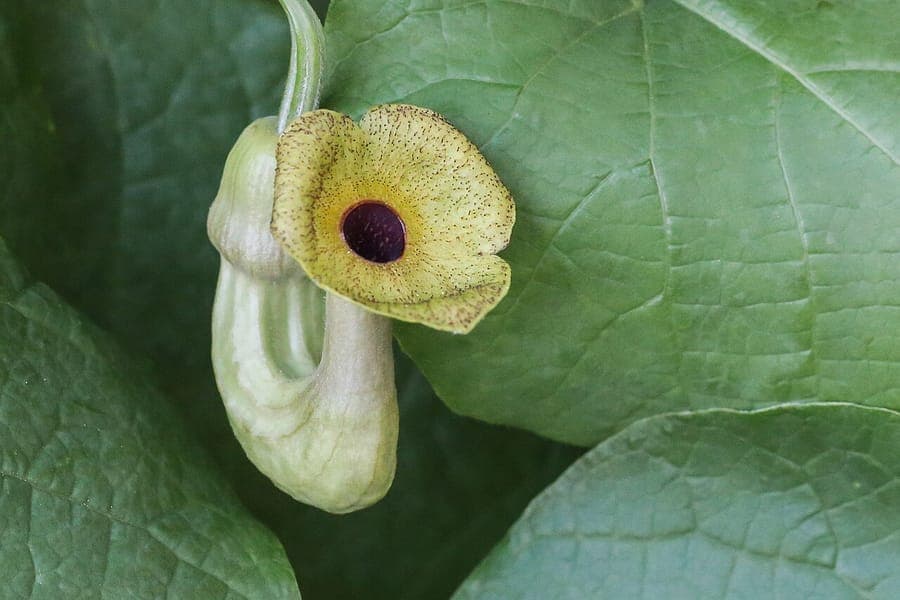
Maja Dumat from Deutschland (Germany) / CC BY 2.0, via Wikimedia Commons
Aristolochia macrophylla: complete guide
Aristolochia macrophylla
¿Quieres ver Aristolochia macrophylla: complete guide en tu jardín?
1 minuto, sin tarjeta de crédito
Overview
Aristolochia macrophylla, better known as Dutchman's Pipe or Pipevine, is a vigorous and exuberant climbing plant from the Aristolochiaceae family. This plant originates from North America and is renowned for its large heart-shaped leaves and distinctly characteristic pipe-shaped flowers. It forms a magnificent climbing plant for large surfaces.
Appearance and bloom
Aristolochia macrophylla is a vigorous growing climber that can reach 8 to 12 meters long. The leaves are large, heart-shaped and green, providing dense, tropical coverage. The flowers are the true eye-catchers: comic pipe-like shapes in purple-brown colors, appearing in spring. The shape of the flowers indeed resembles pipes.
Ideal location
Aristolochia macrophylla grows in both sunny and half-shaded positions, but feels most at home in partial light. A location receiving afternoon shade is ideal. The plant accepts full sun, but shaded positions encourage lush foliage growth. A northwest-facing wall is perfect.
Soil
This plant makes moderate demands on soil. Nutrient-rich, well-draining soil promotes healthy growth. Add compost when planting. A neutral to slightly acidic pH (6.0-7.0) is ideal. In containers, potting soil with compost works well.
Watering
Aristolochia macrophylla requires regular water, especially during the growing period. Do not let the substrate dry out between waterings. During warm summers, water regularly. Once established, it tolerates some drought. Water less in winter.
Diseño gratis
¿Quieres ver Aristolochia macrophylla: complete guide en tu jardín? Crea un diseño gratis ahora.
Pruning
Pruning can be used to control growth and maintain shape. This is best done in spring after flowering. Remove dead wood and keep the framework neat. Annual pruning helps maintain neater growth and richer flowering.
Annual maintenance schedule
Winter: Slow growth, minimal maintenance. Spring: Prune, water regularly, blooming begins. May-June: Blooming at peak, enjoy flowers. Summer: Lush foliage growth, regular watering. Autumn: Leaves color, reduce water.
Winter hardiness
Aristolochia macrophylla is hardy down to approximately -10 to -15 degrees Celsius. In temperate zones, it can overwinter outdoors. In very cold areas, some protection (branches, leaves) around the planting base offers benefits.
Companion plants
Aristolochia macrophylla works well with other climbers for mixed coverage. Clematis and Hydrangea petiolaris are good partners. It also forms a beautiful combination with green hedging plants.
In conclusion
Aristolochia macrophylla is an impressive climbing plant for large walls, pergolas, and other vertical structures. With proper support and regular maintenance, it forms a decorative eye-catcher for years. Order now and enjoy this unique plant. Gardenworld.app offers much inspiration for wall and pergola plantings.
¿Quieres ver Aristolochia macrophylla: complete guide en tu jardín? Crea un diseño gratis ahora.
Sube una foto, elige un estilo y obtén un diseño fotorrealista con lista de plantas en menos de un minuto.
Más de 10.000 jardines diseñados
Sin tarjeta de crédito


Plantas similares
Pistolochia Birthwort: complete guide
Aristolochia pistolochia
Full profile of Aristolochia pistolochia, the Pistolochia birthwort: unusual pipe-shaped flowers, care, soil, and garden use in dry borders.
Aristolochia gigantea: complete guide
Aristolochia gigantea
Aristolochia gigantea, the giant dutchman's pipe or duckflower, is a spectacular tropical climbing vine with colossal, intricately patterned flowers. Dramatic addition to warm regions and glasshouses.
Duckflower: Complete Guide
Aristolochia grandiflora
Learn everything about Aristolochia grandiflora: care, growing conditions and tips for this spectacular ornamental climber.