
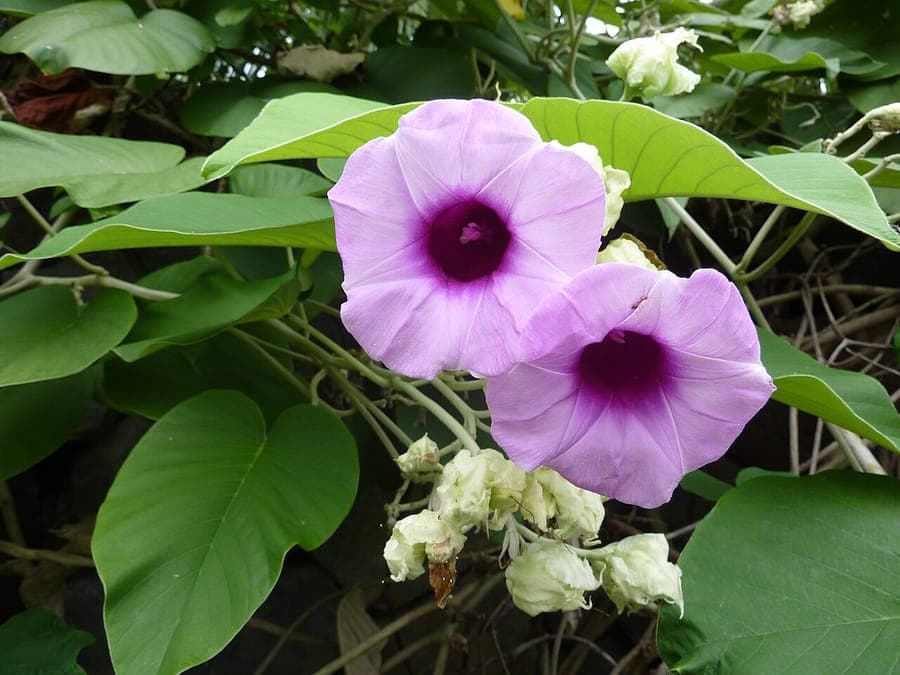
Loi Miao. / CC0, via Wikimedia Commons
Argyreia nervosa: complete guide
Argyreia nervosa
¿Quieres ver Argyreia nervosa: complete guide en tu jardín?
1 minuto, sin tarjeta de crédito
Overview
Argyreia nervosa, commonly called Baby Wood Rose or Woolly Morning Glory, is a captivating climbing plant native to the Indian subcontinent. This ornamental beauty is distinguished by its striking silvery-gray foliage and delicate pink to white blooms that command attention in any garden setting. The plant belongs to the Convolvulaceae family and is celebrated for its romantic appeal and vigorous growth habit.
This plant is perfect for gardeners seeking an exotic, fast-growing climber with distinctive leaf architecture. With proper care, it blooms year-round and creates a dense green wall that transforms vertical spaces into living artworks.
Appearance and Bloom
The characteristic silvery-gray leaves are a defining feature of this remarkable plant. Each leaf is heart-shaped to kidney-form and covered with fine silvery hairs, creating a soft luminescent sheen that's particularly striking in moonlight. Leaf surfaces can reach 10-15 cm in length.
The flowers are captivating: soft pink to white blossoms with purple throats appear in delicate clusters. Each individual bloom is trumpet-shaped and opens to roughly 4-5 cm in diameter. The flowering period runs from May through October, with peak activity during summer months. After blooming, interesting seed pods develop and can persist on the plant for months, adding visual interest.
Ideal Location
This climbing plant thrives in locations with abundant sunlight. A minimum of 6 to 8 hours of direct daily sun is essential for optimal flowering. In partial shade, the plant grows acceptably but produces fewer flowers. Protection from harsh, drying winds is recommended, especially during the establishment phase.
East or south-facing walls are ideal. In cooler climates, plant against a wall near the house foundation to maximize heat accumulation. Provide sturdy support structures or trellises for the plant to climb upon.
Soil
Argyreia nervosa thrives in well-draining, nutrient-rich soil. A pH between 6.0 and 7.5 is optimal. Mix potting soil or garden earth with compost and add perlite or coarse sand for improved drainage.
The plant benefits significantly from added organic matter at planting time. A 5-7 cm mulch layer helps retain moisture and keeps roots cool. Avoid waterlogged conditions to prevent root rot.
Watering
During the growing season (May through October), water regularly to maintain moist but not waterlogged soil. Under dry conditions and heat, water at least twice weekly. During winter and dormant periods, reduce watering significantly - only enough to prevent drying out completely.
Check soil moisture regularly. Ensure good drainage in containers. Rainwater is preferable to tap water due to superior micronutrient content.
Diseño gratis
¿Quieres ver Argyreia nervosa: complete guide en tu jardín? Crea un diseño gratis ahora.
Pruning
Regular pruning encourages branching and denser growth. After flowering, cut old stems back to halfway. Remove weak or damaged growth throughout the year. Perform substantial structural pruning in early spring (March).
The plant can grow aggressively and requires regular maintenance to stay within desired bounds. Remove wayward or wild growth to improve overall plant architecture.
Maintenance Calendar
January to March: Perform structural pruning, check for pests and diseases.
April to May: Begin feeding program, prepare for growing season.
June to August: Increase regular feeding and moisture monitoring.
September to October: Reduce feeding, decrease watering.
November to December: Minimal maintenance, prepare for winter.
Winter Hardiness
Argyreia nervosa is not winter-hardy in temperate climates. At temperatures below 10°C, growth stops and death can occur. In the Netherlands and Belgium, the plant is typically treated as an annual or must be moved indoors for winter.
In climates with winters above 5°C, the plant can survive with minimal care. In very cold winters (below -5°C), the plant will perish. Container cultivation provides more flexibility for winter protection.
Companion Planting
Argyreia nervosa combines beautifully with other climbers such as Jasminum officinale (Common Jasmine) and Clematis hybrids. Also interesting alongside dark-foliaged plants like Ilex (Holly) or Photinia. For color contrast, combine with silvery-leaved plants like Senecio cineraria (Dusty Miller) or Artemisia.
Beneath the plant, low-growing border specimens thrive, such as Lavandula (Lavender) or Santolina. Combined in containers with Hedera (Ivy) or other wall-coverers, you create interesting textural compositions.
Closing Thoughts
The Argyreia nervosa is a refined choice for gardeners wanting to combine exotic elegance with vigorous growth. With attention to location, soil, and moisture management, this plant will bloom spectacularly throughout the growing season. Many garden centers in the UK stock this plant. For more information about exotic garden plants, visit gardenworld.app where you can receive personalized plant recommendations. The experts at gardenworld.app are happy to combine this plant with complementary planting schemes for your unique garden design.
¿Quieres ver Argyreia nervosa: complete guide en tu jardín? Crea un diseño gratis ahora.
Sube una foto, elige un estilo y obtén un diseño fotorrealista con lista de plantas en menos de un minuto.
Más de 10.000 jardines diseñados
Sin tarjeta de crédito


Plantas similares
Spreading alkaliweed: complete guide
Cressa truxillensis
Full growing guide for Cressa truxillensis, the salt-tolerant groundcover of alkaline flats: location, soil, watering, pruning and winter care.
Betony-leaved bindweed: complete guide
Convolvulus betonicifolius
Full guide to betony-leaved bindweed (Convolvulus betonicifolius): origin, appearance, ideal site, soil, watering and garden uses.
Ivyleaf morning glory: complete guide
Ipomoea hederacea
Everything about Ipomoea hederacea: location, soil and climbing care. A fast-growing annual vine with blue funnel flowers for sunny walls and pergolas.