
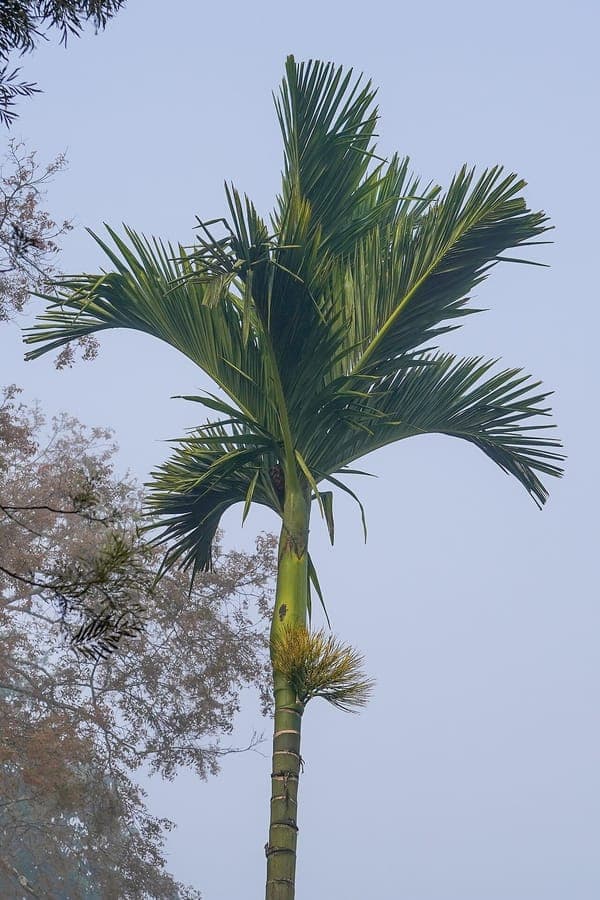
This Photo was taken by Timothy A. Gonsalves. Feel free to use my photos, but please mention me as the author. I would much appreciate if you send me an email [email protected] or write on my talk page, for my information. Please contact me before commercial use. Please do not upload an edited image here without consulting me. I would like to make corrections only at my own source to ensure that the changes improve the image and are preserved.Otherwise you may upload an edited image with a new name. Please use one of the templates derivative or extract. / CC BY-SA 4.0, via Wikimedia Commons
Areca Palm: complete guide
Areca catechu
¿Quieres ver Areca Palm: complete guide en tu jardín?
1 minuto, sin tarjeta de crédito
Overview
The Areca Palm (Areca catechu), also known as the Betel Palm, is an elegant tropical plant originating from the Philippines. This slender palm reaches heights of 10 to 15 meters and is traditionally cultivated for its aromatic nuts used in cultural practices across Asia. The plant is not only functional but also a beautiful decorative addition to any tropical garden or temperate greenhouse setting.
This fascinating palm has a rich history in Asia, where it has been cultivated for centuries for culinary and cultural purposes. The nuts are used as a chewing preparation in traditional ceremonies and social gatherings. In modern gardens, the Areca Palm is primarily valued for its ornamental beauty and exotic appearance, bringing a touch of the tropics to any indoor space.
Appearance and bloom
The Areca Palm has a remarkable appearance that immediately stands out in any environment. The smooth, upright trunk is gray-green and free of branches, giving the plant an elegant appearance. The trunk can reach a diameter of 10 to 15 centimeters and grows very straight, creating a striking vertical line in the landscape.
The feathery, bright green fronds are long and elegant with a pinnate structure. Each frond can reach up to 60 centimeters in length and consists of many small leaflets arranged gracefully along a central vein. These fronds create a transparent, airy effect that is characteristic of palms and adds to their appeal.
The flowers are small, yellowish-white and appear in clusters at the leaf axils. While not particularly showy, they contribute to the overall charm of the plant. After pollination, fruits develop that are approximately 4 to 6 centimeters long and orange-yellow in color. Each fruit contains a single, hard seed-bearing nut that is the famous areca nut.
Ideal location
The Areca Palm thrives in warm locations with plenty of indirect light. In temperate climates, this plant must be kept indoors or in a heated greenhouse. The plant prefers not the full midday sun but rather bright, filtered light throughout most of the day.
A location with temperatures of at least 18 to 20 degrees Celsius year-round is essential for healthy growth. The plant can tolerate briefly lower temperatures, but prolonged exposure to cold can result in growth limitation or damage. Ensure the plant is protected from cold drafts and temperature fluctuations.
Humidity must be relatively high, ideally between 60 and 80 percent. You can achieve this by misting regularly with water and placing the plant among other plants to retain moisture.
Diseño gratis
¿Quieres ver Areca Palm: complete guide en tu jardín? Crea un diseño gratis ahora.
Soil
Use rich, well-draining potting mix with plenty of organic matter for the Areca Palm. A mixture of garden soil, coco coir and compost works excellently. The soil should remain consistently moist but never waterlogged. Water stagnation can lead to root rot and other problems.
A good soil mixture contains approximately 40 percent garden soil, 30 percent coco coir and 30 percent compost. This ensures the right balance between water permeability and moisture retention. Also add some perlite or coarse sand for extra drainage if the soil feels too heavy.
The soil pH should be slightly acidic to neutral, ideally between 6.0 and 7.0. This is beneficial for nutrient uptake and microbial activity in the soil.
Watering
Water this palm regularly, especially during the growing season from spring to autumn. The soil should not completely dry out between waterings. During warm periods, daily watering may be necessary, while in cooler seasons less water may suffice.
Check soil moisture by inserting your finger 2 to 3 centimeters deep into the soil. If it feels dry, it's time to water. If it still feels moist, wait a few more days.
In winter, watering can be reduced somewhat, but allowing the soil to dry completely should be avoided. Always use water at room temperature or slightly warmer, as cold water can shock the plant.
Pruning
The Areca Palm requires minimal pruning. Remove only dead or damaged fronds to keep the plant healthy and attractive. Use sharp, clean tools to prevent damage. If you wish to control height, you can prune the top, though this slows growth and looks less natural.
Remove yellow or brown fronds as soon as they appear, as they no longer provide nutrients back to the plant. Ensure you only cut the absolute minimum, as palms recover slowly from heavy pruning wounds.
Maintenance calendar
Spring: Repot if necessary and begin fertilizing. Summer: Regular watering and misting for humidity. Autumn: Gradually reduce water as temperatures decline. Winter: Minimal water and no fertilizing needed.
Fertilize during the growing season every two to four weeks with a slow-release palm fertilizer. Reduce fertilizing in fall and provide no fertilizer in winter.
Winter hardiness
This palm is not winter hardy in temperate climates. Ensure temperatures never drop below 15 degrees Celsius. In warmer regions, the plant can remain outdoors year-round, provided it is protected from cold winds.
Companion plants
Combine the Areca Palm with other tropical plants such as Ficus, Anthurium and other palms. Low-growing plants with red foliage create beautiful contrast with the green palm fronds.
Closing remarks
The Areca Palm is an excellent choice for creating a tropical atmosphere indoors. With proper care and warm conditions, this plant will provide beauty for many years. Visit gardenworld.app for more tropical plant inspiration and design ideas. Check gardenworld.app for companion planting suggestions and care updates.
For purchase, visit your local garden center or specialty nurseries carrying tropical plants.
¿Quieres ver Areca Palm: complete guide en tu jardín? Crea un diseño gratis ahora.
Sube una foto, elige un estilo y obtén un diseño fotorrealista con lista de plantas en menos de un minuto.
Más de 10.000 jardines diseñados
Sin tarjeta de crédito


Plantas similares
Needle palm: complete guide
Rhapidophyllum hystrix
Everything about the needle palm: the world's hardiest palm, suitable for gardens in temperate climates down to USDA zone 7b.
Saw palmetto: complete guide
Serenoa repens
A complete guide to saw palmetto (Serenoa repens), the iconic fan palm from Florida and the southeastern United States, prized for its toughness.
Puerto Rican hat palm: complete guide
Sabal causiarum
Grow Puerto Rican hat palm successfully. A majestic fan palm with tropical presence suited to sheltered Mediterranean-style gardens.