
Urban / Public domain, via Wikimedia Commons
Aralia racemosa: complete guide
Aralia racemosa
¿Quieres ver Aralia racemosa: complete guide en tu jardín?
1 minuto, sin tarjeta de crédito
Overview
Aralia racemosa, commonly known as American spikenard or Indian root, is a native North American plant from the Araliaceae family. This shade-loving perennial is recognized for its elegant compound leaves, small greenish-white flowers, and decorative dark purple berries. In traditional medicine of North American indigenous peoples, this plant played an important role. Today, it is primarily valued for its distinctive structure in shaded gardens.
Appearance & Bloom
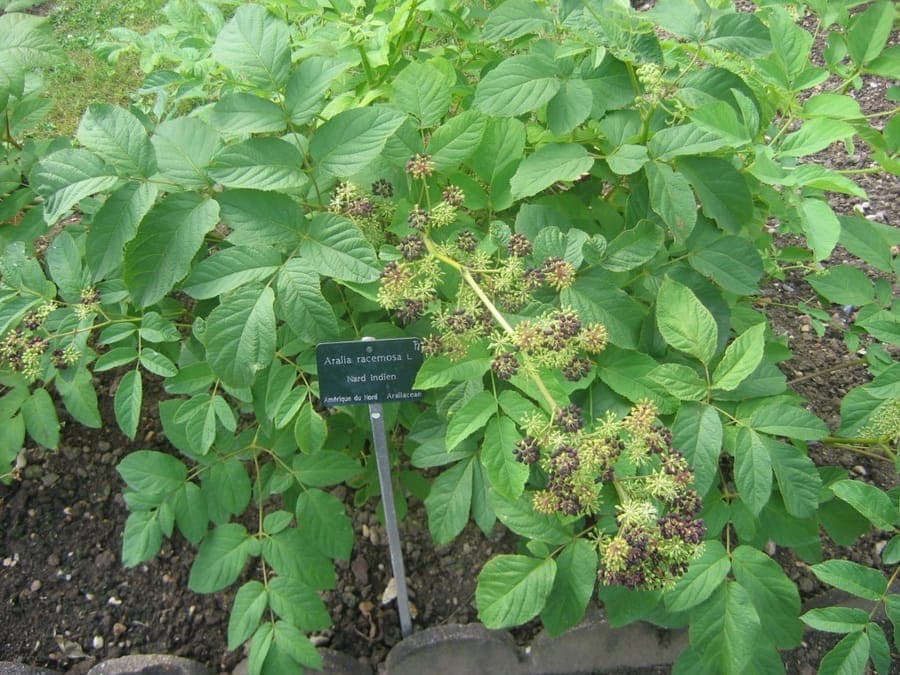
Aralia racemosa is a mid-sized plant typically growing 60 to 120 centimeters tall. The leaves are large and twice-compound with numerous small leaflets, giving a delicate, lace-like appearance. In summer, from July to August, small white to yellow-green flowers appear in prominent raceme-like inflorescences. The flowers give way to brilliant dark red to purple berries in autumn, which are very attractive to birds. The entire plant is frost-sensitive above ground and disappears in winter.
Ideal Location
This plant thrives best under full to partial shade. It is ideal for wooded areas where filtered sunlight is available. Full sun will cause the leaves to shrivel in warm climates. The plant prefers protected locations where wind cannot damage the delicate foliage.
Soil
Aralia racemosa grows best in rich, moisture-retentive soils with abundant organic material. Acidic to neutral soil is preferred. At planting time, incorporate compost or leaf mold to improve soil structure and moisture retention. Regular mulch application helps keep soil cool and moist.
Watering
This plant requires regular water, especially during growth and flowering. Ensure the soil stays consistently moist but not waterlogged. Deeper watering once a week is better than frequent light sprinkling. Mulching around the plant helps improve moisture retention.
Diseño gratis
¿Quieres ver Aralia racemosa: complete guide en tu jardín? Crea un diseño gratis ahora.
Pruning
Minimal pruning is needed. Remove only dead leaves and damaged stems. After flowering, seed clusters can be removed for neater appearance, though many gardeners prefer to leave them for bird food. Careful pruning in spring helps maintain shape.
Maintenance Calendar
Spring: Refresh mulch as new growth appears. Apply slow-release fertilizer. Summer: Regular watering for blooming. Enjoy the subtle flowers. Fall: Admire the beautiful berries. Leave seed for bird food. Winter: Plant dies back. Clean up bed.
Winter Hardiness
Aralia racemosa is very winter-hardy in USDA zones 3-8. It is a deciduous plant that completely dies back to the ground in winter. This makes it very reliable for cold climates. Mulch protection is useful in the coldest areas.
Companion Plants
This plant combines well with:
- Hosta species (shade hosts)
- Heuchera (coral bells)
- Helleborus (Christmas rose)
- Brunnera (Siberian bugloss)
- Sambucus canadensis (American elderberry)
Closing
Aralia racemosa is an excellent choice for gardeners with shaded areas who want to add structure, texture, and seasonal interest. Its delicate leaves provide contrast with sturdier foliage, while its bird-friendly berries add ecological value. Treat it as a supporting player in the shade landscape and you will be rewarded with years of pleasant greenery and autumn color.
For purchase options in English-speaking regions:
- Local native plant nurseries
- Specialty shade plant suppliers
- Online plant retailers
Gardenworld.app helps you find the perfect place for this shade-lover in your garden. Explore the complete guide for personalized design recommendations.
¿Quieres ver Aralia racemosa: complete guide en tu jardín? Crea un diseño gratis ahora.
Sube una foto, elige un estilo y obtén un diseño fotorrealista con lista de plantas en menos de un minuto.
Más de 10.000 jardines diseñados
Sin tarjeta de crédito


Plantas similares
American marsh pennywort: complete guide
Hydrocotyle americana
Everything about Hydrocotyle americana: location, soil, moisture and winter care. A delicate groundcover for shaded pond edges and boggy garden borders.
Devil's club: complete guide
Oplopanax horridus
Full guide to growing Oplopanax horridus: ideal site, soil, watering, and care for this dramatic spiny woodland shrub.
Water pennywort: complete guide
Hydrocotyle umbellata
Everything about Hydrocotyle umbellata: ideal location, soil, watering, winter care and pond planting. A versatile aquatic plant for garden ponds and boggy spots.