
Hardyplants at English Wikipedia / Public domain, via Wikimedia Commons
Aralia nudicaulis: complete guide
Aralia nudicaulis
¿Quieres ver Aralia nudicaulis: complete guide en tu jardín?
1 minuto, sin tarjeta de crédito
Overview
Aralia nudicaulis, commonly called Virginia-sarsaparilla or American sarsaparilla, is a native North American woodland plant extending from subarctic Canada to eastern United States. This versatile plant is valuable for its decorative foliage, modest flowers and bright red berries.
The plant belongs to the Araliaceae family, the same family as ginseng and fatsia. Aralia nudicaulis is used in traditional medicine and holds strong historical significance for North American Indigenous peoples and colonists.
This is an excellent choice for ecological gardens, woodland edge plantings and for those wanting to fill shady corners with something special.
Appearance and bloom period
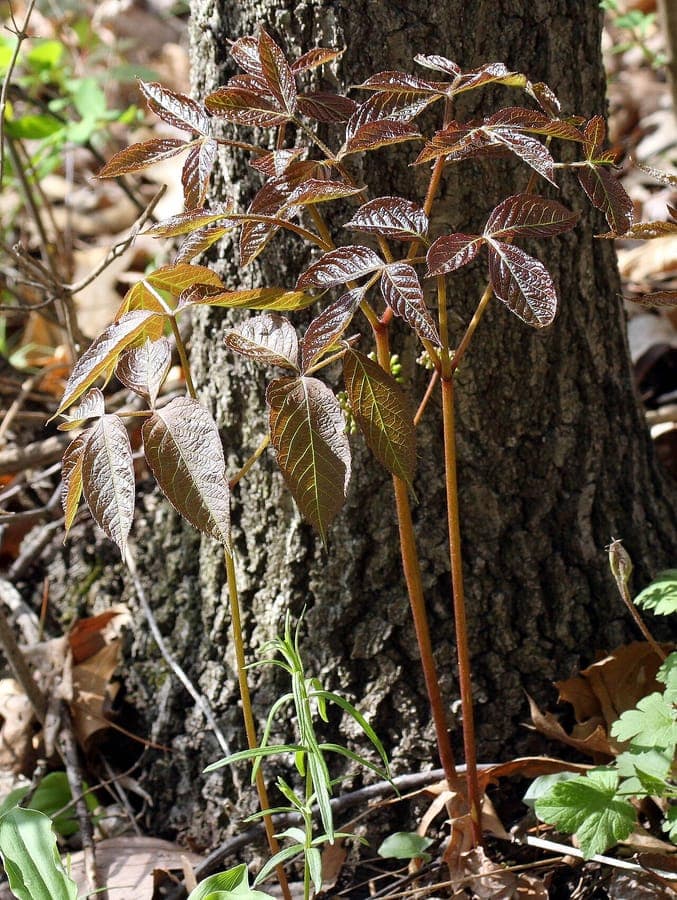
Aralia nudicaulis forms a low, spreading, shrubby growth approximately 30-45 centimeters tall with vigorous rhizomes. The leaves are the primary attraction: they are trifoliate (three large leaflets), finely divided and form an elegant foliage canopy.
The leaves emerge green in spring and take on attractive yellow to red tones in autumn. The modest green flowers appear in May through June in small umbels and are especially attractive to bees.
After flowering, small, bright red berries (approximately 5 millimeters) ripen in August through September. These berries are very attractive to birds and provide valuable food source.
Ideal location
Aralia nudicaulis thrives best in shade to partial shade, especially in mixed woodland edges. The plant requires at least 3-4 hours of indirect light daily. Full shade beneath large trees also works, though flower production will be less.
The plant prefers cool, moist conditions typical of forest soil. A spot beneath deciduous trees with moist soil is perfect. The plant also works well as underplanting in larger plantings.
Avoid hot, drying spots; the plant will wilt in intense sun.
Soil
Aralia nudicaulis prefers rich, humus-rich soil similar to forest soil. The plant grows best in slightly acidic soil (pH 5.5-6.5) with sufficient organic matter.
Amend generously with leaf mold, compost or natural forest humus. This improves moisture retention and nutrition. The plant also tolerates acidic soils well. Heavy, waterlogged soils can be problematic; ensure reasonable drainage.
Rich forest soil with plenty of decomposed organic matter is ideal.
Watering
Aralia nudicaulis requires regular water, especially during the growing season. The plant prefers moist soil but not waterlogging. In moist woodland conditions, supplemental watering is often unnecessary.
During dry periods, regular watering is needed. In container cultivation the plant needs more water and moist soil must be maintained. In winter, when the plant is dormant, less water is needed.
Mulching with leaf mold or compost helps retain moisture.
Diseño gratis
¿Quieres ver Aralia nudicaulis: complete guide en tu jardín? Crea un diseño gratis ahora.
Pruning
Aralia nudicaulis requires minimal pruning. The plant grows naturally compact and forms a beautiful woodland silhouette. Remove dead or damaged leaves as needed.
Yearly, some overgrown foliage can be removed, but hard pruning can disrupt growth. The plant spreads via underground rhizomes and will naturally form a more compact shape.
In spring, old, withered leaves can be removed before new foliage emerges.
Maintenance calendar
March-April: Set plants outside in shaded spots after frost danger.
May-June: Regular watering, bloom period.
June-August: Berry growth, plant maintenance, ensure moisture.
August-September: Berry period, birds eat berries.
October: Fall color, plant enters dormancy.
November-March: Plant dormant, minimal care.
Winter hardiness
Aralia nudicaulis is very winter-hardy in temperate to cold climates, suitable for USDA zones 3-9. The plant naturally grows in subarctic Canada and tolerates -30 degrees Celsius.
In all European regions this plant will thrive. The plant dies back to ground level in winter, but the roots survive and the plant regrows each spring.
This is a very reliable plant for cold climates and requires no frost protection.
Companion plants
Aralia nudicaulis pairs beautifully with other woodland plants and shade-loving species:
- Maianthemum dilatatum (false lily-of-the-valley) - fine underplanting
- Polygonatum (Solomon's seal) - elegant structure
- Astilboides tabularis - large foliage contrast
- Woodwardia areolata (chain fern) - fine texture
- Epimedium (fairy wings) - low green layer
These combinations create interesting woodland specifications.
Conclusion
Aralia nudicaulis is an underrated gem for gardeners wanting to create woodland landscapes or fill shady corners. With its fine foliage, modest flowers, bright red berries and extreme winter hardiness, it adds a natural forest feel to temperate gardens.
This is the plant for those wanting to create ecological gardens that attract many birds and bees. The historical and medicinal significance adds further value. Sow this year and enjoy this North American woodland beauty!
On gardenworld.app, discover more designs featuring woodland plants. Find how to transform your front yard into a natural woodland edge.
¿Quieres ver Aralia nudicaulis: complete guide en tu jardín? Crea un diseño gratis ahora.
Sube una foto, elige un estilo y obtén un diseño fotorrealista con lista de plantas en menos de un minuto.
Más de 10.000 jardines diseñados
Sin tarjeta de crédito


Plantas similares
American marsh pennywort: complete guide
Hydrocotyle americana
Everything about Hydrocotyle americana: location, soil, moisture and winter care. A delicate groundcover for shaded pond edges and boggy garden borders.
Devil's club: complete guide
Oplopanax horridus
Full guide to growing Oplopanax horridus: ideal site, soil, watering, and care for this dramatic spiny woodland shrub.
Water pennywort: complete guide
Hydrocotyle umbellata
Everything about Hydrocotyle umbellata: ideal location, soil, watering, winter care and pond planting. A versatile aquatic plant for garden ponds and boggy spots.