
Kurt Stüber [1] / CC BY-SA 3.0, via Wikimedia Commons
Running rockcress: complete guide
Arabis procurrens
¿Quieres ver Running rockcress: complete guide en tu jardín?
1 minuto, sin tarjeta de crédito
Overview
Arabis procurrens, commonly known as running rockcress or Hungarian rockcress, is an elegant low-spreading groundcover from the Carpathians to the Balkans. This plant is valued for its fine green foliage, often tinged purple, and abundant white flowers in early spring. With its prostrate growth and minimal maintenance requirements, running rockcress is ideal for rock gardens, green roofs, and slopes.
Appearance and Bloom
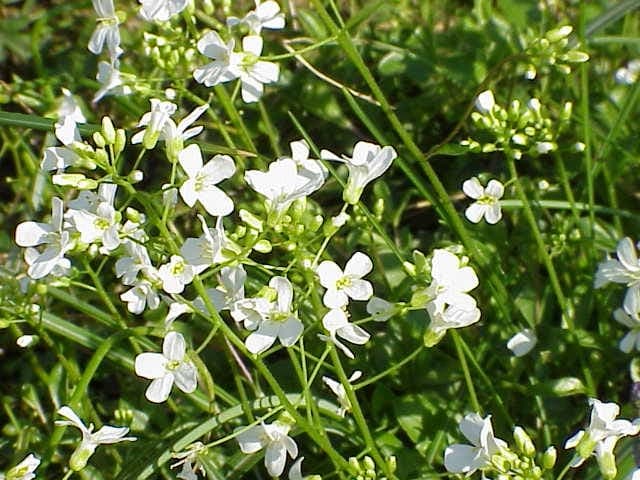
Running rockcress grows as an elegant, low-spreading carpet reaching only 15-25 cm tall and 30-50 cm wide per plant. The leaves are small, narrow, and green with often purple-tinged undersides. The plant spreads via surface runners, creating a flowing, natural effect. From April through May, numerous small four-petaled white flowers appear in dense clusters, creating a spectacular snow-white display.
Ideal Location
Running rockcress thrives in sunny locations, though it also grows in partial shade. Full sun positions produce the most flowers. This plant is perfect for rock walls, stone gardens, slopes, and as border edging along stone paths. Also excellent for green roof and container cultivation.
Soil Requirements
This plant accepts highly diverse soil types, from acidic to alkaline. Well-drained, lightly nutrient-rich soil supports good growth. Sand-gravel mixes are preferred. However, the plant also grows well in moderate soil provided drainage is present. A pH between 5.5 and 7.5 is acceptable.
Diseño gratis
¿Quieres ver Running rockcress: complete guide en tu jardín? Crea un diseño gratis ahora.
Watering
Once established, running rockcress is highly drought-tolerant. Regular watering during the first growing season (April-September) aids root establishment. Afterward, normal rainfall suffices. Extended dry periods may require occasional watering, but this plant is not water-dependent. Excessive moisture in very wet winters can cause damage.
Pruning
Pruning is optional. The plant naturally grows low and compact. After blooming in May, spent flower clusters can be removed. Once every two years in early spring, the plant can be lightly cut back to maintain vigor. Overgrown or old sections can carefully be removed.
Maintenance Calendar
March-April: Preparation, add nutrient compost around existing plants. April-May: Bloom period, maintain regular moisture, enjoy white flowers. June-August: Growth phase, minimal feeding, normal rainfall. August-September: Preparation for winter, no maintenance. October-February: Winter dormancy, minimal care.
Winter Hardiness
Arabis procurrens is very winter hardy to about -15 to -20 degrees Celsius and suitable for most European climate zones. The plant survives harsh winters without problems, even under snow.
Companion Plants
Combine running rockcress with other low alpine plants like Sedum, Sempervivum, Phlox subulata, Armeria, and compact Dianthus species. Flowering groundcovers like Alyssum and Aubrieta add additional color. Grasses like Festuca and compact Carex provide texture.
Closing Thoughts
Arabis procurrens is a valuable gem for alpine and rock garden lovers. With its elegant growth, spectacular spring bloom, and minimal maintenance needs, it adds beauty year after year. Visit gardenworld.app for alpine garden and green roof inspiration. A must-have for serious gardeners.
¿Quieres ver Running rockcress: complete guide en tu jardín? Crea un diseño gratis ahora.
Sube una foto, elige un estilo y obtén un diseño fotorrealista con lista de plantas en menos de un minuto.
Más de 10.000 jardines diseñados
Sin tarjeta de crédito


Plantas similares
Brassica cretica: complete guide
Brassica cretica
Brassica cretica, the Cretan cabbage, grows wild on Aegean cliffs. Discover how to grow this drought-tolerant, yellow-flowered Mediterranean perennial.
Corsican cabbage: complete guide
Brassica insularis
Corsican cabbage is a rare Mediterranean rock cabbage with white flowers and blue-green leaves. Location, soil and winter protection.
Prostrate cabbage: complete guide
Brassica procumbens
Prostrate cabbage is a creeping North African cliff plant with yellow flowers. Discover location, soil type and winter protection.