
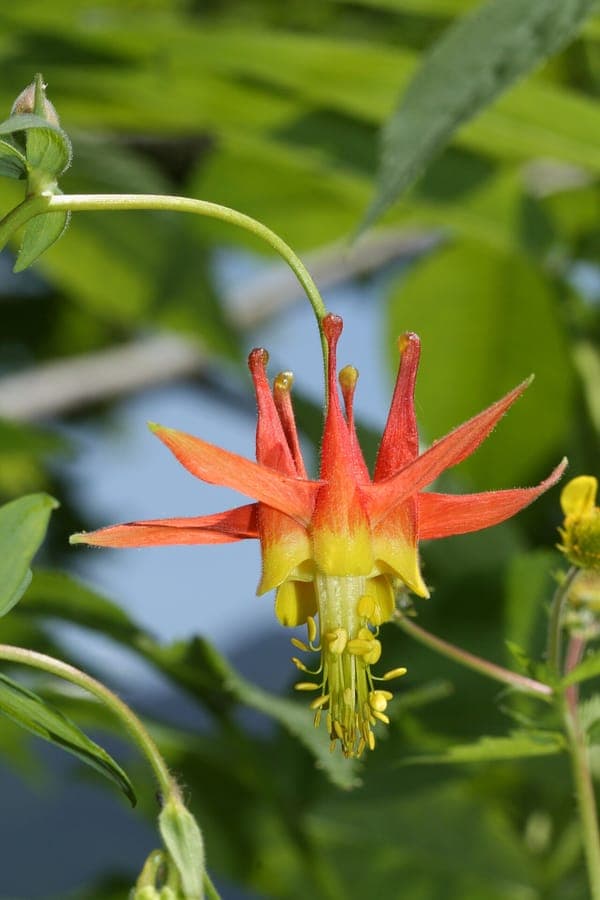
Walter Siegmund (talk) / CC BY-SA 3.0, via Wikimedia Commons
Western Columbine: complete guide
Aquilegia formosa
¿Quieres ver Western Columbine: complete guide en tu jardín?
1 minuto, sin tarjeta de crédito
Overview
Western Columbine (Aquilegia formosa) is an elegant and strikingly beautiful flower native to western North America, from southern Alaska to the northern United States. This plant belongs to the Ranunculaceae family and is renowned for its unique, gracefully shaped flowers in contrasting red-and-yellow hues that attract hummingbirds.
Appearance and growth
Western Columbine grows to approximately 24-36 inches tall. The leaves are finely divided, triangular and gray-green, giving a delicate appearance. Flowers bloom from May to June in various red-and-yellow combinations, with long, thin spurs projecting backward. The flower design naturally attracts hummingbirds.
Ideal location
This plant thrives in partial shade to dappled sun. It prefers morning sun with protection from intense afternoon heat, especially in warm climates. Even in full sun, growth can be good if adequate moisture is present.
Soil
Western Columbine prefers moist, well-draining, humus-rich soils. Rich soil with organic matter promotes optimal growth. Neutral to slightly acidic pH is preferred. Avoid extremely dry soils.
Diseño gratis
¿Quieres ver Western Columbine: complete guide en tu jardín? Crea un diseño gratis ahora.
Watering
Water regularly to maintain evenly moist soil, especially during growth stage and blooming. Once established, the plant tolerates some drought better. Excessive water can be harmful; ensure good drainage.
Pruning
Remove spent flowers to encourage further blooming and keep the plant tidy. After blooming, foliage can be removed when fully withered. Seeds can be collected before they fully scatter for propagation.
Maintenance calendar
April-May: observe growth. May-June: enjoy blooming. June-July: deadhead regularly. July-August: seed pods follow. September-October: prepare for dormancy.
Winter hardiness
Western Columbine is reasonably hardy in zones 3-9. Mulch around the base provides protection in cold winters. In very cold regions, the plant may require biennial treatment.
Companion plants
Combine with other shade-lovers like Hellebores, Heucheras, or Astilbes. The delicate flowers work beautifully between finer grasses or against dark foliage backgrounds. Suits woodland gardens.
Conclusion
Western Columbine is a unique addition with elegant flowers that attract hummingbirds. Perfect for gardeners seeking something special. Available at Intratuin and Gamma in the Netherlands, OBI and Hornbach in Germany.
Want more plant information? Visit gardenworld.app/en for more ideas and advice.
¿Quieres ver Western Columbine: complete guide en tu jardín? Crea un diseño gratis ahora.
Sube una foto, elige un estilo y obtén un diseño fotorrealista con lista de plantas en menos de un minuto.
Más de 10.000 jardines diseñados
Sin tarjeta de crédito


Plantas similares
Drummond's anemone: complete guide
Anemone drummondii
Discover Drummond's anemone (Anemone drummondii): a silvery-grey mountain plant for cool rock gardens and alpine troughs.
Korean clematis: complete guide
Clematis serratifolia
Clematis serratifolia is a hardy climber with fragrant yellow bell flowers in August-September. Pruning group 3, location and care tips.
Aquilegia brevistyla: complete guide
Aquilegia brevistyla
Discover Aquilegia brevistyla, the elegant North American columbine. Growing tips, shade tolerance, and design ideas for woodland and shadowed gardens.