
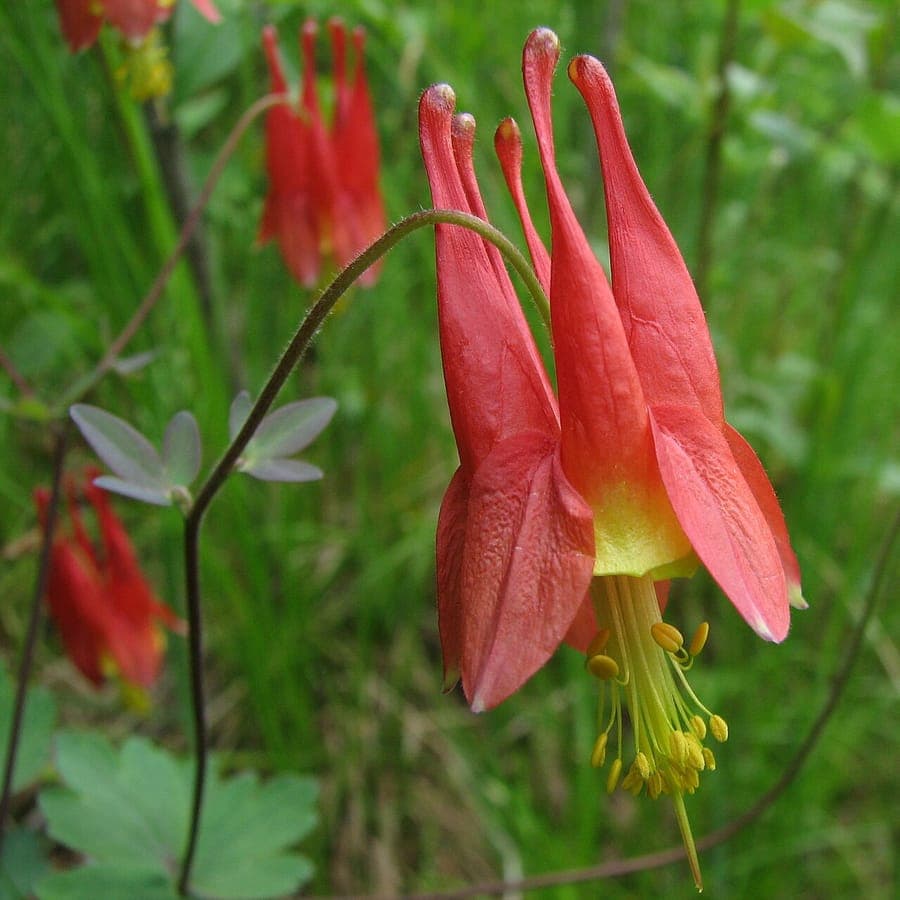
Ragesoss / CC BY-SA 3.0, via Wikimedia Commons
Aquilegia canadensis: complete guide
Aquilegia canadensis
¿Quieres ver Aquilegia canadensis: complete guide en tu jardín?
1 minuto, sin tarjeta de crédito
Overview
Aquilegia canadensis, commonly known as wild columbine or Canadian columbine, is a graceful upright plant in the Ranunculaceae family. This North American species is known for its unique, elegant red and yellow flowers with long back spurs. The plant typically reaches a height of 60-90 cm.
This is a valuable addition to bird gardens and borders where refined, natural beauty is desired.
Appearance & bloom
Aquilegia canadensis features graceful, triangularly divided leaves that are two to three times divided into smaller leaflets. The leaves are finely hairy and have a fresh green color.
The flowers are the main attraction, appearing in May-June. They have a unique shape with red outer crown and yellow inner parts. The long, hollow spurs give the flower an elegant, bird-like profile. The flower is approximately 5 cm long.
Ideal location
Aquilegia canadensis grows best in half-shade, with at least 2-3 hours of indirect sunlight dedicated. In cooler climates, full sunlight can be tolerated. Avoid strong midday sun in warm areas.
Soil
The plant prefers well-draining, moist soil. Sandy to clayey soil is well tolerated. A neutral to slightly acidic soil (pH 6-7) is ideal. Add nutrient-rich compost when planting.
Watering
Water regularly, especially during the growing season. The plant prefers consistent moisture content, not continuously wet ground. In dry periods, watering may be needed. After flowering, water can be gradually reduced.
Diseño gratis
¿Quieres ver Aquilegia canadensis: complete guide en tu jardín? Crea un diseño gratis ahora.
Pruning
Remove spent flowers immediately for extended blooming. Leave the plant largely standing in late autumn for seed development.
Maintenance calendar
Spring (March-May): Water regularly as new growth begins. Sowing can be done directly in the garden. Flowers begin appearing in May. Summer (June-August): Enjoy bloom. Remove spent flowers. Water if dry. Autumn (September-October): Seeds ripen. Leave seed heads on plant. Begin winter preparation. Winter (November-February): Plant dies back to ground level. Minimal care. Seed dispersal can occur naturally.
Winter hardiness
Aquilegia canadensis is very winter-hardy and can tolerate temperatures down to -30 C. This is a very reliable perennial in most climates.
Companion plants
Aquilegia canadensis combines nicely with:
- Christmas rose (Helleborus niger)
- Sedge (Carex oshimensis)
- Catchfly (Silene vulgaris)
- Astilbe (Astilbe japonica)
- Fern (Polystichum)
Closing
Aquilegia canadensis is an elegant, long-blooming plant that is easy to grow in part shade. With minimal maintenance it will brighten your borders from May to July with its unique red and yellow flowers. A perfect opportunity to create a natural, bird-friendly garden.
Wide availability at garden centers. For more garden plants, visit gardenworld.app/en
¿Quieres ver Aquilegia canadensis: complete guide en tu jardín? Crea un diseño gratis ahora.
Sube una foto, elige un estilo y obtén un diseño fotorrealista con lista de plantas en menos de un minuto.
Más de 10.000 jardines diseñados
Sin tarjeta de crédito


Plantas similares
Drummond's anemone: complete guide
Anemone drummondii
Discover Drummond's anemone (Anemone drummondii): a silvery-grey mountain plant for cool rock gardens and alpine troughs.
Korean clematis: complete guide
Clematis serratifolia
Clematis serratifolia is a hardy climber with fragrant yellow bell flowers in August-September. Pruning group 3, location and care tips.
Aquilegia brevistyla: complete guide
Aquilegia brevistyla
Discover Aquilegia brevistyla, the elegant North American columbine. Growing tips, shade tolerance, and design ideas for woodland and shadowed gardens.