
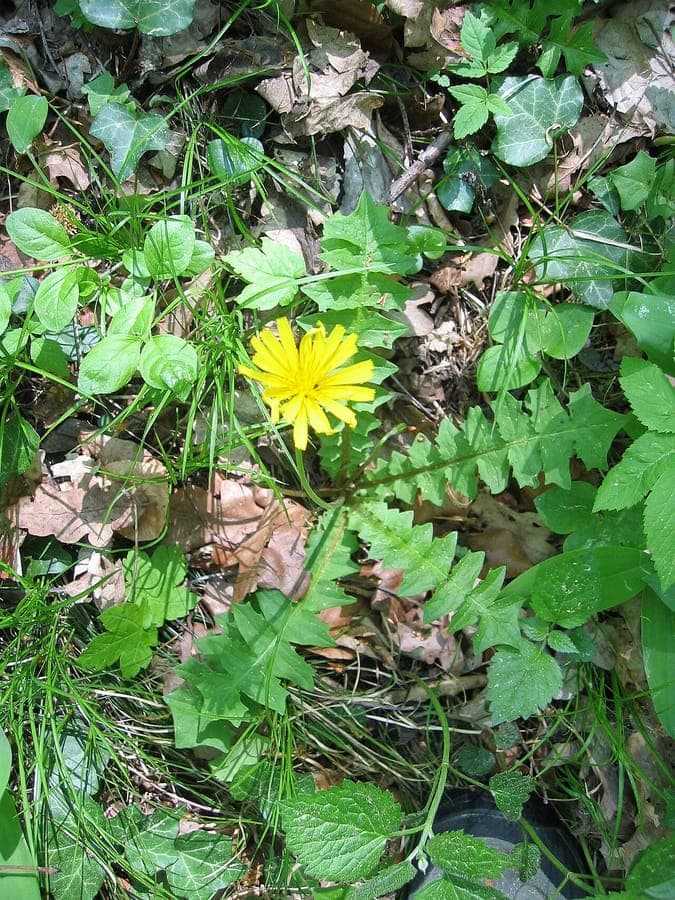
User:Tigerente / CC BY-SA 3.0, via Wikimedia Commons
Aposeris foetida: complete guide
Aposeris foetida
¿Quieres ver Aposeris foetida: complete guide en tu jardín?
1 minuto, sin tarjeta de crédito
Overview
Aposeris foetida, also known as Fetid aposeris or Hainlattich, is a compact plant native to Europe. This delicate herb is appreciated for its finely divided foliage and small yellow flowers that bloom in June and July. The name foetida refers to the characteristic musty odor the plant releases when touched.
Appearance and Bloom
Aposeris foetida forms a low rosette of finely divided foliage with a delicate appearance. The leaves are deeply cut, almost fern-like, giving the plant an elegant character. The yellow flowers appear in June and July on thin stems above the foliage. The plant typically reaches 30-40 centimeters tall.
Ideal Location
This plant thrives in partial to full shade, with at least four hours of indirect light daily. In dense shade, blooming may be less abundant. Place it in a sheltered spot under trees or against walls. Aposeris foetida is frost-hardy and tolerant of cold conditions.
Soil
The soil must be well-draining, preferring neutral to slightly acidic (pH 6.5-7). Rich, moist soil is ideal, especially since the plant grows in woodland environments. Add organic material such as humus or leaf mold. This plant loves growing in moist spots, unlike many other Mediterranean plants.
Diseño gratis
¿Quieres ver Aposeris foetida: complete guide en tu jardín? Crea un diseño gratis ahora.
Watering
Water regularly to keep soil moist. Aposeris foetida loves moist soil, especially during the growing season. Water carefully at the base and avoid wetting foliage. In dry periods, provide extra water. The plant tolerates some drying but blooms better with regular watering.
Pruning
Pruning is minimal. Remove faded flowers to encourage further blooming. Remove dead leaves in autumn. The plant grows compact without much pruning needed. Pruning outward sometimes helps maintain better form.
Maintenance Calendar
Spring: Clean, remove dead material. Spring/Summer: Regular watering, feed with liquid plant food. June-July: Monitor blooming, remove faded flowers. Autumn: Reduce watering, cleanup.
Winter Hardiness
Aposeris foetida is hardy and tolerant of below-zero temperatures. The plant survives frozen winters in Europe without protection. It is highly suitable for cold climates and sheltered locations. Highly frost-resistant.
Companion Plants
Combine with other shade plants like Hellebores, Astilbe, and Hosta. Also attractive with shade bulbs. Use in wild gardens or under trees. Beautiful accent in shade borders.
Closing
Aposeris foetida is a charming plant for shaded gardens in Europe. With its fine foliage and yellow flowers, it adds subtle beauty. Perfect for shade where other plants struggle. Available at specialized plant nurseries.
For more information about garden design, visit gardenworld.app/en and gardenworld.app/nl.
¿Quieres ver Aposeris foetida: complete guide en tu jardín? Crea un diseño gratis ahora.
Sube una foto, elige un estilo y obtén un diseño fotorrealista con lista de plantas en menos de un minuto.
Más de 10.000 jardines diseñados
Sin tarjeta de crédito


Plantas similares
Calendula stellata: complete guide
Calendula stellata
Complete guide to Calendula stellata, the star-flowered marigold from Sicily: location, soil, watering and companion planting tips.
Korean chrysanthemum: complete guide
Chrysanthemum x rubellum
Chrysanthemum x rubellum is a hardy autumn perennial with single pink to copper flowers from August to November. Care and combinations.
Helianthus divaricatus: complete guide
Helianthus divaricatus
Helianthus divaricatus is a North American woodland sunflower with yellow summer blooms, ideal for naturalistic borders and shady edges.