
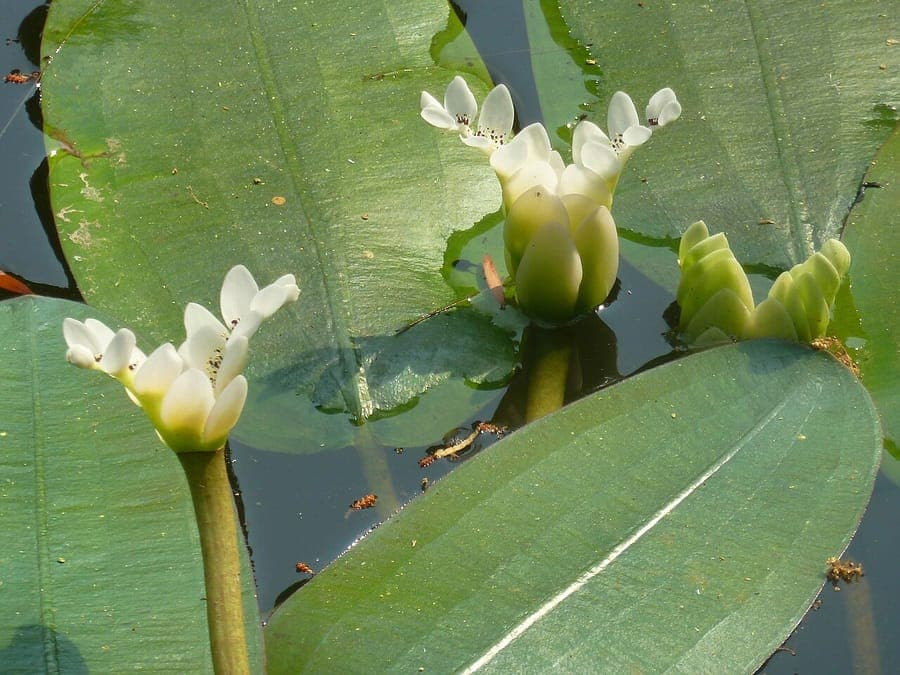
JMK / CC BY-SA 3.0, via Wikimedia Commons
Cape pond-lily: complete guide
Aponogeton distachyos
¿Quieres ver Cape pond-lily: complete guide en tu jardín?
1 minuto, sin tarjeta de crédito
Overview
Cape pond-lily (Aponogeton distachyos), also called 'water-hawthorn' or 'vanilla of water', is an enchanting aquatic plant from the Aponogetonaceae family. Originally from South Africa, this plant is a must-have for any pond. With its characteristic purple and white bifurcate flowers and fresh hawthorn scent, it offers unique beauty to water features.
Appearance and bloom
Cape pond-lily forms floating rosettes of lance-shaped leaves emerging directly from water. Plant reaches 30-60 cm above water surface. Characteristic twin flowers (bifurcate) appear in dense clusters above water, with purple stamens and white petals. Bloom period: October to May, with peak blooming in spring and autumn. Scent is light and pleasant, reminiscent of hawthorn.
Ideal location
Perfect for shallow ponds and water features (30-100 cm deep). Thrives in full sun to partial shade (at least 4 hours sunlight). Suitable for ponds, garden pools and container water gardens. Should not grow in fast-flowing water. Place in wind-protected spot for optimal blooming.
Soil
Use rich, organic pond soil or potting mix blended with aquatic nutrients. Heavier soil than normal garden soil works better. Plant in 15-20 cm plant pots with side holes. Top-dress with aquatic plant feeds in summer.
Diseño gratis
¿Quieres ver Cape pond-lily: complete guide en tu jardín? Crea un diseño gratis ahora.
Watering
As water plant no traditional 'watering' needed. Ensure water pH 6.5-7.0 and moderately nutrient-rich. Change water 20-30% monthly in closed systems. In slow-flowing water provide natural feeding. Avoid stagnant water.
Pruning
Remove dead and damaged leaves regularly. Remove flower remnants after blooming. Avoid aggressive pruning; plant grows slowly. Prevent overgrowth by periodically monitoring plant mass.
Maintenance calendar
October-May: Blooming period, regular removal of dead leaves. June-September: Dormant period, light care. Yearly: Refresh soil in pots, add nutrients.
Winter hardiness
Hardy zones 8-11. In temperate climates, small populations can overwinter in deep (at least 80 cm) ponds. Protect against complete freezing of pond water.
Companion plants
Combine in ponds with other aquatic plants: Nymphaea (water lily), Iris aquatica, Pontederia. Fish prevent muddy banks. Floaters like salvinia provide shade.
Final thoughts
Cape pond-lily offers unique growing season contrast in ponds where other water plants sleep. With suitable water temperature and nutrition, create years of aquatic beauty. Visit gardenworld.app/en for more water feature inspiration.
Where to buy
Available at Intratuin aquatic section and online specialized suppliers.
¿Quieres ver Cape pond-lily: complete guide en tu jardín? Crea un diseño gratis ahora.
Sube una foto, elige un estilo y obtén un diseño fotorrealista con lista de plantas en menos de un minuto.
Más de 10.000 jardines diseñados
Sin tarjeta de crédito


Plantas similares
Acer pycnanthum: complete guide
Acer pycnanthum
Acer pycnanthum, the Japanese swamp maple, is a fast-growing tree with early red flowers and brilliant autumn color, ideal for damp garden settings.
Freeman maple: complete guide
Acer × freemanii
Everything about the Freeman maple (Acer x freemanii): a fast-growing shade tree with spectacular autumn colour for large gardens.
Silver vine: complete guide
Actinidia polygama
Discover silver vine (Actinidia polygama): a hardy climbing plant with silvery foliage, loved by gardeners and cats alike.