
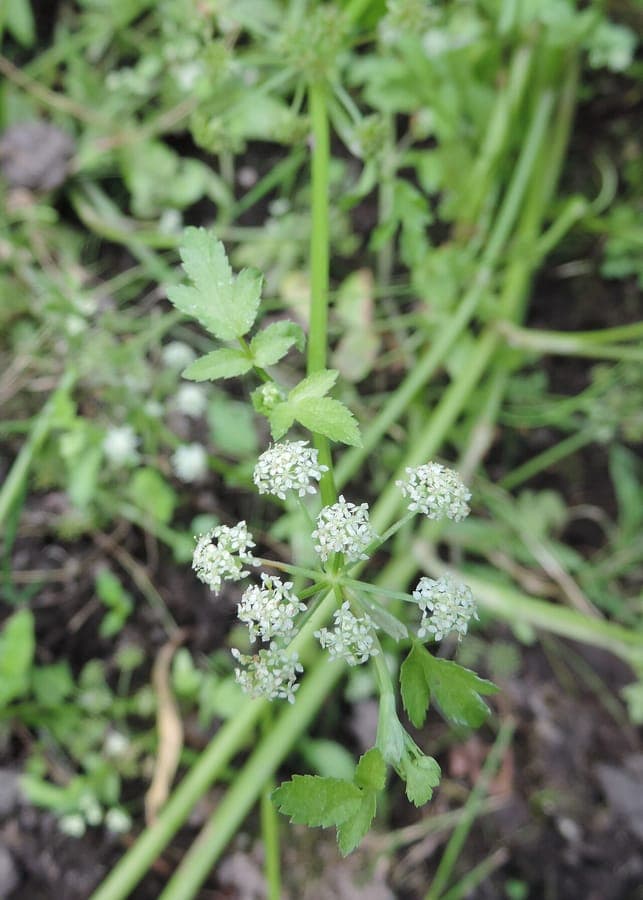
Krzysztof Ziarnek, Kenraiz / CC BY-SA 4.0, via Wikimedia Commons
European Marshwort: complete guide
Apium nodiflorum
¿Quieres ver European Marshwort: complete guide en tu jardín?
1 minuto, sin tarjeta de crédito
Overview
European Marshwort (Apium nodiflorum), also known as fool's water-cress, is a moisture-loving herb from the Apiaceae family. This delicate wetland herb grows naturally in damp locations throughout Europe. The plant belongs to the same family as parsley, dill, and wild carrot.
The plant is renowned for thriving in extremely wet conditions where many other plants cannot survive. In European wetlands, this herb is indigenous and forms important components of protected ecosystems.
Appearance and Bloom
European Marshwort is a low-growing herb typically reaching 10 to 40 centimeters in height. The stems are hollow, smooth, and greenish in color. The leaves are highly characteristic: they are small and divided into minuscule leaflets, giving the plant a delicate appearance.
The flower clusters are small and unobtrusive. Flowers are white to light pink, appearing in small umbels. Flowering occurs from May through September, with peak bloom typically June to August.
Ideal Location
European Marshwort thrives in extremely wet locations where water is regularly present. This may include marshes, along water channels, in shallow ponds. The plant can even grow partially submerged underwater. A location where water regularly accumulates but doesn't stagnate proves ideal.
Soil
European Marshwort requires consistently wet soils. Marsh or clay-based soils prove ideal. The plant grows best on heavy soils with substantial water-holding capacity. PH can range from moderately acidic to neutral.
Diseño gratis
¿Quieres ver European Marshwort: complete guide en tu jardín? Crea un diseño gratis ahora.
Watering Requirements
European Marshwort must never dry completely. The plant requires constant moisture-saturated conditions. During wet seasons, supplemental watering often proves unnecessary. During dry summers, regular watering becomes essential.
Pruning and Maintenance
European Marshwort requires minimal intervention. The plant naturally grows low and compact. Following bloom, faded flower heads can be carefully removed, though this remains purely optional.
Maintenance Calendar
April: Plant begins growth. Monitor water levels. May-June: Growth accelerates. Flowering commences. Regular watering needed. July-August: Bloom reaches peak display. Plant growth continues vigorously. September: Flowering concludes. Water requirements may decrease slightly. October-November: Above-ground portions fade. Plant enters dormancy. December-February: Complete dormancy. Plant may remain beneath winter ice.
Winter Hardiness
European Marshwort demonstrates excellent winter hardiness and grows permanently in European wetlands. The plant survives frost periods without difficulty.
Companion Plants
European Marshwort pairs beautifully with other moisture-loving species. Suitable companions include sedges, reed species, marsh marigold, bistort. The herb can also grow as an understory plant beneath taller marsh flowers.
Closing Thoughts
European Marshwort represents an exceptional moisture-loving herb ideally suited for gardeners seeking to create natural wetland-like environments. For additional information, consult gardenworld.app.
¿Quieres ver European Marshwort: complete guide en tu jardín? Crea un diseño gratis ahora.
Sube una foto, elige un estilo y obtén un diseño fotorrealista con lista de plantas en menos de un minuto.
Más de 10.000 jardines diseñados
Sin tarjeta de crédito


Plantas similares
Whorled carrot: complete guide
Daucus involucratus
Daucus involucratus is a Mediterranean umbellifer with white flower heads framed by lacy bracts. Growing this gravel garden gem.
Daucus muricatus: complete guide
Daucus muricatus
Daucus muricatus, the spiny wild carrot, grows wild on Mediterranean coasts. Discover sowing, June-July bloom, and wildflower meadow use.
Daucus pumilus: complete guide
Daucus pumilus
Daucus pumilus is a dwarf wild carrot relative with white lacy umbels, thriving on dunes and coastal rock in poor, fast-draining soil.