
Olivier Pichard / CC BY-SA 3.0, via Wikimedia Commons
Field parsley piert: complete guide
Aphanes arvensis
¿Quieres ver Field parsley piert: complete guide en tu jardín?
1 minuto, sin tarjeta de crédito
Overview
Aphanes arvensis, commonly called Field parsley piert or Common parsley-piert, is a delicate herbaceous plant belonging to the Rosaceae family. This diminutive self-seeding plant colonizes disturbed ground, field margins, and cultivated land. Despite its modest appearance, it holds botanical interest for naturalists and wild garden enthusiasts.
Appearance and Bloom
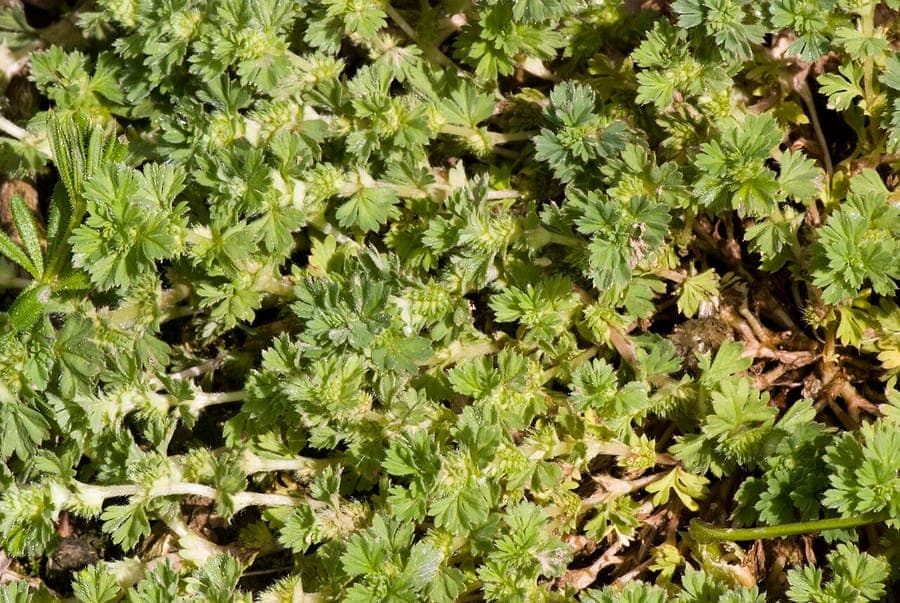
Field parsley piert grows as a low, sprawling plant rarely exceeding 15-30 cm in height. The foliage is the most distinctive feature: deeply divided, finely cut leaves create an intricate, lacy appearance with soft green coloring. The flowers are inconspicuous, small greenish-yellow blooms that appear in late spring and summer on delicate panicles. While not showy, they possess botanical charm.
Ideal Location
This plant thrives in full sun to partial shade on dry to moderately moist soils. It adapts well to poor, disturbed ground and is particularly at home in field margins and grassland edges. Sandy, loamy, or clay soils all suit it.
Soil
Aphanes arvensis grows in sandy, loamy, or clay soils with slightly acidic to neutral pH (5-5.5 optimal). The plant is undemanding regarding nutrients and actually thrives better in lower-fertility soils where competition is minimal.
Diseño gratis
¿Quieres ver Field parsley piert: complete guide en tu jardín? Crea un diseño gratis ahora.
Watering
Once established, Field parsley piert requires minimal water. It is quite drought-tolerant and actually performs better under drier conditions than wet. Water only during prolonged dry spells, and be cautious of overwatering.
Pruning
No pruning is necessary. The plant grows naturally low and compact. Simply remove dead foliage in fall to tidy the plant before winter dormancy.
Maintenance Calendar
Spring: Direct sow seeds where plants are to grow, press lightly into soil. Summer: Allow natural seeding and seed formation, avoid excessive watering. Autumn: Let seeds fall naturally for next season's crop. Winter: No special protection required in temperate climates.
Winter Hardiness
Aphanes arvensis is moderately hardy in temperate regions, often growing as a winter annual or early spring annual. In colder zones, seeds survive frost and germinate in spring.
Companion Plants
Combine with other field wildflowers and meadow plants for authentic natural effect. Pairs well with Veronica, Plantago, or other field herbaceous plants. Excellent for meadow mixes and field margin restoration.
Closing
Field parsley piert appeals to naturalists and wild gardeners seeking authentic meadow flora. Its modest stature and delicate foliage create subtle beauty. Explore it on gardenworld.app/en and bring native meadow character to your garden. Visit gardenworld.app/nl for more plant inspiration.
¿Quieres ver Field parsley piert: complete guide en tu jardín? Crea un diseño gratis ahora.
Sube una foto, elige un estilo y obtén un diseño fotorrealista con lista de plantas en menos de un minuto.
Más de 10.000 jardines diseñados
Sin tarjeta de crédito


Plantas similares
Siberian crab apple: complete guide
Malus x robusta
Complete guide to the Siberian crab apple (Malus x robusta): location, soil, pruning, winter hardiness and the best companion plants for your garden.
Chinese flowering crabapple (Malus x spectabilis): complete guide
Malus x spectabilis
Meet the Chinese flowering crabapple (Malus x spectabilis): a classic spring bloomer with carmine buds and pink blossom.
Potentilla crassinervia: complete guide
Potentilla crassinervia
Potentilla crassinervia, the Corsican cinquefoil, grows wild on Corsica and Sardinia's peaks. Discover how to grow this hardy alpine rock garden gem.