
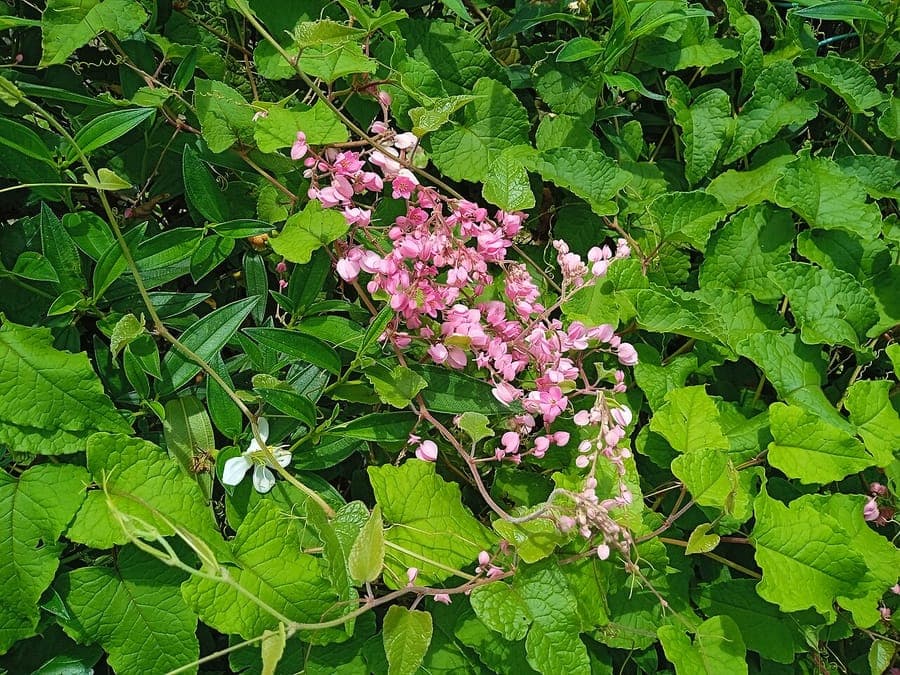
Wiki Farazi / CC0, via Wikimedia Commons
Chain-of-love: complete guide
Antigonon leptopus
¿Quieres ver Chain-of-love: complete guide en tu jardín?
1 minuto, sin tarjeta de crédito
Overview
Antigonon leptopus, commonly known as Chain-of-love, Coral vine or Coralita, is a spectacular scrambling plant native to Mexico and Central America. This plant is famous for its exuberant flowering with small coral-pink flowers appearing in long, drooping trusses. It is perfect for gardeners seeking dramatic visual impact with relatively low-maintenance plants. Chain-of-love belongs to the Polygonaceae family and has been cultivated in gardens since the 19th century. The plant is now widespread in warm climates worldwide and is particularly popular in California, Florida and other subtropical regions. In temperate climates, it is usually grown in large containers that can be moved to protected locations during winters.
Appearance and Bloom
Antigonon leptopus grows as an elegant climbing herb that can reach 2-3 meters or longer under optimal conditions. The stems are thin, scrambling structures with spiral tendrils that wind around support structures. The leaves are small, soft heart-shaped, approximately 2-4 centimeters long and arranged in a regular pattern along the stems. They have a silky texture that is pleasant to touch and green color that contrasts well with the flowers.
The flowers are the true attraction of this plant. They appear in large, drooping panicles 10-20 centimeters long, sometimes even longer in optimal growing conditions. Each individual flower is tiny, about 5 millimeters in diameter, with deep coral-pink to rose color. The flowers are open blooms with five petals that are soft and almost translucent in texture. They appear continuously from mid-summer until first frost in autumn, with longer flowering periods in very hot conditions. In tropical regions, plants can bloom almost year-round.
After flowering, small papery seed pods form and remain on the plant, providing additional ornamental value. These seed pods have an interesting structure and can be decorative. In warm climates, self-seeding is possible, although germination percentages vary.
Ideal Location
Chain-of-love craves maximum heat and sunlight. Place this plant in very sunny locations receiving minimum 6-8 hours direct sun daily. South or west-facing walls, pergolas and fences are ideal as they reflect extra heat. Sunlight promotes not only growth but is essential for rich, full flowering. Plants grown in half shade will produce far fewer flowers.
In very hot, dry climates, afternoon shade may be beneficial to prevent leaf scorch and desiccation, especially for young plants in their first season. In temperate climates, however, maximum sun exposure is needed.
Diseño gratis
¿Quieres ver Chain-of-love: complete guide en tu jardín? Crea un diseño gratis ahora.
Soil
Antigonon leptopus is highly adaptable regarding soil quality. It grows successfully in sandy, loamy or clayey soils. The plant thrives even in fairly poor soils. The most critical aspect is good drainage to prevent root rot. The plant cannot tolerate waterlogging or prolonged wet conditions.
For optimal growth, add compost, peat or aged leaf mould to improve organic matter and water retention. A pH between neutral and slightly alkaline is ideal. In containers, well-draining potting soil is essential.
Watering
Once established, Chain-of-love is remarkably drought-tolerant thanks to its deep root system. Water regularly in the first growing year approximately once per week to build a strong root system. Once the plant is well-established, mature specimens can survive long periods with minimal watering.
In containers, more frequent watering is needed. Check regularly if the potting soil feels dry and water thoroughly if needed. In extreme drought, watering twice weekly may be necessary. Note: Excessive water can cause root rot.
Pruning
Pruning is optional but useful for shaping and controlling growth. In late winter or early spring, you can remove dead or damaged wood. Regular "pinching" of growing tips during the growing season stimulates more branch formation and therefore more flowers. This is especially valuable for young plants.
Mature vines can be shortened without harming the plant. The plant recovers quickly and flowers profusely on young wood.
Maintenance Calendar
January to March: Remove winter-dead wood, prune for shape if needed. April to June: Begin regular watering schedule, install support structure, apply balanced fertilizer as growth begins. July to September: Enjoy peak flowering, deadhead spent flowers for extended bloom, reduce watering as moisture increases. October to December: Reduce watering as growth slows, protect against frost in zones below 9.
Winter Hardiness
Chain-of-love is hardy only to USDA zone 9 (minimum -7°C). In zone 8, survival is possible with protection against hard frosts. In zones 7 and colder, it must be grown in containers that can be moved in winter to protected locations or garages.
Companion Plants
Combine Chain-of-love with other heat-loving plants for interesting contrast effects. Clematis species provide color earlier in the season. Passiflora adds exotic flowers. Jasmine adds fragrance. Low-growing Mediterranean herbaceous plants at the base such as Santolina, Helichrysum italicum, and lavender add texture and keep feet cool.
Closing
Chain-of-love is an essential plant for warm-climate gardens. With minimal maintenance requirements and spectacular, long-lasting flowers, it deserves a prominent place in your garden design. Use gardenworld.app/en for your garden design with Chain-of-love central. Discover more plant species on gardenworld.app/nl.
¿Quieres ver Chain-of-love: complete guide en tu jardín? Crea un diseño gratis ahora.
Sube una foto, elige un estilo y obtén un diseño fotorrealista con lista de plantas en menos de un minuto.
Más de 10.000 jardines diseñados
Sin tarjeta de crédito


Plantas similares
Crosby's wild buckwheat: complete guide
Eriogonum crosbyae
Full guide to growing Eriogonum crosbyae: ideal site, soil, watering, winter hardiness and companion plants for this rare western wild buckwheat.
Spreading buckwheat: complete guide
Eriogonum effusum
Full guide to growing Eriogonum effusum: ideal site, soil, watering, winter hardiness and companion plants for this prairie subshrub from the American West.
Tall woolly buckwheat: complete guide
Eriogonum elatum
Full guide to Eriogonum elatum: siting, soil, watering, pruning and companion plants for this elegant white-flowered buckwheat from the western United States.