
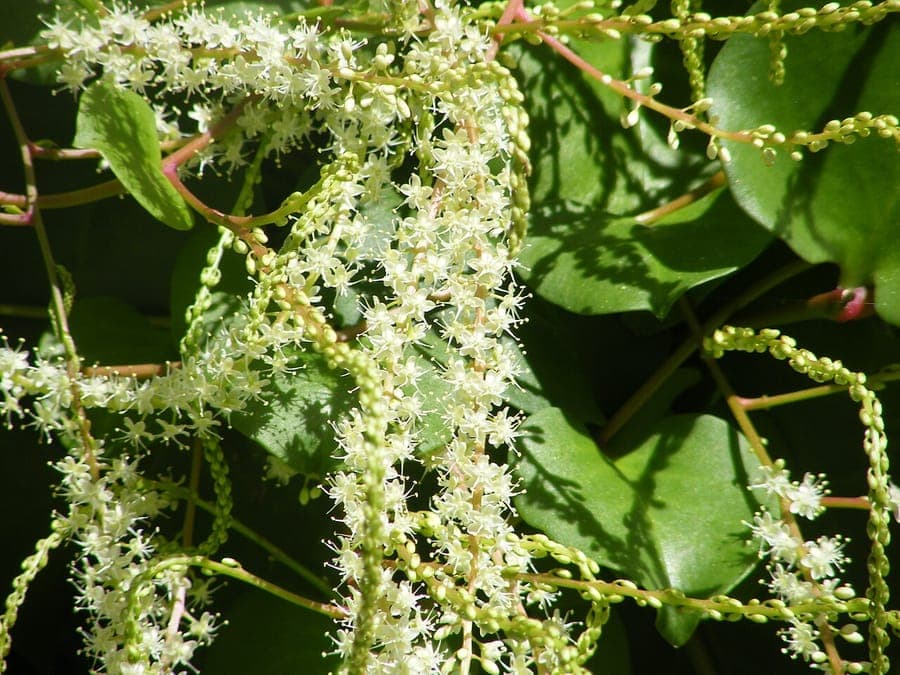
John Robert McPherson / CC BY-SA 4.0, via Wikimedia Commons
Anredera cordifolia: complete guide
Anredera cordifolia
¿Quieres ver Anredera cordifolia: complete guide en tu jardín?
1 minuto, sin tarjeta de crédito
Overview
Anredera cordifolia, commonly known as Madeira-vine or Bridal wreath, is a fast-growing ornamental climbing plant from South America. This plant is celebrated for its heart-shaped leaves and small, fragrant white flowers that bloom in thick clusters. In temperate zones, it is usually grown as an annual, though it can overwinter in milder climates.
Appearance and Bloom
Anredera cordifolia grows as an elegant, slender climber with delicate stems. The leaves are smooth, heart-shaped, and with a glossy green color. During summer months, small, fragrant white flowers appear in dense clusters at the stem ends. These charming flowers attract bees and butterflies and create a visually striking element in the garden.
Ideal Location
This plant grows best in sunny to semi-shaded locations with at least four hours of sunlight daily. Full sun is ideal, but it can also grow in partial shade. Place it on a supportive structure like a pergola where it can twine. Anredera cordifolia grows faster in warm environments and is best planted in open, well-lit locations.
Soil
The soil must be regularly moist but well-draining. Rich, nutrient-rich soil promotes faster growth and richer blooming. Add organic material before planting. A neutral to slightly acidic pH (6.5-7.5) is ideal. This plant grows well in container and pot conditions, making it a favorite for patios and balconies.
Watering
Water regularly, especially during growth and flowering periods. Keep the soil moist but ensure no stagnant water accumulates. In warm periods, water daily or every other day. In cooler weather, watering can be reduced. Because of its tropical origins, it loves humidity and responds well to regular watering.
Diseño gratis
¿Quieres ver Anredera cordifolia: complete guide en tu jardín? Crea un diseño gratis ahora.
Pruning
Pruning helps maintain shape and promote bushiness. Trim back along long shoots as needed. Remove weak or overlapping growth. In autumn, the plant can be cut back to base leaf level to regrow for next season. Pruning promotes richer blooming.
Maintenance Calendar
Spring: Plant after last frost danger. Water regularly. Summer: Daily watering, feed with potassium-rich fertilizer. Autumn: Gradually reduce watering. Winter: In temperate zones, plant usually dies back, but can be kept indoors in pots.
Winter Hardiness
Anredera cordifolia is not winter-hardy in northern growing areas. The plant dies back at frost and regrows from tubers the following season. In Mediterranean or warm climates, it can overwinter. In containers, it can be moved indoors for overwintering.
Companion Plants
Plant alongside other summer climbers like Clematis or bean vines. Beautiful combination with garden flowers like Dahlias and Sunflowers. In containers, use for pergolas, arches, and gazebos. Also suitable for screens and windbreaks.
Closing
Anredera cordifolia offers fast growth, beautiful heart-shaped leaves, and charming white flowers. Perfect for temperate-zone gardens where quick screening is desired. With regular watering and good drainage, it blooms profusely. Available at major garden centers.
For more information about garden design, visit gardenworld.app/en and gardenworld.app/nl.
¿Quieres ver Anredera cordifolia: complete guide en tu jardín? Crea un diseño gratis ahora.
Sube una foto, elige un estilo y obtén un diseño fotorrealista con lista de plantas en menos de un minuto.
Más de 10.000 jardines diseñados
Sin tarjeta de crédito


Plantas similares
Acer pycnanthum: complete guide
Acer pycnanthum
Acer pycnanthum, the Japanese swamp maple, is a fast-growing tree with early red flowers and brilliant autumn color, ideal for damp garden settings.
Freeman maple: complete guide
Acer × freemanii
Everything about the Freeman maple (Acer x freemanii): a fast-growing shade tree with spectacular autumn colour for large gardens.
Silver vine: complete guide
Actinidia polygama
Discover silver vine (Actinidia polygama): a hardy climbing plant with silvery foliage, loved by gardeners and cats alike.